


Mining & Resources
Rare earth deposits in Australia
Australia's rare earth deposits and processing ambitions, and the fabricated plant steelwork that comes with new separation capacity.
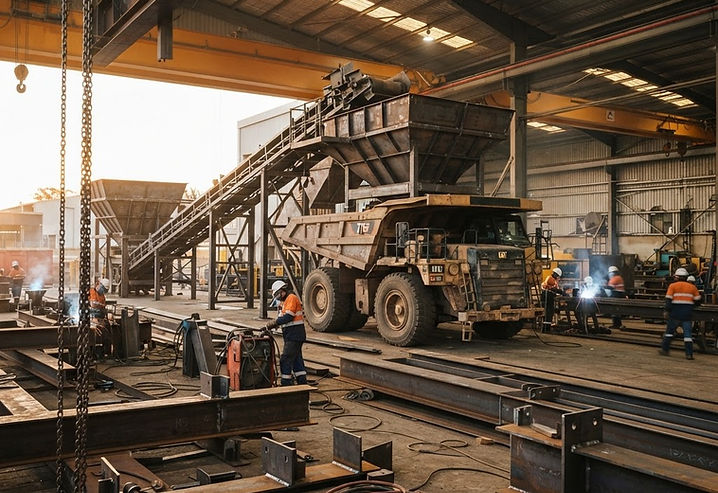
Australia is fast becoming a cornerstone of the global rare earths story. New and expanding projects, from heavy rare earths in Western Australia to NdPr focused developments in the Northern Territory, are positioning the country to supply the magnets, motors and electronics that power electric vehicles, wind turbines and advanced defence systems. That creates not only mining and processing opportunities, but a substantial pipeline of demand for precision stainless steel fabrication: conveyors, tanks, piping, skids, structural support, and corrosion resistant plant components.
Where the deposits (and projects) sit today
Browns Range (Northern Minerals), a heavy rare earth (HRE) project in WA advancing toward commercial scale. Browns Range is explicitly targeting dysprosium and terbium, elements critical for high temperature permanent magnets, and has been the focus of recent investment and project updates.
Nolans (Arafura / Northern Territory), a large Nd/Pr focused deposit intended to produce magnet grade rare earth oxides and downstream products, and one of the biggest NdPr resources in Australia. Projects like Nolans are central to supply chain diversification for magnet metals.
Iluka & mineral sands by products / refineries, Iluka has been developing processing routes and refinery capacity (Eneabba) to convert monazite/xenotime by products into refined rare earths domestically, increasing local downstream processing capability.
These projects are supported by a national policy environment that explicitly encourages exploration, processing and value adding in Australia as part of the Critical Minerals Strategy 2023 to 2030. That strategy provides funding pathways, export facilitation and incentives aimed at moving Australia up the value chain from raw concentrates toward refined products and magnet manufacture.
Global demand for magnet rare earths (neodymium, praseodymium, dysprosium, terbium, NdPr/Dy/Tb) is forecast to grow strongly as EVs, wind turbines and automation scale up. Several market researchers and energy agencies project multifold demand growth for magnet rare earths over the next decade, creating a structural need for new supply outside current concentrated sources. Price volatility and recent supply disruptions have also made governments and manufacturers keen to diversify supply chains.
What that means for stainless steel fabrication, concrete opportunities
Rare earth projects and downstream refineries create repeated and durable demand for stainless steel fabrication. Opportunities include:
Process plant equipment, reactors, leach tanks, neutralisation tanks and centrifuge housings made from corrosion resistant stainless steels (316, duplex, Super Duplex) and specialty alloys for acidic/alkaline chemistries used in rare earth extraction and separation. (High quality surface finish and corrosion allowances are critical.)
Conveyors and material handling systems, feed conveyors, vibratory feeders, hoppers and chutes for ore, monazite concentrates and tailings. These need wear resistant stainless steel or lined steels and modular designs for transport to remote sites. Keyword fit: stainless steel fabrication suppliers can design hygienic, corrosion resistant conveyors suited to mineral sands and REE concentrates.
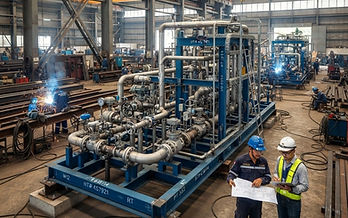
Piping, valves and skid mounted process packages, prefabricated stainless steel skids (pumps, filters, heat exchangers) that can be delivered and integrated on site reduce construction time and commissioning risk. Fabricators with ISO 9001, weld procedure qualification and NDE capability will be preferred.
Structural and safety systems, platforms, stairs, bunding, storage tanks and acid conditioning infrastructure manufactured to mining and environmental codes.
Custom fabrication for downstream/refinery plants, refinery feed systems, glovebox enclosures, cleanrooms and magnet manufacturing auxiliaries will require tight tolerance stainless work and specialist finishes.
Maintenance, spare parts and local content, ongoing operations need local fabrication capacity for repairs, retrofits and replacement parts. Governments and EPCs often prioritise suppliers who can deliver localization, rapid turnaround and documented QA.

Competitive advantages for fabricators
If your shop wants to win work from rare earth developers and processors, consider these differentiators:
Materials expertise, demonstrated capability with duplex and high nickel alloys plus corrosion testing and metallurgy support.
Weld and quality credentials, WPS/PQRs, AS/NZS / ASTM compliance, NDE (UT/RT/MPI), ISO 9001 and traceability.
Modular skid experience, ability to design, assemble, test (FAT) and ship skid packages reduces client risk and capital costs.
Project packaging, integrate mechanical, piping and electrical interfaces or partner with EPCs to offer turnkey modules.
Remote logistics & site services, projects are often in remote WA or NT locations: mobilising crews, offering site welding, and rapid spares dispatch win contracts.
Sustainability & circularity services, magnet recycling and circular economy services (e.g., plant components for magnet recycling lines) are emerging niches.
Risks & practical considerations
Commodity and policy volatility. Project timing depends on capital decisions, commodity prices and geopolitics; fabricators should size exposure and keep flexible capacity.
Technical complexity. Rare earth processing uses corrosive chemistries and radioactive by products (in some deposits); strict environmental and HSE controls are required. Suppliers must be prepared for tight regulatory, waste management and QA requirements.
Local content expectations. Government and offtakers may prioritise local supply chains, a chance for Australian fabricators, but also a need to document capabilities and compliance.
Quick action plan for stainless steel fabricators
Audit & certify, ensure weld qualifications, ISO 9001 and NDE resources are up to date.
Develop skid & modular shop drawings for likely process units (leach tanks, neutralisation skids, condensers).
Create an REE sector capability pack, case studies, materials expertise, safety stats and turnaround times.
Target EPCs and project developers (Northern Minerals, Arafura, Iluka and others) with tailored offers for FAT tested skids and maintenance contracts.
Conclusion
Australia’s rare earth pipeline, led by projects like Browns Range, Nolans and expanding domestic refining capability, is creating a medium- to long term market for specialised stainless steel fabrication. Fabricators that invest in materials expertise, modular skid manufacturing, quality systems and logistics will find opportunities across construction, commissioning and long term maintenance. With demand for magnet metals expected to rise markedly over the next decade, positioning now for the rare earth value chain can pay off as projects move from feasibility to construction and into production.
Further reading
Follow project tracking across the wider market on Project Atlas Intel.
How K999 can help
Equipment built for the pit
Mining work is where wear life decides the maintenance budget, so the articles in this section feed directly into how we detail chutes, hoppers, conveyors and wear parts.
Mining equipment and conveyors- 01
Mining equipment and conveyor fabrication with replaceable wear liners and hardfaced contact surfaces.
- 02
Chutes, hoppers and transfer structures detailed for access, lifting and shutdown windows.
- 03
Site assembly planning from the Sattahip yard for modules that ship by sea.
More on Mining & Resources
All articles

Request for quotation
Need fabricated steel to that standard?
Every enquiry is answered within 48 hours by our estimating team in Rayong. The priced quotation follows once drawings, quantities and standards are confirmed. Stainless steel fabrication, structural steel fabrication, pipe spooling, pressure vessels, steel tanks, mining equipment and conveyors, pig launchers, chutes and hoppers, send the package and we will price it.
Before you request a quotation
Steel fabrication quotation questions
What structural steel fabrication, pressure vessel and pipe spooling packages cost, what to send with an enquiry, and how delivery to site works.
Structural steel fabrication is priced from the section and plate tonnage, the detailing and drawing hours, welding and fitting manhours, NDT requirements, blast and coating system, packing and freight. Grade matters as much as weight: AS/NZS, ASTM, JIS and BS sections carry different mill prices, and heavy built up members take longer than rolled sections. Our Rayong workshop produces around 10,000 tonnes of structural steel fabrication a year, so a clear bill of materials is usually enough to price. Send the drawings and we answer within 48 hours; the priced quotation follows once quantities, standards and delivery dates are confirmed.
For steel fabrication work, send the drawings or IFC package, a bill of materials with material grades, the welding and NDT requirements, the coating specification, the delivery port and your site dates. Add the inspection and test plan, any third party inspection requirement, and whether trial assembly or match marking is needed. Where drawings are still in progress, a scope list with sizes, quantities and duty is enough to start, and the estimate is refined once the final package arrives. Every enquiry is answered within 48 hours, and the priced quotation is issued after scope, standards and quantities are confirmed.
Yes. Pressure vessel fabrication is carried out to ASME Section VIII Div. 1 under our ASME U stamp No. 43,462, or to AS/NZS and BS where the project specifies, covering separators, air receivers, water drums, waste heat recovery units and pig launchers. Steel tanks for fuel, biofuel, chemical, water and food duty are designed in house with our E Tank programme to API, ASME, BS and AS/NZS. Because structural steel, vessels, tanks and their supports are built in the same workshops, one enquiry can cover the vessel package, the tank package and the structural steel that carries them, with a single coating and documentation system and one shipment.
Steel fabrication Australia packages are scheduled from a 33,000 m2 Rayong yard with an 80,000 m2 assembly yard inside Sattahip port, so fabrication, trial assembly, blasting, coating and packing run in one place. Programme length depends on tonnage, material lead times, the coating system and inspection scope, and it is confirmed with the quotation. We quote FOB Laem Chabang, Map Ta Phut or Sattahip, or CIF and DAP to your Australian port, with packing lists, weights, lifting points and a data book per shipment. Staged deliveries can follow your site erection sequence instead of shipping everything at once.
There is no fixed minimum. Pipe spooling Australia packages run at up to 3,000 diameter inches per shift on SCH.40, from a single replacement spool to a full plant piping scope, with spools numbered, X rayed where specified and coated to match erection order. Mining equipment fabrication covers chutes, hoppers, ore bins, transfer towers and conveyor structures with Bisalloy, Hardox, rubber lining or hardfacing fitted in house, from one wear liner set to modules of up to 2,500 tonnes assembled at Sattahip. Send the scope list and we will tell you what the smallest sensible batch is for your programme.