


Industry News
Reducing Steel Scrap in Manufacturing
Nesting efficiency, cut planning and offcut reuse turn scrap from a write off into a managed cost line.
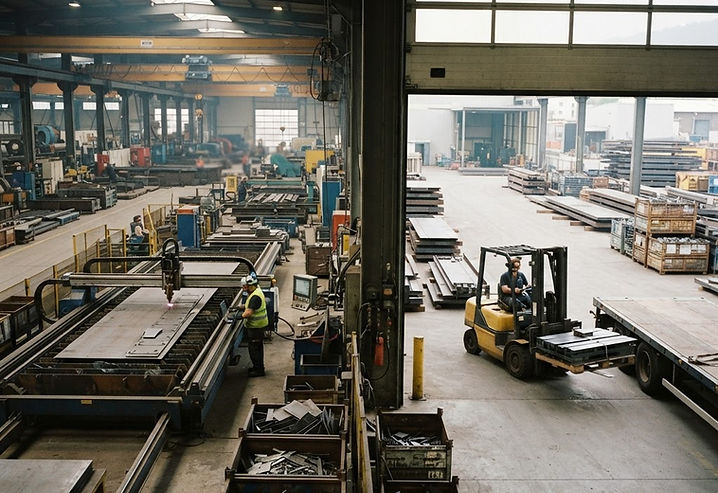
During the manufacturing process, the cost of raw materials is usually the most expensive for any industry. Hence, when a high volume of raw material is rejected, it can adversely impact a company’s profit margins. Review of the rejected material (called scrap) is critical and programs to reduce scrap are almost always part of manufacturers’ continuous improvement initiatives. But what is scrap and how can scrap be reduced in the context of metal fabrication and manufacturing industries? This will be covered further in this blog.
What is Scrap?
Manufacturing scrap is the unusable material from a manufacturing operation that will be discarded. Scrap can be subdivided into several categories while used as a general definition for all rejected material. First, there’s scrap that is rejected in raw material form. It may be due to spoilage, or it may be due to off specification performance characteristics such as tensile strength or shatter point. This material has no additional processing or partial processing added to it. Second, there’s scrap that has been partially processed. Many manufactured goods are produced in stages of a production process, and the failure at any one step can mean that the part must be rejected as part of quality management of metal fabrication. This is more expensive than scrapping raw material as the partially finished part has had some value added labor. Third, finished goods must be scrapped due to failure to meet specifications. Some can be reworked by adding labor to adjust the part or turn it into something else. Others may require complete scrapping if no rework can be performed.
Ways to Reduce Scrap and Rework

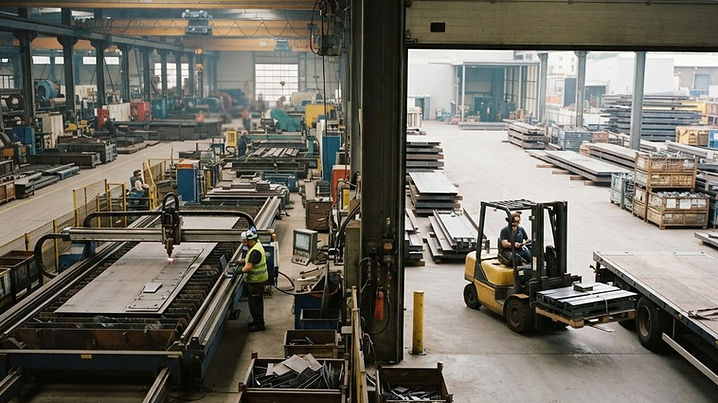
Conduct Process Audits: Conducting process audits is the first step in any scrap reduction process. Without understanding the current process as it occurs, identifying scrap points would prove impossible in structural steel fabrication.
Improve Communication and Change Management: Manufacturing is a fast paced, noisy, and extended process. Communication is sometimes nonexistent between upstream and downstream processes, and errors can be compounded as a result. The same is true for hand written notes and tags, where handwriting quality, lack of clarity, and other shortcomings can impact the next production stage.
Review Material Sourcing: The quality of a manufacturer depends not only on the quality of material and components used to make goods but also on the quality of material used in industrial processes, such as heat induction bending services. In the case of the former, a rigorous selection of materials such as tensile strength, alloy consistency, and vendor’s production methods can make or break a company’s quality when those materials are in production. In the latter case, cutting dies, routing heads, and other hardened tool types must be guaranteed to cut the material they claim to cut. If the performance characteristics of the tool are inferior, scrap can result.
Document the Right Things: Many manufacturers are drowning in written documents from manual procedures. But when it comes to the most critical aspects of documentation, they are lacking. Design iterations for active products should always have defined and traceable access. This includes CAD and CAM drawings and any other engineering specifications.
Evaluate Maintenance Strategies: Scrap occurs at a higher than desirable rate while using preventive methods, and most manufacturers have yet to move beyond them. This is because manual condition monitoring requires a lot of labor, manual checking, and measurement of temperature, wear, abrasion, and more. Tool wear and failure may not be detected with a manual preventive maintenance strategy, and data may be omitted through error, bias, or training issues.
Curtain Call
Scrap is a necessary evil, however there are many means to reduce scrap in fabrication and manufacturing processes. It also requires a change of mindset to move towards sustainability in the steel manufacturing industry and management involvement may be required. So, the goal of companies should not be to make the “scrapyard” empty, but to ensure that lesser scrap is sent to the “scrapyard”!
Further reading
Follow Oil & Gas across the wider market on Project Atlas Intel.
How K999 can help
Where we fit the story
Trade policy, commodity cycles and energy markets decide when projects move, and they decide what gets fabricated. These articles collect the changes we track for our clients.
See our projects- 01
Work delivered for mining, energy, processing and manufacturing clients across Australia and Southeast Asia.
- 02
Fabrication in Rayong with assembly at Sattahip, shipping from Laem Chabang and Map Ta Phut.
- 03
Enquiries answered within 48 hours by our estimating team.
More on Industry News
All articles


Request for quotation
Need fabricated steel to that standard?
Every enquiry is answered within 48 hours by our estimating team in Rayong. The priced quotation follows once drawings, quantities and standards are confirmed. Stainless steel fabrication, structural steel fabrication, pipe spooling, pressure vessels, steel tanks, mining equipment and conveyors, pig launchers, chutes and hoppers, send the package and we will price it.
Before you request a quotation
Steel fabrication quotation questions
What structural steel fabrication, pressure vessel and pipe spooling packages cost, what to send with an enquiry, and how delivery to site works.
Structural steel fabrication is priced from the section and plate tonnage, the detailing and drawing hours, welding and fitting manhours, NDT requirements, blast and coating system, packing and freight. Grade matters as much as weight: AS/NZS, ASTM, JIS and BS sections carry different mill prices, and heavy built up members take longer than rolled sections. Our Rayong workshop produces around 10,000 tonnes of structural steel fabrication a year, so a clear bill of materials is usually enough to price. Send the drawings and we answer within 48 hours; the priced quotation follows once quantities, standards and delivery dates are confirmed.
For steel fabrication work, send the drawings or IFC package, a bill of materials with material grades, the welding and NDT requirements, the coating specification, the delivery port and your site dates. Add the inspection and test plan, any third party inspection requirement, and whether trial assembly or match marking is needed. Where drawings are still in progress, a scope list with sizes, quantities and duty is enough to start, and the estimate is refined once the final package arrives. Every enquiry is answered within 48 hours, and the priced quotation is issued after scope, standards and quantities are confirmed.
Yes. Pressure vessel fabrication is carried out to ASME Section VIII Div. 1 under our ASME U stamp No. 43,462, or to AS/NZS and BS where the project specifies, covering separators, air receivers, water drums, waste heat recovery units and pig launchers. Steel tanks for fuel, biofuel, chemical, water and food duty are designed in house with our E Tank programme to API, ASME, BS and AS/NZS. Because structural steel, vessels, tanks and their supports are built in the same workshops, one enquiry can cover the vessel package, the tank package and the structural steel that carries them, with a single coating and documentation system and one shipment.
Steel fabrication Australia packages are scheduled from a 33,000 m2 Rayong yard with an 80,000 m2 assembly yard inside Sattahip port, so fabrication, trial assembly, blasting, coating and packing run in one place. Programme length depends on tonnage, material lead times, the coating system and inspection scope, and it is confirmed with the quotation. We quote FOB Laem Chabang, Map Ta Phut or Sattahip, or CIF and DAP to your Australian port, with packing lists, weights, lifting points and a data book per shipment. Staged deliveries can follow your site erection sequence instead of shipping everything at once.
There is no fixed minimum. Pipe spooling Australia packages run at up to 3,000 diameter inches per shift on SCH.40, from a single replacement spool to a full plant piping scope, with spools numbered, X rayed where specified and coated to match erection order. Mining equipment fabrication covers chutes, hoppers, ore bins, transfer towers and conveyor structures with Bisalloy, Hardox, rubber lining or hardfacing fitted in house, from one wear liner set to modules of up to 2,500 tonnes assembled at Sattahip. Send the scope list and we will tell you what the smallest sensible batch is for your programme.