


Mining & Resources
US Miners Eye Copper Comeback as Demand Rises
Electrification and grid build out are lifting copper demand, reopening US mining projects and their fabrication packages.
Introduction to Copper Demand
Copper, a metal revered for its conductive properties, is experiencing a notable resurgence in demand across various industries. This increasing need can be attributed to several crucial factors, including the broadening applications of copper in construction for alloying stainless steel, electronics, and especially renewable energy systems. With the global transition towards electrification and the adoption of sustainable technologies, the demand for copper has gained unprecedented momentum.
The construction sector, a significant consumer of copper, relies on this metal for plumbing, wiring, and roofing applications due to its durability and conductivity. As urbanization and infrastructure development continue to accelerate worldwide, the construction industry’s copper consumption is projected to rise significantly. Moreover, in the electronics industry, copper plays a critical role in the manufacturing of electrical components and circuits. As technology advances and devices become more interconnected, the reliance on copper in producing these electronics will further elevate demand.
Perhaps most significantly, the renewable energy sector is fueling an extraordinary spike in copper consumption. The shift from fossil fuels to cleaner energy alternatives necessitates extensive use of copper in various infrastructure, including solar panels, wind turbines, and electric vehicles. For instance, Electric vehicles typically contain several kilograms of copper, highlighting the metal’s essential role in realizing sustainable transportation solutions. According to recent reports, global copper consumption is expected to increase by as much as 30% by 2030, driven significantly by these demands.
These trends in copper consumption underscore a promising outlook for U.S. miners who are poised to meet this rising demand. With sustainable mining practices gaining traction, the extraction and processing of copper can align with environmental considerations, thereby supporting the renewable energy transition while boosting local economies.
Current State of the US Copper Mining Industry
The United States copper mining industry is currently experiencing a transformational phase amid escalating global demand driven by the shift towards renewable energy. With copper being essential in the manufacturing of electrical components, renewable energy systems, and electric vehicles, it plays a crucial role in a sustainable future. Existing copper mines in states such as Arizona, New Mexico, and Utah continue to operate, contributing significantly to domestic production levels. In 2022, the US produced approximately 1.2 million metric tons of copper, reflecting a stable output despite various challenges.
Employment statistics within the industry indicate a strong workforce dedicated to mining operations and processing, with thousands of jobs sustained through primarily unionized labor. However, concerns over sustainable mining practices have emerged. Stricter regulatory compliance aimed at minimizing environmental impacts has introduced complexities for mining operations. Mines must implement sustainable practices that mitigate ecological footprints while satisfying governmental expectations and community concerns. The incorporation of these practices is critical as the industry seeks to balance productivity with environmental stewardship.

Recent challenges faced by the copper mining sector include those stemming from the COVID 19 pandemic, which disrupted supply chains and labor availability. Many mines adapted quickly by implementing safety protocols and adjusting to a remote work environment where feasible. Additionally, regulatory issues have become more pronounced, with renewed focus on land use, water resource management, and ecological preservation. These factors contribute to the industry’s evolving landscape, influencing copper production levels and the overall capacity to meet the increasing demand associated with renewable energy initiatives.
Technological Advancements in Copper Mining
The landscape of copper mining is undergoing a significant transformation, fueled by technological advancements that enhance efficiency, sustainability, and safety. In particular, innovations in exploration techniques have led to more precise identification of copper deposits, thereby reducing the time and costs associated with traditional methods. Geophysical and geochemical methods, combined with advanced data analytics and machine learning, facilitate the accurate targeting of prospective mining areas, minimizing unnecessary environmental disruption.
Moreover, extraction processes have benefitted from cutting edge technologies such as automated drilling systems and real time monitoring solutions. These advancements contribute to a more streamlined operation, enabling miners to extract copper with greater speed and safety while reducing the consumption of resources. For instance, the integration of Internet of Things (IoT) devices allows for continuous data gathering, optimizing mining operations and enhancing overall productivity. By utilizing renewable energy copper production techniques, companies can further decrease their carbon footprint, aligning operations with global sustainability goals.
Sustainable mining practices are critical in addressing the negative perceptions historically associated with copper mining. New technologies enable the recycling of water used in the extraction process, substantially decreasing the industry’s impact on local water sources. Furthermore, advancements in waste management and tailings processing not only mitigate potential environmental hazards but also open new avenues for resource recovery. By implementing these innovative technologies, U.S. miners are not only improving their operational efficiency but also positioning themselves to meet the rising demand for copper globally.
As the renewable energy sector continues to expand, the importance of sustainable mining practices grows correspondingly. By adopting these technological innovations, U.S. miners can enhance their competitive edge, ensuring they are well prepared for the anticipated surge in copper demand in the coming years.
Future Outlook and Investment Opportunities
The outlook for copper remains robust as global demand continues to climb, particularly due to its essential role in renewable energy technologies and electric vehicle production. With the increasing emphasis on transitioning towards clean energy solutions, copper is poised to become a critical component, making investments in this sector imperative. Analysts predict that copper prices will experience significant upward trends in the coming years, primarily driven by rising electrification and infrastructural developments worldwide.
In terms of production levels, both domestic and international dynamics are pivotal. The United States, with its vast mineral resources, has the potential to enhance copper production sustainably. As miners focus on sustainable mining practices, this shift could not only meet rising demand but also align with environmental responsibilities. Mining companies are increasingly adopting innovative techniques aimed at reducing their carbon footprint and improving resource efficiency, which may lead to an overall positive perception from investors and the public alike.
The opportunities for investment within the copper mining sector are plentiful. New projects are emerging across the globe, particularly in regions rich in copper deposits. These initiatives often come with strategic partnerships that enhance production capabilities or integrate sustainable mining practices. Mechanisms such as public private partnerships are facilitating investments to bolster infrastructure and production efficiency, which are critical in supporting the anticipated demand surge.
Moreover, funding initiatives aimed at expanding production capacity are gaining traction as companies seek to capitalize on the copper demand expansion. Stakeholders, including institutional investors and venture capitalists, are looking to tap into the burgeoning copper market. In conclusion, the copper sector not only offers promising financial returns, but it also plays a vital role in supporting the global move towards a more sustainable future, ensuring that investments in this area are both economically and environmentally compelling.
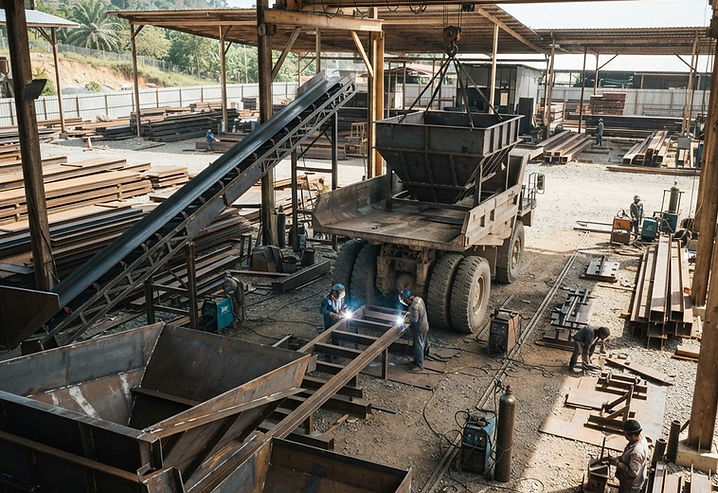
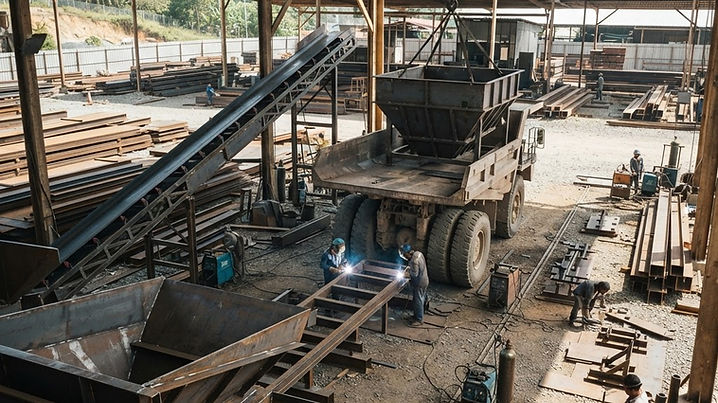
K999 Thailand carries out work of this kind through its mining equipment fabrication team in Rayong.
Further reading
Follow EPC contractors in Southeast Asia across the wider market on Project Atlas Intel.
How K999 can help
Equipment built for the pit
Mining work is where wear life decides the maintenance budget, so the articles in this section feed directly into how we detail chutes, hoppers, conveyors and wear parts.
Mining equipment and conveyors- 01
Mining equipment and conveyor fabrication with replaceable wear liners and hardfaced contact surfaces.
- 02
Chutes, hoppers and transfer structures detailed for access, lifting and shutdown windows.
- 03
Site assembly planning from the Sattahip yard for modules that ship by sea.
More on Mining & Resources
All articles

Request for quotation
Need fabricated steel to that standard?
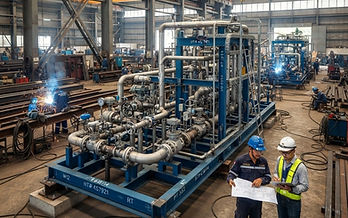
Every enquiry is answered within 48 hours by our estimating team in Rayong. The priced quotation follows once drawings, quantities and standards are confirmed. Stainless steel fabrication, structural steel fabrication, pipe spooling, pressure vessels, steel tanks, mining equipment and conveyors, pig launchers, chutes and hoppers, send the package and we will price it.
Before you request a quotation
Steel fabrication quotation questions
What structural steel fabrication, pressure vessel and pipe spooling packages cost, what to send with an enquiry, and how delivery to site works.
Structural steel fabrication is priced from the section and plate tonnage, the detailing and drawing hours, welding and fitting manhours, NDT requirements, blast and coating system, packing and freight. Grade matters as much as weight: AS/NZS, ASTM, JIS and BS sections carry different mill prices, and heavy built up members take longer than rolled sections. Our Rayong workshop produces around 10,000 tonnes of structural steel fabrication a year, so a clear bill of materials is usually enough to price. Send the drawings and we answer within 48 hours; the priced quotation follows once quantities, standards and delivery dates are confirmed.
For steel fabrication work, send the drawings or IFC package, a bill of materials with material grades, the welding and NDT requirements, the coating specification, the delivery port and your site dates. Add the inspection and test plan, any third party inspection requirement, and whether trial assembly or match marking is needed. Where drawings are still in progress, a scope list with sizes, quantities and duty is enough to start, and the estimate is refined once the final package arrives. Every enquiry is answered within 48 hours, and the priced quotation is issued after scope, standards and quantities are confirmed.
Yes. Pressure vessel fabrication is carried out to ASME Section VIII Div. 1 under our ASME U stamp No. 43,462, or to AS/NZS and BS where the project specifies, covering separators, air receivers, water drums, waste heat recovery units and pig launchers. Steel tanks for fuel, biofuel, chemical, water and food duty are designed in house with our E Tank programme to API, ASME, BS and AS/NZS. Because structural steel, vessels, tanks and their supports are built in the same workshops, one enquiry can cover the vessel package, the tank package and the structural steel that carries them, with a single coating and documentation system and one shipment.
Steel fabrication Australia packages are scheduled from a 33,000 m2 Rayong yard with an 80,000 m2 assembly yard inside Sattahip port, so fabrication, trial assembly, blasting, coating and packing run in one place. Programme length depends on tonnage, material lead times, the coating system and inspection scope, and it is confirmed with the quotation. We quote FOB Laem Chabang, Map Ta Phut or Sattahip, or CIF and DAP to your Australian port, with packing lists, weights, lifting points and a data book per shipment. Staged deliveries can follow your site erection sequence instead of shipping everything at once.
There is no fixed minimum. Pipe spooling Australia packages run at up to 3,000 diameter inches per shift on SCH.40, from a single replacement spool to a full plant piping scope, with spools numbered, X rayed where specified and coated to match erection order. Mining equipment fabrication covers chutes, hoppers, ore bins, transfer towers and conveyor structures with Bisalloy, Hardox, rubber lining or hardfacing fitted in house, from one wear liner set to modules of up to 2,500 tonnes assembled at Sattahip. Send the scope list and we will tell you what the smallest sensible batch is for your programme.