


Mining & Resources
Rio, BHP Join Forces with BlueScope for Green Steel
Australia’s biggest steelmaker and the nation’s largest iron ore producers have announced a new collaboration aimed to create a pathway to decarbonise steel production.
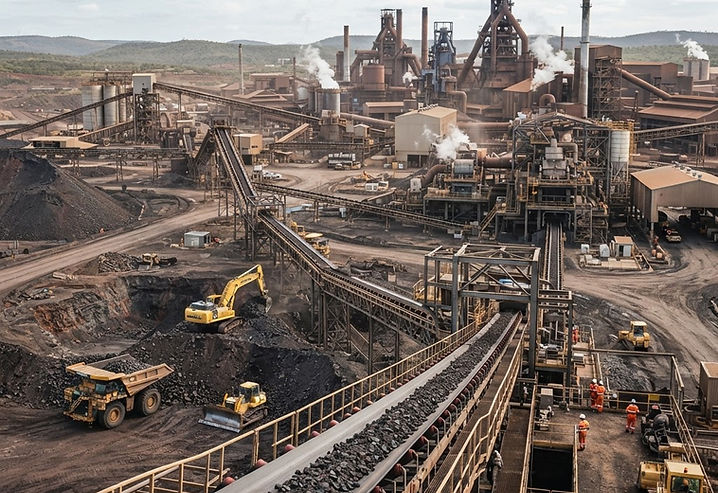
Australia’s biggest steelmaker and the nation’s largest iron ore producers have announced a new collaboration aimed to create a pathway to decarbonise steel production. Miners Rio Tinto and BHP sent teams from their Pilbara operations to join BlueScope at its Port Kembla terminal on Friday to make the announcement. Faced with the risk of falling behind the global effort to decarbonise, the iron ore competitors and the steelmaker have been exploring the development of an electric smelting furnace for iron making. BlueScope chief executive Australia Tania Archibald said it was necessary to establish a commercially viable alternative to blast furnace steelmaking. “This is a major opportunity for Australia on a global scale as the broader heavy steel fabrication industry seek to decarbonise,” Ms. Archibald said. The project faces many challenges aside from the technology development; it will also be dependent on securing a substantial gas supply and, ultimately, green hydrogen.
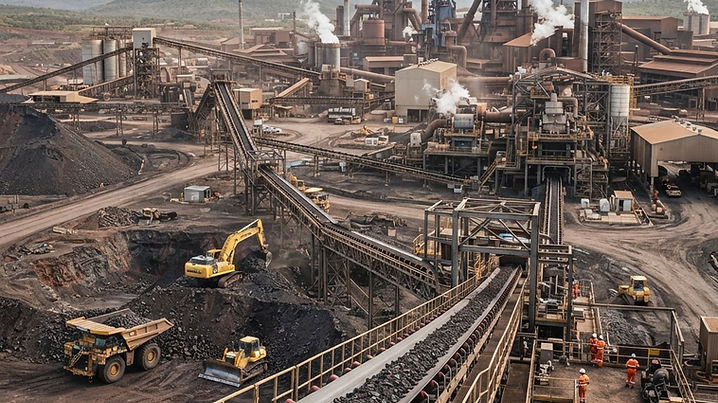
More than 70% of global steel is produced using blast furnaces, around 20 per cent through electric arc furnaces and around five per cent as Direct Reduced Iron (DRI). DRI is seen as the most promising pathway to decarbonise iron and steelmaking. In the DRI process, gas and ultimately green hydrogen replace coal. BlueScope believed natural gas based DRI could reduce steelmaking emissions by around 60 per cent, while green hydrogen based DRI would take the process towards zero. DRI technology is also dependent on high grade ores for steel fabrication in mining and Australia’s ore supply in the Pilbara is disadvantaged by high levels of impurities. Ms Archibald said the three companies would work together in attempt to find a way to process the low and medium grade ores. “The challenge is to evolve the technology to unlock the ability to consume Australia’s abundant Pilbara ores in the DRI process,” she said. “This is really about how we crack the code with using the Pilbara ores in a DRI process.” She said the collaboration was critically important for BlueScope’s net zero 2050 goal.
Iron ore is Australia’s biggest export, and Rio Tinto Iron Ore chief executive Simon Trott said the announcement was key to securing the industries into the long term. “With Central Queensland developing as Australia’s new green energy capital, we need to ensure that iron ore from Australia is well positioned for a green steel future,” Mr. Trott said. “Today is about making sure that that continues in the decades to come.” Incoming BHP Western Australia iron ore asset president Tim Day said the project was critical for Australia. “If we can crack it, it is actually going to be a significant uptick for mining plant and equipment, the Pilbara, Western Australia and Australia in general and the globe,” Mr. Day said. The steelmaker said a key advantage for the project would be adapting technology from its electric smelting furnace processing DRI in New Zealand. Locations around the country will be considered, including BlueScope’s Port Kembla steel mill. The companies said the cost was not resolved and would be shared equally amongst the partners, with the project also designed to allow additional partners including the federal government. The companies believed the pilot facility could be commissioned by 2027.
K999 Thailand carries out work of this kind through its mining equipment fabrication team in Rayong.
Further reading
Follow tender opportunities across the wider market on Project Atlas Intel.
How K999 can help
Equipment built for the pit
Mining work is where wear life decides the maintenance budget, so the articles in this section feed directly into how we detail chutes, hoppers, conveyors and wear parts.
Mining equipment and conveyors- 01
Mining equipment and conveyor fabrication with replaceable wear liners and hardfaced contact surfaces.
- 02
Chutes, hoppers and transfer structures detailed for access, lifting and shutdown windows.
- 03
Site assembly planning from the Sattahip yard for modules that ship by sea.
More on Mining & Resources
All articles

Request for quotation
Need fabricated steel to that standard?
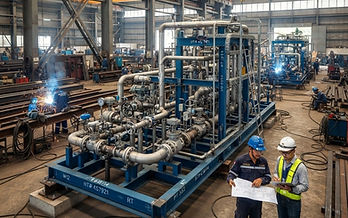
Every enquiry is answered within 48 hours by our estimating team in Rayong. The priced quotation follows once drawings, quantities and standards are confirmed. Stainless steel fabrication, structural steel fabrication, pipe spooling, pressure vessels, steel tanks, mining equipment and conveyors, pig launchers, chutes and hoppers, send the package and we will price it.
Before you request a quotation
Steel fabrication quotation questions
What structural steel fabrication, pressure vessel and pipe spooling packages cost, what to send with an enquiry, and how delivery to site works.
Structural steel fabrication is priced from the section and plate tonnage, the detailing and drawing hours, welding and fitting manhours, NDT requirements, blast and coating system, packing and freight. Grade matters as much as weight: AS/NZS, ASTM, JIS and BS sections carry different mill prices, and heavy built up members take longer than rolled sections. Our Rayong workshop produces around 10,000 tonnes of structural steel fabrication a year, so a clear bill of materials is usually enough to price. Send the drawings and we answer within 48 hours; the priced quotation follows once quantities, standards and delivery dates are confirmed.
For steel fabrication work, send the drawings or IFC package, a bill of materials with material grades, the welding and NDT requirements, the coating specification, the delivery port and your site dates. Add the inspection and test plan, any third party inspection requirement, and whether trial assembly or match marking is needed. Where drawings are still in progress, a scope list with sizes, quantities and duty is enough to start, and the estimate is refined once the final package arrives. Every enquiry is answered within 48 hours, and the priced quotation is issued after scope, standards and quantities are confirmed.
Yes. Pressure vessel fabrication is carried out to ASME Section VIII Div. 1 under our ASME U stamp No. 43,462, or to AS/NZS and BS where the project specifies, covering separators, air receivers, water drums, waste heat recovery units and pig launchers. Steel tanks for fuel, biofuel, chemical, water and food duty are designed in house with our E Tank programme to API, ASME, BS and AS/NZS. Because structural steel, vessels, tanks and their supports are built in the same workshops, one enquiry can cover the vessel package, the tank package and the structural steel that carries them, with a single coating and documentation system and one shipment.
Steel fabrication Australia packages are scheduled from a 33,000 m2 Rayong yard with an 80,000 m2 assembly yard inside Sattahip port, so fabrication, trial assembly, blasting, coating and packing run in one place. Programme length depends on tonnage, material lead times, the coating system and inspection scope, and it is confirmed with the quotation. We quote FOB Laem Chabang, Map Ta Phut or Sattahip, or CIF and DAP to your Australian port, with packing lists, weights, lifting points and a data book per shipment. Staged deliveries can follow your site erection sequence instead of shipping everything at once.
There is no fixed minimum. Pipe spooling Australia packages run at up to 3,000 diameter inches per shift on SCH.40, from a single replacement spool to a full plant piping scope, with spools numbered, X rayed where specified and coated to match erection order. Mining equipment fabrication covers chutes, hoppers, ore bins, transfer towers and conveyor structures with Bisalloy, Hardox, rubber lining or hardfacing fitted in house, from one wear liner set to modules of up to 2,500 tonnes assembled at Sattahip. Send the scope list and we will tell you what the smallest sensible batch is for your programme.