


Manufacturing & Technology
Role of Energy Management Systems in Smart Factories
Metering by process exposes where electricity and gas are consumed, turning plant energy into a managed cost line.
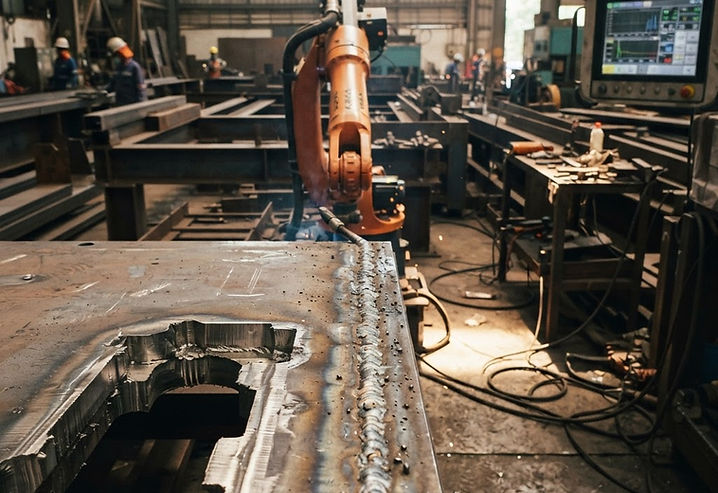
Smart factories involve many moving parts. Consequently, they need tools to manage these multiple systems and ensure the facility operates as efficiently as possible. Energy management solutions are among the most crucial of these platforms. These systems include Internet of Things (IoT) sensors, smart transformers, connected HVAC equipment and cloud computing platforms to control it all. While implementing this technology can be daunting, it plays several key roles in steel fabrication Australia. So, what are the use cases and benefits of energy management systems in smart factories? This blog will look to explore this topic in greater detail.
Reducing Costs
Like many Industry 4.0 applications, smart energy management systems minimize ongoing expenses. These devices adjust factory power consumption based on real time conditions to maintain productivity while using as little energy as possible. As a result, they produce significant savings. A recent study quantified these savings by measuring smart utility meter performance across 87 factories. Energy consumption fell by an average of 7.46% in each facility, resulting in over $41 million in savings across the entire company. While every organization needs to optimize cash flows and cost reductions may not be that substantial, any amount of savings is always welcome.
Optimizing Maintenance
Energy management systems also play an important role in equipment maintenance. Manufacturers spend $222 billion on maintenance on average, either from direct repair costs or from breakdown related losses. However, those relying more on predictive maintenance experience 52.7% less unplanned downtime, and this is where energy management comes in. Predictive maintenance relies on real time equipment health data to alert manufacturers to emerging issues. Temperatures or electrical signals falling outside of normal parameters are common examples. Consequently, manufacturers enable more proactive maintenance practices by analysing electrical use through smart energy systems.

Ensuring Uptime
Similarly, smart energy management helps manufacturers maintain productivity. Proactive maintenance is part of this endeavour, but IoT energy systems also support it by ensuring more reliable power supplies. A constant energy source is the most basic requirement to avoid the $5 million in losses a single hour of downtime can cause. Smart energy infrastructure can respond to changing conditions in real time to ensure consistent power levels. As a result, sensitive manufacturing equipment can keep working at the same level even amid grid issues. This reliability is particularly important as the nation’s energy network ages or goes through disruption from required upgrades.
Improving Safety
Manufacturers must also consider their energy systems’ impact on employee safety. Exposure to harmful substances or environments is the leading cause of nonfatal injuries in manufacturing, and equipment related incidents are the second most common cause. Energy management affects both. Consistent power delivery to equipment prevents safety affecting malfunctions, such as sudden stoppages or out of control speeds. Smart energy solutions can prevent electrical shocks by identifying hazards as soon as they arise and automatically cutting off power to the affected area. Predictive maintenance will also make mining plant and equipment Australia or electrical related risks less common.
Enabling Sustainability
Energy management systems are also key to ensuring sustainability. Pressure is mounting for manufacturers to embrace more eco friendly business practices, and energy efficiency is a key part of this movement. The industry’s electrical consumption alone produces 285 million metric tons of greenhouse gas emissions annually. Smart energy systems support sustainability in steel manufacturing by minimizing facilities’ electrical consumption. These savings reduce energy related emissions and make renewable power a more viable option. Renewables are intermittent, but smart infrastructure can move excess electricity in and out of storage according to real time needs to balance supply and demand discrepancies.
The Finale
As factories embrace more technologies, they will need more control over their energy usage to ensure everything works correctly. Smart energy management systems provide that control. Energy management systems improve manufacturers’ finances, uptime, safety, sustainability and reliability. Those advantages are hard to ignore, so it will not take long for the industry to react and these technologies to become standard. Getting ahead of that trend is key to retaining a competitive edge in this market.
K999 Thailand carries out work of this kind through its steel fabrication capability team in Rayong.
Further reading
Follow Critical Minerals across the wider market on Project Atlas Intel.
Calculation tool
Run the numbers for this yourself with the free metric to imperial converter from Engineering Toolbox Australia. Treat the result as a first check, then confirm the final design with your engineer.
How K999 can help
How we apply the technology
Faster quoting, cleaner detailing and fewer site surprises come from the tools we use before the first cut, and the articles here explain how those tools change the work.
3D modelling and detailing- 01
3D modelling and shop detailing that resolves clashes before fabrication starts.
- 02
Fibre laser cutting for plate profiles, with nesting planned around the rolling schedule.
- 03
Project management that reports progress against the same model the client approved.
More on Manufacturing & Technology
All articles

Request for quotation
Need fabricated steel to that standard?
Every enquiry is answered within 48 hours by our estimating team in Rayong. The priced quotation follows once drawings, quantities and standards are confirmed. Stainless steel fabrication, structural steel fabrication, pipe spooling, pressure vessels, steel tanks, mining equipment and conveyors, pig launchers, chutes and hoppers, send the package and we will price it.
Before you request a quotation
Steel fabrication quotation questions
What structural steel fabrication, pressure vessel and pipe spooling packages cost, what to send with an enquiry, and how delivery to site works.
Structural steel fabrication is priced from the section and plate tonnage, the detailing and drawing hours, welding and fitting manhours, NDT requirements, blast and coating system, packing and freight. Grade matters as much as weight: AS/NZS, ASTM, JIS and BS sections carry different mill prices, and heavy built up members take longer than rolled sections. Our Rayong workshop produces around 10,000 tonnes of structural steel fabrication a year, so a clear bill of materials is usually enough to price. Send the drawings and we answer within 48 hours; the priced quotation follows once quantities, standards and delivery dates are confirmed.
For steel fabrication work, send the drawings or IFC package, a bill of materials with material grades, the welding and NDT requirements, the coating specification, the delivery port and your site dates. Add the inspection and test plan, any third party inspection requirement, and whether trial assembly or match marking is needed. Where drawings are still in progress, a scope list with sizes, quantities and duty is enough to start, and the estimate is refined once the final package arrives. Every enquiry is answered within 48 hours, and the priced quotation is issued after scope, standards and quantities are confirmed.
Yes. Pressure vessel fabrication is carried out to ASME Section VIII Div. 1 under our ASME U stamp No. 43,462, or to AS/NZS and BS where the project specifies, covering separators, air receivers, water drums, waste heat recovery units and pig launchers. Steel tanks for fuel, biofuel, chemical, water and food duty are designed in house with our E Tank programme to API, ASME, BS and AS/NZS. Because structural steel, vessels, tanks and their supports are built in the same workshops, one enquiry can cover the vessel package, the tank package and the structural steel that carries them, with a single coating and documentation system and one shipment.
Steel fabrication Australia packages are scheduled from a 33,000 m2 Rayong yard with an 80,000 m2 assembly yard inside Sattahip port, so fabrication, trial assembly, blasting, coating and packing run in one place. Programme length depends on tonnage, material lead times, the coating system and inspection scope, and it is confirmed with the quotation. We quote FOB Laem Chabang, Map Ta Phut or Sattahip, or CIF and DAP to your Australian port, with packing lists, weights, lifting points and a data book per shipment. Staged deliveries can follow your site erection sequence instead of shipping everything at once.
There is no fixed minimum. Pipe spooling Australia packages run at up to 3,000 diameter inches per shift on SCH.40, from a single replacement spool to a full plant piping scope, with spools numbered, X rayed where specified and coated to match erection order. Mining equipment fabrication covers chutes, hoppers, ore bins, transfer towers and conveyor structures with Bisalloy, Hardox, rubber lining or hardfacing fitted in house, from one wear liner set to modules of up to 2,500 tonnes assembled at Sattahip. Send the scope list and we will tell you what the smallest sensible batch is for your programme.