


Manufacturing & Technology
Role of Ergonomics in Manufacturing
Lift aids, bench heights and job rotation reduce strain injuries, which are among the costliest absences in heavy fabrication.
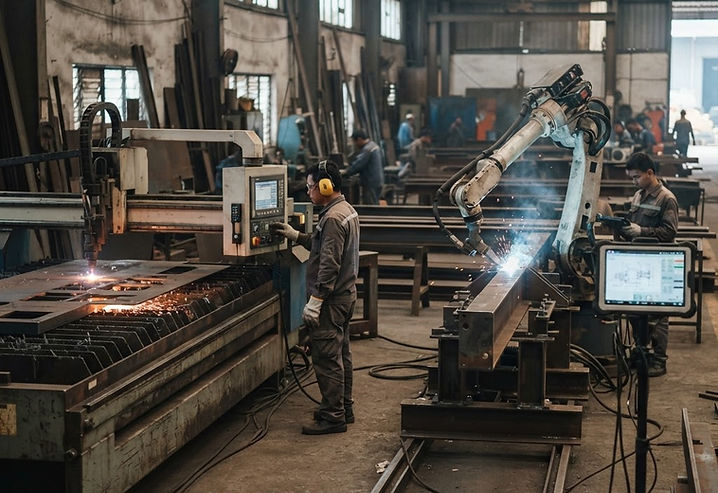
Ergonomics, the scientific discipline that studies human efficiency in work environments, plays a pivotal role in the manufacturing industry. The aim of ergonomics is to design tasks, workspaces, and equipment to fit the employee, thereby reducing risk factors and fostering efficient work postures. This focus on “fitting the job to the worker” can have far reaching impacts, driving improvements in safety, productivity, and job satisfaction. This blog will discuss the role of ergonomics in greater detail.
Consequences of Poor Ergonomics in Manufacturing
Poor ergonomics leads to increased safety hazards in metal fabrication. It is often characterized by conditions that force workers into awkward postures, mandate heavy lifting, or require extended periods of repetitive motion. These conditions affect worker comfort and can result in musculoskeletal disorders (MSDs). MSDs encompass various inflammatory and degenerative conditions affecting the muscles, ligaments, tendons, and bones especially when dealing with large products like pressure vessels. Common MSDs in the manufacturing sector include carpal tunnel syndrome, back pain, and other repetitive strain injuries. MSDs pose a real and significant threat to productivity and worker health. They can lead to extended absences, diminished productivity, and, in severe cases, permanent disability. Moreover, they contribute to increased healthcare costs and can create a ripple effect, impacting morale and leading to further inefficiencies in the manufacturing environment.
OSHA’s Recognition and Impact of Ergonomic Solutions

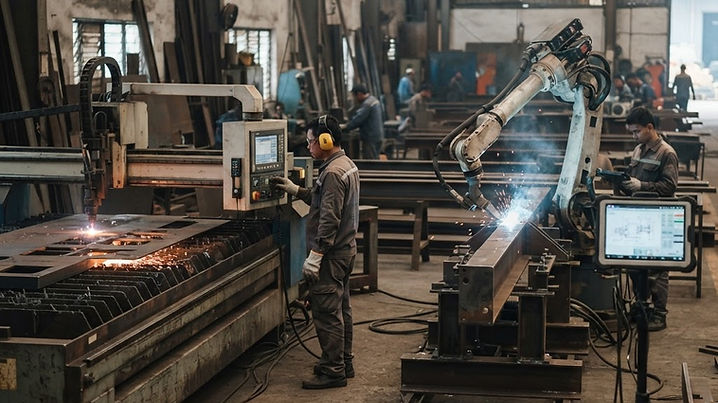
The Occupational Safety and Health Administration (OSHA) recognizes the importance of ergonomics in mitigating factory operations risks as part of quality management in metal fabrication. As a key component of its mission to ensure safe and healthful working conditions, OSHA promotes implementing ergonomic solutions to prevent workplace injuries. In fact, many of their guidelines directly address ergonomics in manufacturing, emphasizing the need for ergonomic design, regular risk assessments, and appropriate interventions. With recent programs such as the new National Emphasis Program, their commitment to ergonomics has been renewed. Implementing ergonomic solutions, such as equipment redesign, workstation modifications, or administrative controls like job rotation, can lead to substantial improvements. These changes not only minimize the risk of injury but also foster a healthier work environment. They can improve workers’ comfort, reduce fatigue and strain, and boost job satisfaction. In turn, these improvements often lead to enhanced productivity and a lower incidence of MSDs, creating a win win situation for employees and employers alike.
Influence of Automation on Workstation Design
Automation has been a defining trend in the manufacturing industry in 2024 and continues to reshape the landscape of workstation design. Automation in intralogistics, including robots, conveyors, and lifting aids, can take over tasks that traditionally required heavy lifting or manual material handling, thereby reducing the ergonomic risk for workers. Robots, for example, can handle repetitive tasks that require precision and speed, thus eliminating the risk of repetitive motion injuries. Conveyors can transport heavy loads across long distances within the factory, reducing the need for manual material handling that could result in overexertion and back injuries. Moreover, the application of lifting aids in the assembly line can help with heavy lifting tasks, thus mitigating the risk of overexertion and back pain. By leveraging these automation technologies, businesses can significantly reduce the physical demands placed on their workers. In turn, this reduces the risk of ergonomic injuries, improves the overall work environment, and ultimately enhances productivity.
Looking Ahead
The future of ergonomics in manufacturing looks promising. With advancements in technology, like wearable sensors, AI, and more sophisticated automation systems, manufacturers can further improve the work environment and reduce the incidence of workplace injuries. Incorporating ergonomics into the pipe fabrication Australia process is not just about compliance or avoiding injuries, it is about fostering a culture that values employee well being. By doing so, manufacturers can realize the many benefits of ergonomics, from enhanced productivity to improved employee morale.
K999 Thailand carries out work of this kind through its steel fabrication capability team in Rayong.
Further reading
Follow EPC contractors in the United States across the wider market on Project Atlas Intel.
How K999 can help
How we apply the technology
Faster quoting, cleaner detailing and fewer site surprises come from the tools we use before the first cut, and the articles here explain how those tools change the work.
3D modelling and detailing- 01
3D modelling and shop detailing that resolves clashes before fabrication starts.
- 02
Fibre laser cutting for plate profiles, with nesting planned around the rolling schedule.
- 03
Project management that reports progress against the same model the client approved.
More on Manufacturing & Technology
All articles

Request for quotation
Need fabricated steel to that standard?
Every enquiry is answered within 48 hours by our estimating team in Rayong. The priced quotation follows once drawings, quantities and standards are confirmed. Stainless steel fabrication, structural steel fabrication, pipe spooling, pressure vessels, steel tanks, mining equipment and conveyors, pig launchers, chutes and hoppers, send the package and we will price it.
Before you request a quotation
Steel fabrication quotation questions
What structural steel fabrication, pressure vessel and pipe spooling packages cost, what to send with an enquiry, and how delivery to site works.
Structural steel fabrication is priced from the section and plate tonnage, the detailing and drawing hours, welding and fitting manhours, NDT requirements, blast and coating system, packing and freight. Grade matters as much as weight: AS/NZS, ASTM, JIS and BS sections carry different mill prices, and heavy built up members take longer than rolled sections. Our Rayong workshop produces around 10,000 tonnes of structural steel fabrication a year, so a clear bill of materials is usually enough to price. Send the drawings and we answer within 48 hours; the priced quotation follows once quantities, standards and delivery dates are confirmed.
For steel fabrication work, send the drawings or IFC package, a bill of materials with material grades, the welding and NDT requirements, the coating specification, the delivery port and your site dates. Add the inspection and test plan, any third party inspection requirement, and whether trial assembly or match marking is needed. Where drawings are still in progress, a scope list with sizes, quantities and duty is enough to start, and the estimate is refined once the final package arrives. Every enquiry is answered within 48 hours, and the priced quotation is issued after scope, standards and quantities are confirmed.
Yes. Pressure vessel fabrication is carried out to ASME Section VIII Div. 1 under our ASME U stamp No. 43,462, or to AS/NZS and BS where the project specifies, covering separators, air receivers, water drums, waste heat recovery units and pig launchers. Steel tanks for fuel, biofuel, chemical, water and food duty are designed in house with our E Tank programme to API, ASME, BS and AS/NZS. Because structural steel, vessels, tanks and their supports are built in the same workshops, one enquiry can cover the vessel package, the tank package and the structural steel that carries them, with a single coating and documentation system and one shipment.
Steel fabrication Australia packages are scheduled from a 33,000 m2 Rayong yard with an 80,000 m2 assembly yard inside Sattahip port, so fabrication, trial assembly, blasting, coating and packing run in one place. Programme length depends on tonnage, material lead times, the coating system and inspection scope, and it is confirmed with the quotation. We quote FOB Laem Chabang, Map Ta Phut or Sattahip, or CIF and DAP to your Australian port, with packing lists, weights, lifting points and a data book per shipment. Staged deliveries can follow your site erection sequence instead of shipping everything at once.
There is no fixed minimum. Pipe spooling Australia packages run at up to 3,000 diameter inches per shift on SCH.40, from a single replacement spool to a full plant piping scope, with spools numbered, X rayed where specified and coated to match erection order. Mining equipment fabrication covers chutes, hoppers, ore bins, transfer towers and conveyor structures with Bisalloy, Hardox, rubber lining or hardfacing fitted in house, from one wear liner set to modules of up to 2,500 tonnes assembled at Sattahip. Send the scope list and we will tell you what the smallest sensible batch is for your programme.