


Fabrication
Sampling - Developing Innovation in Fabrication
First article sampling proves a fabrication method before batch release, catching tooling and tolerance issues at the cheapest point.
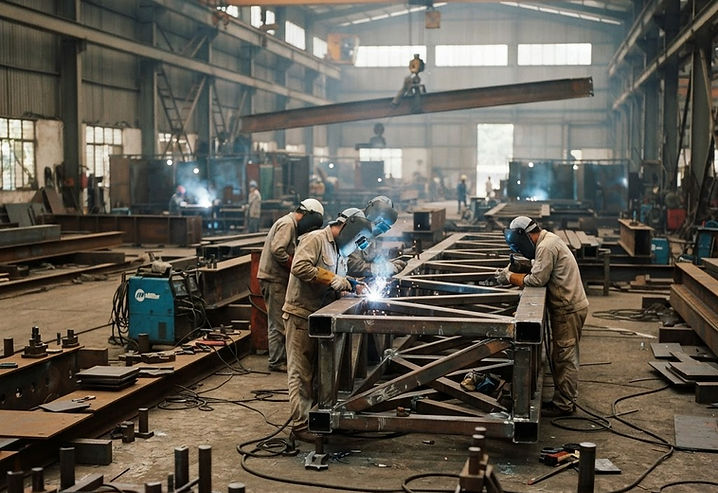
Have you ever listened to a song and felt there was something familiar about it? If yes, it is likely that you noticed the use of sampling, or interpolation. Sampling is the reuse of tracks or snippets from a previous recording in a new recording. There are challenges to sampling, namely licensing and theft, however it can give a new lease of life to old, but worthwhile, records. There is a parallel between sampling in the music industry and sampling in metal fabrication where creativity can be nourished with the reuse of tried and true, successful fabrication practices. This blog will look to explore this topic in greater detail.
Smart Manufacturing and Advantage of Work Sampling
Smart Manufacturing or Industry 4.0 gives designers and heavy steel fabrication companies a comprehensive view of materials, processes, equipment, and products, letting us capture experiences across the product lifecycle. This gives the operations manager the unprecedented ability to study and learn from previous product design and development successes and failures. In many instances, managers can reuse common components and processes to leverage learned successes while allowing greater focus on innovation in new and unexplored topics. These processes often include variability but do not necessarily require innovation. With the fabrication team’s prior captured experiences, the common processes and techniques can be reused with the modifications that best suit the firm’s manufacturing demands.
Work sampling is a process to improve workforce productivity by obtaining a complete and accurate picture of the productive time and idle time of the machines in a specific production area. This knowledge is then used to improve production times of machines, equipment and personnel going forward and to reduce costs for laser cutting, electricity etc. Also, there is a lesser chance of work sampling to produce skewed or incomplete results since the entire operations floor would be covered as part of the sampling process and the resultant quality of data would make manipulation difficult.
Importance of Data

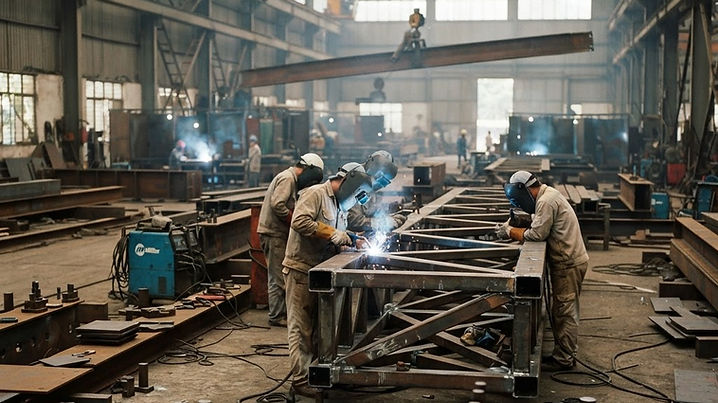
It is important to note that learning and reuse of experience demands that manufacturers collect and maintain quality, relevant data. If a question on data is posed to manufacturing companies, there will be some firms that will speak proudly about the volume of data they possess. This is like bragging that one’s garage is so full you that there is no space for a new car in it. The relevant point here should be the focus on the quality, governance, and oversight of data. Too many organizations hoard data but fail to support its quality, relevance, and usefulness and this can also lead to cyber crime attacks on manufacturing firms. Obsolete and poor quality data only drains resources and decreases processing efficiency, which gives rise to longer lead times. Also, if a manufacturer decides to use sampling and relies on earlier data which is incorrect and unwieldy, the results are likely to be disastrous depending on the scale and function of the implemented project (e.g., development of water tanks ). Data resources available to capture manufacturing experiences across a product’s lifecycle include:
IoT enabled monitors.
Design and simulation data.
Enterprise resource planning.
Product lifecycle management.
Manufacturing execution systems.
Closing Comments
It can thus be seen that, similar to the music industry, manufacturers can find meaningful information in their past experiences. Making these experiences useful requires discipline in capturing and maintaining thorough, quality information about the firm’s design and operations. With knowledge, skill, and creativity, an operations manager can use these experiences as a foundation for efficient innovation to take on future manufacturing challenges!
Further reading
Follow the major European markets across the wider market on Project Atlas Intel.
How K999 can help
Fabrication capacity behind the article
Articles in this section describe work we run every week in Rayong: cutting, forming, welding and assembly, under cover and in the yard, with the documentation that goes with it.
Structural steel fabrication- 01
Two workshops totalling more than 33,000 m² plus an 80,000 m² assembly yard at Sattahip.
- 02
Structural steel fabrication to 10,000 tonnes a year, with the largest single module built at 2,500 tonnes.
- 03
Blast, prime and paint before dispatch, with dimensional reports issued against the approved drawings.
More on Fabrication
All articles


Request for quotation
Need fabricated steel to that standard?
Every enquiry is answered within 48 hours by our estimating team in Rayong. The priced quotation follows once drawings, quantities and standards are confirmed. Stainless steel fabrication, structural steel fabrication, pipe spooling, pressure vessels, steel tanks, mining equipment and conveyors, pig launchers, chutes and hoppers, send the package and we will price it.
Before you request a quotation
Steel fabrication quotation questions
What structural steel fabrication, pressure vessel and pipe spooling packages cost, what to send with an enquiry, and how delivery to site works.
Structural steel fabrication is priced from the section and plate tonnage, the detailing and drawing hours, welding and fitting manhours, NDT requirements, blast and coating system, packing and freight. Grade matters as much as weight: AS/NZS, ASTM, JIS and BS sections carry different mill prices, and heavy built up members take longer than rolled sections. Our Rayong workshop produces around 10,000 tonnes of structural steel fabrication a year, so a clear bill of materials is usually enough to price. Send the drawings and we answer within 48 hours; the priced quotation follows once quantities, standards and delivery dates are confirmed.
For steel fabrication work, send the drawings or IFC package, a bill of materials with material grades, the welding and NDT requirements, the coating specification, the delivery port and your site dates. Add the inspection and test plan, any third party inspection requirement, and whether trial assembly or match marking is needed. Where drawings are still in progress, a scope list with sizes, quantities and duty is enough to start, and the estimate is refined once the final package arrives. Every enquiry is answered within 48 hours, and the priced quotation is issued after scope, standards and quantities are confirmed.
Yes. Pressure vessel fabrication is carried out to ASME Section VIII Div. 1 under our ASME U stamp No. 43,462, or to AS/NZS and BS where the project specifies, covering separators, air receivers, water drums, waste heat recovery units and pig launchers. Steel tanks for fuel, biofuel, chemical, water and food duty are designed in house with our E Tank programme to API, ASME, BS and AS/NZS. Because structural steel, vessels, tanks and their supports are built in the same workshops, one enquiry can cover the vessel package, the tank package and the structural steel that carries them, with a single coating and documentation system and one shipment.
Steel fabrication Australia packages are scheduled from a 33,000 m2 Rayong yard with an 80,000 m2 assembly yard inside Sattahip port, so fabrication, trial assembly, blasting, coating and packing run in one place. Programme length depends on tonnage, material lead times, the coating system and inspection scope, and it is confirmed with the quotation. We quote FOB Laem Chabang, Map Ta Phut or Sattahip, or CIF and DAP to your Australian port, with packing lists, weights, lifting points and a data book per shipment. Staged deliveries can follow your site erection sequence instead of shipping everything at once.
There is no fixed minimum. Pipe spooling Australia packages run at up to 3,000 diameter inches per shift on SCH.40, from a single replacement spool to a full plant piping scope, with spools numbered, X rayed where specified and coated to match erection order. Mining equipment fabrication covers chutes, hoppers, ore bins, transfer towers and conveyor structures with Bisalloy, Hardox, rubber lining or hardfacing fitted in house, from one wear liner set to modules of up to 2,500 tonnes assembled at Sattahip. Send the scope list and we will tell you what the smallest sensible batch is for your programme.