


Fabrication
Sheet Metal Defects and Solutions - Part I
Cracks, orange peel and dimensional drift in formed sheet, and the material and tooling causes behind each defect.
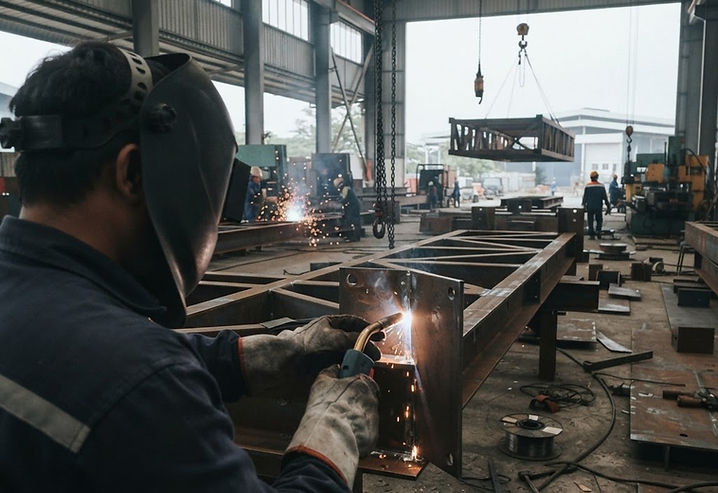
Due to the high degree of precision involved in steel fabrication processes, poorly executed operations can give rise to a significant number of defects. These defects need to be rectified during production so that resiliency and durability of the finished product is not compromised and quality is not adversely impacted. Each sheet metal process comes with its own unique set of defects and this also corresponds to the type of end product being developed. This blog is the first of a two blog series which will look to discuss the defects generated due to two common metal operations, bending and welding, and corresponding solutions in this regard.
Bending Defects and Solutions
Sheet metal bending is an important sheet metal process due to its ability to draw a variety of part geometries without tooling, as well as fast lead times, high repeatability, and automation in metal fabrication. It also allows products to be manufactured from one piece of metal, utilizing heat induction bending services, thus resulting in lower costs, improved strength, and simplified assembly.
Cracks in the bending angle, The two major reasons for cracks in a drawn part are poor metal pliability and having a very small bending radius. To avoid the occurrence of these defects, usage of softer metals, or increasing metal malleability by heating and then cooling slowly is recommended.
Hole deformation, The location of the hole can be deformed by the friction between the concave die surface and the outside surface during the bending process. Such defects can be resolved by raising the pressure of the ejector plate or by adding a hard spot on this plate to increase the friction between the aforementioned surfaces so that they do not slide.

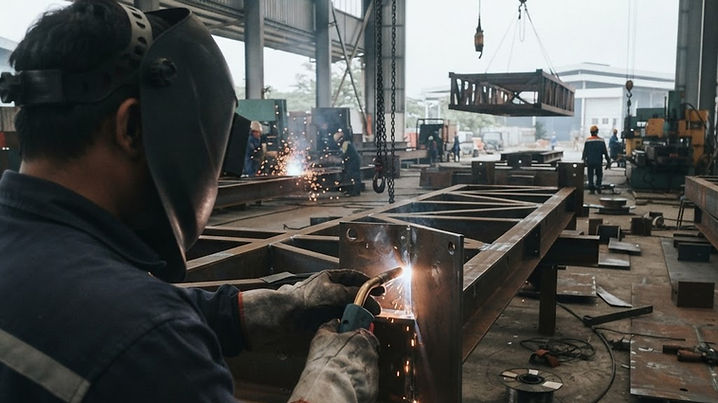
Uneven concave piece bottom, These defects are usually caused by the use of an ejection device, due to insufficient force or uneven material. Therefore, it is required to ensure that the ejection device is set to the correct measure of force, or removed altogether and that the material is evenly leveled before the start of the bending process.
Welding Defects and Solutions
Welding is commonly used to join two or more pieces of sheet metal together. Be it MIG Welding (Gas Metal Arc Welding), TIG Welding (Gas Tungsten Arc Welding), Shielded Metal Arc Welding (SMAW), or Flux Cored Arc Welding (FCAW), several defects may be faced if the proper technique is not used.
Spatter, Spatter occurs when molten material droplets are formed near the welding arc. It is usually caused by high currents, wrong polarity, or insufficient gas shielding. To avoid spatter, reduction of the current and arc length and increase of the torch to plate angle is suggested. Cleaning the gas nozzle can also help.
Porosity, These defects are caused when hydrogen, nitrogen, and oxygen are absorbed in the molten weld pool. Upon solidification, they are trapped in the weld. Grease, moisture, paint, and rust can also cause porosity. To prevent this issue, ensuring the plate edges are clean and dry, using fresh welding materials, and checking the welding torch for leakages can help.
Undercut, Undercut occurs when high voltages or long arc lengths are used. Utilizing an incorrect electrode or one that is too large relative to the thickness, as well as a fast travel speed of the torch, can also cause this problem. Such defects can be averted by using an electrode that is just the right size, ensuring that the torch is moved slowly, and avoiding holding near the vertical plate if a horizontal fillet weld is being made.
Conclusion
It is evident that sheet metal plays a vital role in the manufacturing industry due to its ability to undergo a variety of processes. In practice, it is not possible to achieve a “zero error” production, hence it is vital that defects are rectified immediately so that the final product fits business requirements. Ultimately, quality is the holy grail for the customer, and customer is king!
Further reading
Follow project owner and operator data across the wider market on Project Atlas Intel.
Calculation tool
Run the numbers for this yourself with the free engineering calculator australia from Engineering Toolbox Australia. Treat the result as a first check, then confirm the final design with your engineer.
How K999 can help
Fabrication capacity behind the article
Articles in this section describe work we run every week in Rayong: cutting, forming, welding and assembly, under cover and in the yard, with the documentation that goes with it.
Structural steel fabrication- 01
Two workshops totalling more than 33,000 m² plus an 80,000 m² assembly yard at Sattahip.
- 02
Structural steel fabrication to 10,000 tonnes a year, with the largest single module built at 2,500 tonnes.
- 03
Blast, prime and paint before dispatch, with dimensional reports issued against the approved drawings.
More on Fabrication
All articles


Request for quotation
Need fabricated steel to that standard?
Every enquiry is answered within 48 hours by our estimating team in Rayong. The priced quotation follows once drawings, quantities and standards are confirmed. Stainless steel fabrication, structural steel fabrication, pipe spooling, pressure vessels, steel tanks, mining equipment and conveyors, pig launchers, chutes and hoppers, send the package and we will price it.
Before you request a quotation
Steel fabrication quotation questions
What structural steel fabrication, pressure vessel and pipe spooling packages cost, what to send with an enquiry, and how delivery to site works.
Structural steel fabrication is priced from the section and plate tonnage, the detailing and drawing hours, welding and fitting manhours, NDT requirements, blast and coating system, packing and freight. Grade matters as much as weight: AS/NZS, ASTM, JIS and BS sections carry different mill prices, and heavy built up members take longer than rolled sections. Our Rayong workshop produces around 10,000 tonnes of structural steel fabrication a year, so a clear bill of materials is usually enough to price. Send the drawings and we answer within 48 hours; the priced quotation follows once quantities, standards and delivery dates are confirmed.
For steel fabrication work, send the drawings or IFC package, a bill of materials with material grades, the welding and NDT requirements, the coating specification, the delivery port and your site dates. Add the inspection and test plan, any third party inspection requirement, and whether trial assembly or match marking is needed. Where drawings are still in progress, a scope list with sizes, quantities and duty is enough to start, and the estimate is refined once the final package arrives. Every enquiry is answered within 48 hours, and the priced quotation is issued after scope, standards and quantities are confirmed.
Yes. Pressure vessel fabrication is carried out to ASME Section VIII Div. 1 under our ASME U stamp No. 43,462, or to AS/NZS and BS where the project specifies, covering separators, air receivers, water drums, waste heat recovery units and pig launchers. Steel tanks for fuel, biofuel, chemical, water and food duty are designed in house with our E Tank programme to API, ASME, BS and AS/NZS. Because structural steel, vessels, tanks and their supports are built in the same workshops, one enquiry can cover the vessel package, the tank package and the structural steel that carries them, with a single coating and documentation system and one shipment.
Steel fabrication Australia packages are scheduled from a 33,000 m2 Rayong yard with an 80,000 m2 assembly yard inside Sattahip port, so fabrication, trial assembly, blasting, coating and packing run in one place. Programme length depends on tonnage, material lead times, the coating system and inspection scope, and it is confirmed with the quotation. We quote FOB Laem Chabang, Map Ta Phut or Sattahip, or CIF and DAP to your Australian port, with packing lists, weights, lifting points and a data book per shipment. Staged deliveries can follow your site erection sequence instead of shipping everything at once.
There is no fixed minimum. Pipe spooling Australia packages run at up to 3,000 diameter inches per shift on SCH.40, from a single replacement spool to a full plant piping scope, with spools numbered, X rayed where specified and coated to match erection order. Mining equipment fabrication covers chutes, hoppers, ore bins, transfer towers and conveyor structures with Bisalloy, Hardox, rubber lining or hardfacing fitted in house, from one wear liner set to modules of up to 2,500 tonnes assembled at Sattahip. Send the scope list and we will tell you what the smallest sensible batch is for your programme.