


Fabrication
Steel Sheet Fabrication, Welding, and Procurement in Construction
How sheet steel is specified, cut, formed and welded for construction packages, and where procurement decisions drive final fabrication cost.
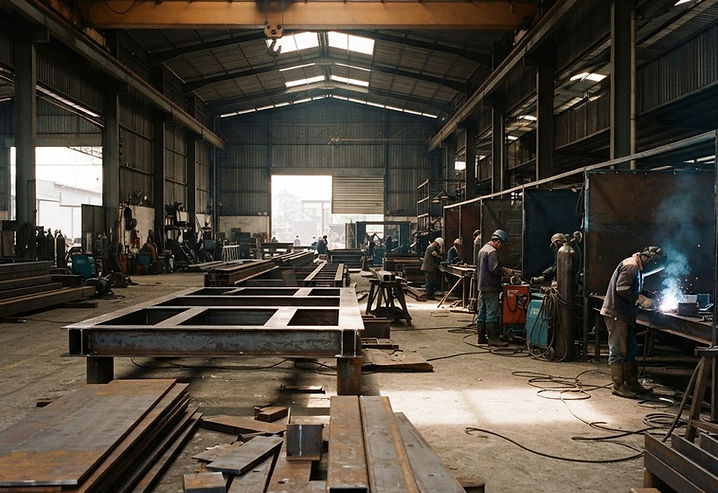
Understanding Steel Sheet Fabrication
Steel sheet fabrication is a critical process in the construction industry, encompassing a range of procedures that transform raw steel sheets into finished products ready for use in various construction applications. This process involves several techniques, including cutting, bending, welding, and assembling steel sheets into structural components and architectural features. Typically, a variety of steel sheets, such as carbon steel, stainless steel, and galvanized steel, are utilized, each offering distinct properties suited to different environments and load bearing requirements.
The significance of precision in fabrication cannot be overstated. Accurate measurements and cuts are essential to ensure that the fabricated components fit together seamlessly, which is vital for structural integrity and aesthetic appeal. The role of advancements in technology, notably CNC machining, has revolutionized the steel fabrication landscape. CNC machines allow for automated processes that enhance accuracy while also minimizing material wastage. This not only boosts the quality of metal works sheet metal but also enhances productivity, enabling sheet metal fabricators to meet demanding project timelines without compromising on quality.
Moreover, the industry is governed by several standards and regulations that are in place to ensure safety, durability, and performance. Adhering to these guidelines is paramount for steel sheet fabricators and construction professionals alike, as it guarantees that all products meet the necessary specifications. This diligence fosters trust among clients and stakeholders and ultimately leads to the successful completion of construction projects. As the construction demands grow and evolve, the continuous adaptation of techniques and compliance with industry regulations remain vital in the realm of steel sheet fabrication, contributing to innovative and safe building practices.
Welding Techniques and Best Practices
In the realm of steel sheet fabrication, choosing the appropriate welding technique is critical for achieving strong and visually appealing results. Various methods are employed by sheet metal fabricators to cater to specific project requirements. Among these, MIG (Metal Inert Gas), TIG (Tungsten Inert Gas), and arc welding are the most commonly used techniques, each with distinct advantages and drawbacks.
MIG welding is favored for its efficiency and speed, making it ideal for large scale production. This technique utilizes a continuous wire feed to create a weld, allowing for faster operations on thicker materials. However, while it is excellent for speed, it may result in less aesthetically pleasing welds compared to TIG. TIG welding, conversely, provides higher precision and control which enhances both the strength and appearance of the weld. This method is particularly suitable for thinner materials and applications where weld appearance is paramount. Though TIG welding can be slower and more labor intensive, the quality of the weld can often justify the extra time and effort.
Arc welding is another technique often used in metal works sheet metal, known for its ability to effectively join thicker materials. Its increase in heat generation leads to strong welds, although skill and experience are required to manage potential distortion and the risk of burns effectively.
To ensure quality welds, best practices must be adhered to. Proper material preparation is essential, which includes cleaning the surfaces to remove impurities that could compromise weld integrity. Safety measures, such as protective gear and adequate ventilation, are paramount to mitigate risks during the welding process. Furthermore, routine inspection techniques must be employed postwelding to assess the strength and appearance of the joints.

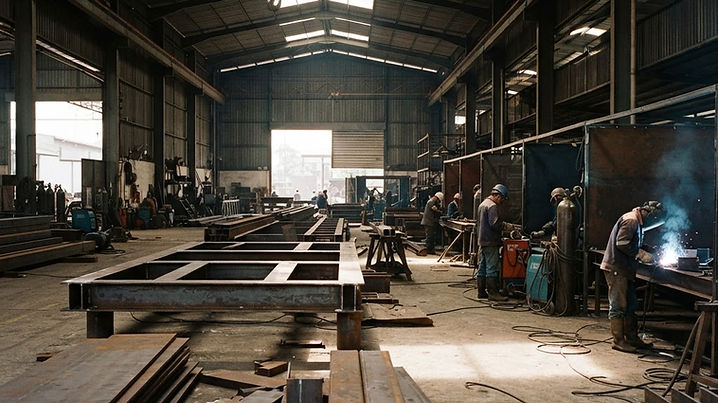
Real world applications showcase successful welding techniques, demonstrating that adherence to best practices leads to improved outcomes. For example, in commercial construction, structural steel employs both MIG and TIG welding to ensure joints meet the required safety standards while enhancing aesthetic appeal. By understanding the specific advantages and techniques, metal works sheet metal projects can benefit from optimal welding strategies.
Procurement Strategies for Steel Sheets
Procurement strategies for steel sheets are a pivotal component in the steel sheet fabrication process, influencing factors such as quality, cost, and timeliness in construction projects. When sourcing steel sheets from suppliers, it is essential to adopt a systematic approach that encompasses various critical criteria.
First and foremost, quality assurance should be prioritized. Ensuring that the steel sheets meet industry standards and specifications is vital for the overall success of any metal works sheet metal project. Suppliers must be evaluated based on their certifications, testing protocols, and the types of materials they offer. Conducting audits or requesting sample materials can also help verify their commitment to quality. This focus on quality is particularly important in construction, where structural integrity relies heavily on the materials used.
Another vital criterion is cost effectiveness. In the competitive realm of steel sheet procurement, it is imperative to compare quotes from various suppliers while also considering the longevity and durability of the materials provided. Cheaper options may lead to inferior quality, resulting in higher costs over time due to potential failures or rework. Thus, a thorough cost benefit analysis is indispensable when evaluating suppliers.
Delivery timelines play a crucial role in procurement strategy as well. In construction, project delays can lead to significant financial losses. Therefore, it is crucial to select suppliers who can guarantee prompt delivery of steel sheets. Establishing clear communication regarding timelines and expectations can mitigate risks associated with delays in supply.
Moreover, maintaining strong relationships with suppliers cannot be overstated. A collaborative approach fosters trust and can lead to better negotiation terms, improved services, and prioritized delivery schedules. Ultimately, effective procurement strategies must balance quality, cost, and reliability, ensuring the seamless flow of materials for steel sheet fabrication in construction projects.
Integrating Steel Fabrication into Construction Projects
Steel sheet fabrication plays a critical role in contemporary construction projects, influencing both the design and execution phases. The integration of fabricated steel elements requires a collaborative approach among architects, engineers, and contractors to ensure that each component aligns with project specifications. Effective communication and early involvement of all stakeholders facilitate seamless coordination and ultimately lead to successful outcomes. This collaboration allows for the identification of any issues that may arise during the design phase, such as load constraints or aesthetic considerations, which can be addressed before fabrication begins.
As projects transition into execution, the significance of sheet metal fabricators becomes evident. These specialists are responsible for producing custom metal works sheet metal products that meet precise specifications. Their expertise is essential for ensuring that fabricated pieces fit correctly within the overall structure. Coordination among the construction team is vital to address the logistics of transporting, handling, and installing these steel sheet fabrication elements on site. Delays or miscalculations at this stage can lead to increased costs and project timelines.
Challenges often encountered during the integration process include logistical issues such as material delivery and onsite assembly constraints. Effective project management strategies can mitigate these challenges by creating detailed schedules that align with the workflow of different trades involved. Additionally, embracing technological solutions such as Building Information Modeling (BIM) can enhance planning accuracy and assist in visualizing the integration of metal works sheet metal components within the construction project.
Several case studies illustrate successful integration techniques, showcasing projects where precise planning and collaboration led to timely completion and client satisfaction. These examples serve as valuable references for best practices in steel sheet fabrication integration, demonstrating that when project teams work cohesively, the resulting structures benefit from enhanced durability, functionality, and design precision.
K999 Thailand carries out work of this kind through its site construction and installation team in Rayong.
Further reading
Follow pipeline projects in the United States across the wider market on Project Atlas Intel.
How K999 can help
Fabrication capacity behind the article
Articles in this section describe work we run every week in Rayong: cutting, forming, welding and assembly, under cover and in the yard, with the documentation that goes with it.
Structural steel fabrication- 01
Two workshops totalling more than 33,000 m² plus an 80,000 m² assembly yard at Sattahip.
- 02
Structural steel fabrication to 10,000 tonnes a year, with the largest single module built at 2,500 tonnes.
- 03
Blast, prime and paint before dispatch, with dimensional reports issued against the approved drawings.
More on Fabrication
All articles


Request for quotation
Need fabricated steel to that standard?
Every enquiry is answered within 48 hours by our estimating team in Rayong. The priced quotation follows once drawings, quantities and standards are confirmed. Stainless steel fabrication, structural steel fabrication, pipe spooling, pressure vessels, steel tanks, mining equipment and conveyors, pig launchers, chutes and hoppers, send the package and we will price it.
Before you request a quotation
Steel fabrication quotation questions
What structural steel fabrication, pressure vessel and pipe spooling packages cost, what to send with an enquiry, and how delivery to site works.
Structural steel fabrication is priced from the section and plate tonnage, the detailing and drawing hours, welding and fitting manhours, NDT requirements, blast and coating system, packing and freight. Grade matters as much as weight: AS/NZS, ASTM, JIS and BS sections carry different mill prices, and heavy built up members take longer than rolled sections. Our Rayong workshop produces around 10,000 tonnes of structural steel fabrication a year, so a clear bill of materials is usually enough to price. Send the drawings and we answer within 48 hours; the priced quotation follows once quantities, standards and delivery dates are confirmed.
For steel fabrication work, send the drawings or IFC package, a bill of materials with material grades, the welding and NDT requirements, the coating specification, the delivery port and your site dates. Add the inspection and test plan, any third party inspection requirement, and whether trial assembly or match marking is needed. Where drawings are still in progress, a scope list with sizes, quantities and duty is enough to start, and the estimate is refined once the final package arrives. Every enquiry is answered within 48 hours, and the priced quotation is issued after scope, standards and quantities are confirmed.
Yes. Pressure vessel fabrication is carried out to ASME Section VIII Div. 1 under our ASME U stamp No. 43,462, or to AS/NZS and BS where the project specifies, covering separators, air receivers, water drums, waste heat recovery units and pig launchers. Steel tanks for fuel, biofuel, chemical, water and food duty are designed in house with our E Tank programme to API, ASME, BS and AS/NZS. Because structural steel, vessels, tanks and their supports are built in the same workshops, one enquiry can cover the vessel package, the tank package and the structural steel that carries them, with a single coating and documentation system and one shipment.
Steel fabrication Australia packages are scheduled from a 33,000 m2 Rayong yard with an 80,000 m2 assembly yard inside Sattahip port, so fabrication, trial assembly, blasting, coating and packing run in one place. Programme length depends on tonnage, material lead times, the coating system and inspection scope, and it is confirmed with the quotation. We quote FOB Laem Chabang, Map Ta Phut or Sattahip, or CIF and DAP to your Australian port, with packing lists, weights, lifting points and a data book per shipment. Staged deliveries can follow your site erection sequence instead of shipping everything at once.
There is no fixed minimum. Pipe spooling Australia packages run at up to 3,000 diameter inches per shift on SCH.40, from a single replacement spool to a full plant piping scope, with spools numbered, X rayed where specified and coated to match erection order. Mining equipment fabrication covers chutes, hoppers, ore bins, transfer towers and conveyor structures with Bisalloy, Hardox, rubber lining or hardfacing fitted in house, from one wear liner set to modules of up to 2,500 tonnes assembled at Sattahip. Send the scope list and we will tell you what the smallest sensible batch is for your programme.