


Fabrication
Steel Supply Constraints Reshape Global Fabrication Schedules
Global steel lead times are reaching record highs, shifting the primary project risk from price to material availability. Fabricators and project owners must prioritize early procurement and robust documentation to mitigate schedule delays in 2027.
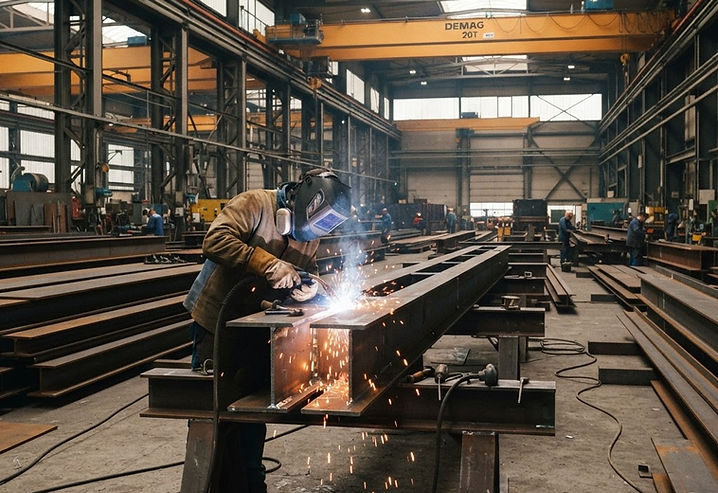
The global steel market is currently facing a period of extreme supply tightness that is fundamentally altering how industrial projects are planned and executed. As of late 2026, lead times for critical structural sections and heavy plate have stretched to levels that rival or exceed the historic constraints seen in 2021. For fabricators and engineering contractors, this shift means that securing tonnage has become a more significant challenge than managing unit costs.
Why is material availability now the primary project risk?
Major steel mills are struggling to maintain consistent production schedules, often opting to roll specific sizes only during limited windows. This lack of certainty means that even if a project is initially scheduled, orders can be pushed back by weeks or months if raw material supplies fluctuate. When mills cannot confirm rolling dates, fabrication shops cannot commit to firm production start times. This uncertainty cascades downstream, forcing EPC contractors to manage schedule risks that were previously considered manageable contingencies.
How should buyers and fabricators adapt to these constraints?
Buyers must move away from traditional price-focused procurement strategies and prioritize schedule assurance. It is essential to involve fabricators in the design phase as early as possible to align structural requirements with actual mill availability. When specific grades are unavailable, teams must have pre-approved substitution routes in place to prevent shop stalls. This is particularly critical for complex projects involving stainless steel fabrication where material traceability and certification are non-negotiable.
To protect project timelines, procurement teams should consider the following steps:
- Confirm mill-origin documentation and EN 10204 3.1 certificate requirements at the enquiry stage.
- Request specific mill lead times for required grades rather than relying on general market availability statements.
- Build explicit delivery float and material escalation provisions into commercial contracts.
- Establish a documented substitution approval process before awarding fabrication packages.
As the industry navigates these supply challenges, the focus must remain on transparency and early collaboration. By treating material procurement as a critical path item rather than a post-award task, project owners can better insulate their schedules from the volatility of the current market. K999 remains committed to working closely with our partners to navigate these supply chain complexities. We continue to prioritize clear communication and rigorous planning to ensure that project milestones are met despite the ongoing global steel shortages.
For the calculations behind this topic, the free engineering calculator australia from Engineering Toolbox Australia is a practical starting point.
Calculation tool
Run the numbers for this yourself with the free engineering calculator australia from Engineering Toolbox Australia. Treat the result as a first check, then confirm the final design with your engineer.
How K999 can help
Fabrication capacity behind the article
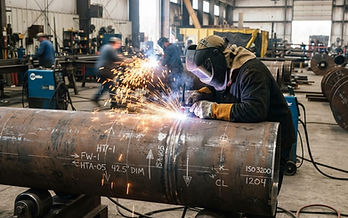
Articles in this section describe work we run every week in Rayong: cutting, forming, welding and assembly, under cover and in the yard, with the documentation that goes with it.
Structural steel fabrication- 01
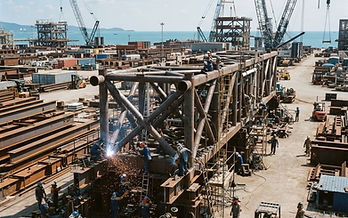
Two workshops totalling more than 33,000 m² plus an 80,000 m² assembly yard at Sattahip.
- 02
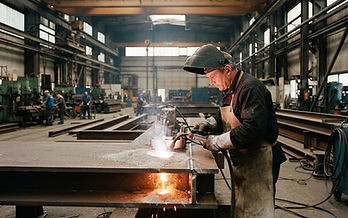
Structural steel fabrication to 10,000 tonnes a year, with the largest single module built at 2,500 tonnes.
- 03
Blast, prime and paint before dispatch, with dimensional reports issued against the approved drawings.
More on Fabrication
All articles


Request for quotation
Need fabricated steel to that standard?
Every enquiry is answered within 48 hours by our estimating team in Rayong. The priced quotation follows once drawings, quantities and standards are confirmed. Stainless steel fabrication, structural steel fabrication, pipe spooling, pressure vessels, steel tanks, mining equipment and conveyors, pig launchers, chutes and hoppers, send the package and we will price it.
Before you request a quotation
Steel fabrication quotation questions
What structural steel fabrication, pressure vessel and pipe spooling packages cost, what to send with an enquiry, and how delivery to site works.
Structural steel fabrication is priced from the section and plate tonnage, the detailing and drawing hours, welding and fitting manhours, NDT requirements, blast and coating system, packing and freight. Grade matters as much as weight: AS/NZS, ASTM, JIS and BS sections carry different mill prices, and heavy built up members take longer than rolled sections. Our Rayong workshop produces around 10,000 tonnes of structural steel fabrication a year, so a clear bill of materials is usually enough to price. Send the drawings and we answer within 48 hours; the priced quotation follows once quantities, standards and delivery dates are confirmed.
For steel fabrication work, send the drawings or IFC package, a bill of materials with material grades, the welding and NDT requirements, the coating specification, the delivery port and your site dates. Add the inspection and test plan, any third party inspection requirement, and whether trial assembly or match marking is needed. Where drawings are still in progress, a scope list with sizes, quantities and duty is enough to start, and the estimate is refined once the final package arrives. Every enquiry is answered within 48 hours, and the priced quotation is issued after scope, standards and quantities are confirmed.
Yes. Pressure vessel fabrication is carried out to ASME Section VIII Div. 1 under our ASME U stamp No. 43,462, or to AS/NZS and BS where the project specifies, covering separators, air receivers, water drums, waste heat recovery units and pig launchers. Steel tanks for fuel, biofuel, chemical, water and food duty are designed in house with our E Tank programme to API, ASME, BS and AS/NZS. Because structural steel, vessels, tanks and their supports are built in the same workshops, one enquiry can cover the vessel package, the tank package and the structural steel that carries them, with a single coating and documentation system and one shipment.
Steel fabrication Australia packages are scheduled from a 33,000 m2 Rayong yard with an 80,000 m2 assembly yard inside Sattahip port, so fabrication, trial assembly, blasting, coating and packing run in one place. Programme length depends on tonnage, material lead times, the coating system and inspection scope, and it is confirmed with the quotation. We quote FOB Laem Chabang, Map Ta Phut or Sattahip, or CIF and DAP to your Australian port, with packing lists, weights, lifting points and a data book per shipment. Staged deliveries can follow your site erection sequence instead of shipping everything at once.
There is no fixed minimum. Pipe spooling Australia packages run at up to 3,000 diameter inches per shift on SCH.40, from a single replacement spool to a full plant piping scope, with spools numbered, X rayed where specified and coated to match erection order. Mining equipment fabrication covers chutes, hoppers, ore bins, transfer towers and conveyor structures with Bisalloy, Hardox, rubber lining or hardfacing fitted in house, from one wear liner set to modules of up to 2,500 tonnes assembled at Sattahip. Send the scope list and we will tell you what the smallest sensible batch is for your programme.