


Manufacturing & Technology
Strategies to Reduce Manufacturing Cycle Times
Batch sizing, setup reduction and material staging compress lead times without adding shifts or machines.
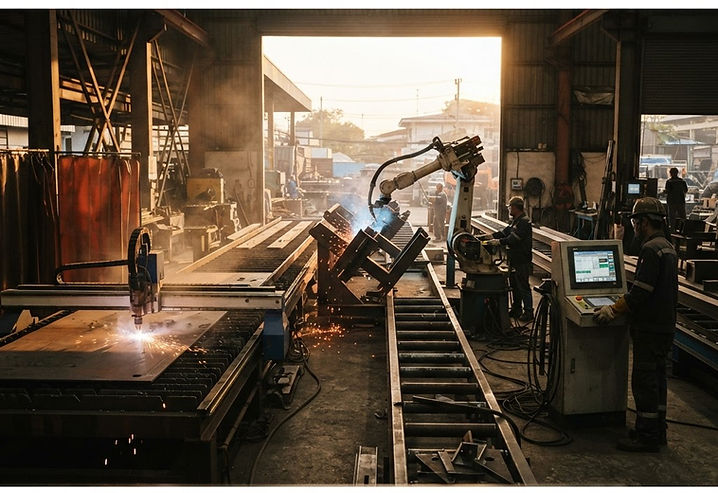
While many industries are now operating as they did prior to the COVID 19 pandemic, manufacturers continue to grapple with complex challenges like global supply chain issues, unpredictable product demand spikes, and delivery driver shortages. These challenges have extended lead times, which, in turn, has placed significant pressure on companies to improve manufacturing cycle times. This has resulted in manufacturers finding ways to streamline their processes, automate manual functions, and redesign products so they are easier to produce. So, what are some of the strategies followed by manufacturers to reduce cycle times? Let us dive deeper into this topic through this blog.
Accessing and Centralizing Data
Manufacturing plants have traditionally been structured in a way that facilitates operations but results in information silos and a lack of transparency. Data is frequently stored in multiple sources such as warehouse and inventory management, manufacturing resource planning (MRP), manufacturing execution systems (MES), and edge computing. Data management is one of the top manufacturing technology trends and it provides an end to end view that can guide decision making and optimize a manufacturing operation. Increasingly, manufacturers are creating a data fabric to centralize their data. This virtualized architecture layer and tool set connect data across disparate systems and creates a unified view. It prevents unauthorized access with unique security controls and automatically optimizes data for performance. Additionally, teams can connect systems without being slowed down by the complexity of traditional data programming, which leads to rapid application development.
Maximize Machine Uptime

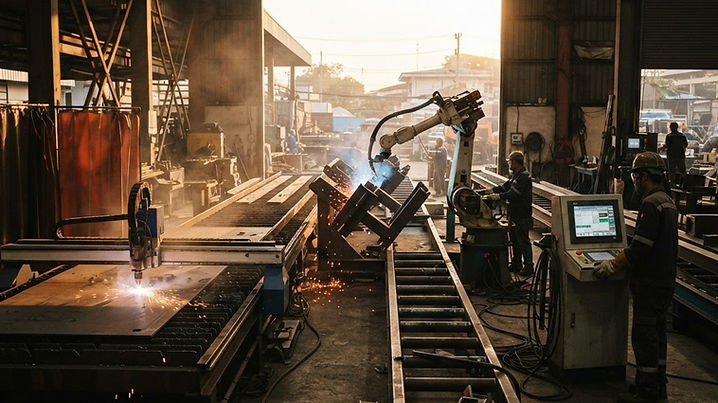
A significant contributor to manufacturing cycle time spikes is critical machines going offline. Improving machine uptime builds overall equipment effectiveness (OEE), which measures the amount of manufacturing time that is productive. Machine uptime depends on the quality of the maintenance of the equipment. Some manufacturers only fix machines when they break, others schedule regular maintenance, and some focus on proactive defect elimination. The most effective method is predictive maintenance, such as using AI in video surveillance to improve productivity. Connecting machines and IoT devices allow manufacturers to access data and use analytics to identify flagging performance issues and wear and tear before machines fail. It also ensures maintenance technicians focus on the most urgent problems. With predictive maintenance, manufacturers can identify performance declines before they negatively impact cycle times. It also increases the lifespan of machinery, which reduces the cost of equipment replacement. Predictive maintenance reduces breakdowns by an average of 70% and maintenance costs by 25%.
Identify and Eliminate Bottlenecks
Performance slowdowns can be caused by manual processes, poor work floor layout, or a design that could be improved to simplify product assembly. Even something as simple as extended pipe fabrication setup times can increase operational costs and bottleneck time to market. The two critical components to consider are process stability and process speed. Stability refers to the standardization of a process, how much variability is evident? If the average cycle time varies significantly, it will be challenging to make process improvements and accurately measure speed, or efficiency enhancements, so high variability must be the first issue addressed.
Once the average cycle time is stable, performance lags caused by bottlenecks or process deviation can be identified. One way to accomplish this is by utilizing process mining tools. Process mining examines how a process occurs in the real world from log data in software systems. For example, running process mining on water tank development process might identify that employees manually enter data that could be automated or captured via an application form or a photo scan. Or it might be observed that a single handoff between employee stations takes unnecessary additional time. This could indicate the need to change the operations floor layout to shave a few seconds off each handoff (which results in significant savings over time).
Concluding Remarks
While manufacturers can develop strategies to improve floor operations, the correct and appropriate implementation of these strategies is the differentiator between visible improvements and sunk costs. Also, a holistic approach is generally necessary to reduce manufacturing cycle time and quality remains king, after all, reduced cycle times do not help if quality is compromised!
K999 Thailand carries out work of this kind through its steel fabrication capability team in Rayong.
Further reading
Follow engineering procurement construction companies in Singapore across the wider market on Project Atlas Intel.
How K999 can help
How we apply the technology
Faster quoting, cleaner detailing and fewer site surprises come from the tools we use before the first cut, and the articles here explain how those tools change the work.
3D modelling and detailing- 01
3D modelling and shop detailing that resolves clashes before fabrication starts.
- 02
Fibre laser cutting for plate profiles, with nesting planned around the rolling schedule.
- 03
Project management that reports progress against the same model the client approved.
More on Manufacturing & Technology
All articles

Request for quotation
Need fabricated steel to that standard?
Every enquiry is answered within 48 hours by our estimating team in Rayong. The priced quotation follows once drawings, quantities and standards are confirmed. Stainless steel fabrication, structural steel fabrication, pipe spooling, pressure vessels, steel tanks, mining equipment and conveyors, pig launchers, chutes and hoppers, send the package and we will price it.
Before you request a quotation
Steel fabrication quotation questions
What structural steel fabrication, pressure vessel and pipe spooling packages cost, what to send with an enquiry, and how delivery to site works.
Structural steel fabrication is priced from the section and plate tonnage, the detailing and drawing hours, welding and fitting manhours, NDT requirements, blast and coating system, packing and freight. Grade matters as much as weight: AS/NZS, ASTM, JIS and BS sections carry different mill prices, and heavy built up members take longer than rolled sections. Our Rayong workshop produces around 10,000 tonnes of structural steel fabrication a year, so a clear bill of materials is usually enough to price. Send the drawings and we answer within 48 hours; the priced quotation follows once quantities, standards and delivery dates are confirmed.
For steel fabrication work, send the drawings or IFC package, a bill of materials with material grades, the welding and NDT requirements, the coating specification, the delivery port and your site dates. Add the inspection and test plan, any third party inspection requirement, and whether trial assembly or match marking is needed. Where drawings are still in progress, a scope list with sizes, quantities and duty is enough to start, and the estimate is refined once the final package arrives. Every enquiry is answered within 48 hours, and the priced quotation is issued after scope, standards and quantities are confirmed.
Yes. Pressure vessel fabrication is carried out to ASME Section VIII Div. 1 under our ASME U stamp No. 43,462, or to AS/NZS and BS where the project specifies, covering separators, air receivers, water drums, waste heat recovery units and pig launchers. Steel tanks for fuel, biofuel, chemical, water and food duty are designed in house with our E Tank programme to API, ASME, BS and AS/NZS. Because structural steel, vessels, tanks and their supports are built in the same workshops, one enquiry can cover the vessel package, the tank package and the structural steel that carries them, with a single coating and documentation system and one shipment.
Steel fabrication Australia packages are scheduled from a 33,000 m2 Rayong yard with an 80,000 m2 assembly yard inside Sattahip port, so fabrication, trial assembly, blasting, coating and packing run in one place. Programme length depends on tonnage, material lead times, the coating system and inspection scope, and it is confirmed with the quotation. We quote FOB Laem Chabang, Map Ta Phut or Sattahip, or CIF and DAP to your Australian port, with packing lists, weights, lifting points and a data book per shipment. Staged deliveries can follow your site erection sequence instead of shipping everything at once.
There is no fixed minimum. Pipe spooling Australia packages run at up to 3,000 diameter inches per shift on SCH.40, from a single replacement spool to a full plant piping scope, with spools numbered, X rayed where specified and coated to match erection order. Mining equipment fabrication covers chutes, hoppers, ore bins, transfer towers and conveyor structures with Bisalloy, Hardox, rubber lining or hardfacing fitted in house, from one wear liner set to modules of up to 2,500 tonnes assembled at Sattahip. Send the scope list and we will tell you what the smallest sensible batch is for your programme.