


Industry News
Structural Metal Product Manufacturing Industry in Australia
An overview of Australia's structural steel manufacturing base, its capacity limits and its reliance on imported packages.
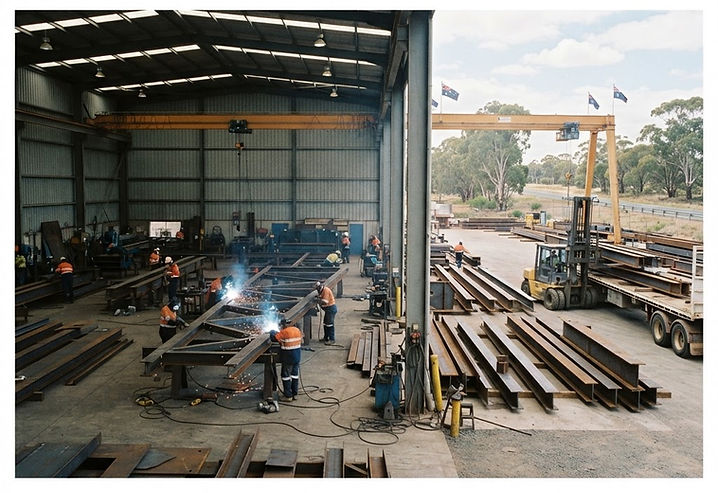
As the world emerges from the debilitating effects of the COVID 19 pandemic, an important and interesting feature to be analyzed is whether manufacturing demand would increase proportionately, specifically metal and steel fabrication and manufacturing. Focusing on Australia specifically, the demand trend can be analyzed to better understand whether the beleaguered metal manufacturing industry is likely to receive a boost in coming months. This article will dive deeper in this topic and will cover the likely drivers of this industry from an Australian perspective.
Demand from Building Construction
Commercial and Industrial: The commercial and industrial building construction market is an important source of demand for a range of structural metal products, such as metal security doors and shutters, staircases, balustrades and curtain walls. Greater activity in these construction markets boosts demand for many industry products, for example the use of I beams in structural steel construction. Demand from commercial and industrial building construction in Australia has fallen in 2020 to 21, threatening industry performance.
Residential: Residential building construction represents one of the most important sources of demand for structural metal products. House and apartment building construction generates demand for a range of industry products, including window and door frames, fly screen doors, metal balustrades, and shutters and garage doors. Demand from residential building construction in Australia has declined in 2020 to 21, thus negatively affecting the industry.
Downstream Construction Markets

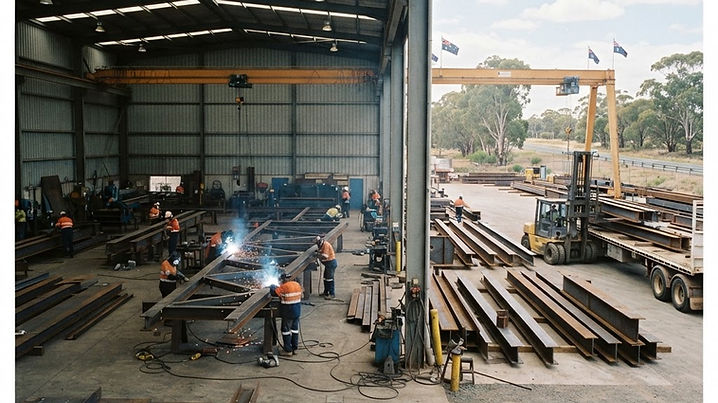
Declining demand from the residential building and heavy and civil engineering construction markets has weakened industry expansion over the past five years. Firms that construct buildings such as houses, apartments, hotels, offices and factories require a range of structural metal products such as garage doors, curtain walls, pressure vessels and metal door and window systems. Demand from the Australian Institutional Building Construction industry has increased over the five years, largely due to PPP funded buildings for education, healthcare and aged care. Institutional buildings such as schools, libraries, courthouses and hospitals are important markets for metal door and window systems, awnings and shutters. However, growth in commercial building construction activity has made this market more significant to the industry compared with institutional building.
Industry Competition
Industry products are forecast to become increasingly vulnerable to competition from substitute products over the next five years. Substitute products, such as structural timber, aluminum and plastic, share many desirable characteristics with steel products, while also being lighter and often cheaper. These substitute products are increasingly gaining acceptance in Australia as a more efficient and aesthetically pleasing alternative to steel products. Consequently, the rising popularity of these products is projected to negatively affect demand for industry products over the period.
Key Markets
Residential building construction is expected to drive the Australian metal product manufacturing industry expansion over the next few years, with the construction of houses boosting demand for garage doors, windows and door frames. Furthermore, the construction of large multiunit apartments and townhouses in major capital cities, such as Melbourne and Sydney, is also anticipated to support demand for the industry. Rising disposable incomes are also forecast to increase customer demand, which may be a challenge for the fabrication and manufacturing industries. Since the industry is highly fragmented, small scale manufacturers tend to focus on specific product segments rather than diversifying their manufacturing capacity.
Conclusion
A question may arise as to how nonbuilding construction companies in Australia contribute to the metal product manufacturing industry? While there is a demand for industry products for mineral and energy infrastructure construction, transportation construction etc., declining capital expenditure spends has reduced industry revenue in recent years. The demand from the residential building construction market remains the strongest driver of industry performance and it is hoped that a recovery of demand in this sector comes sooner rather than later!
Further reading
Follow tenders across the entire Middle East across the wider market on Project Atlas Intel.
How K999 can help
Where we fit the story
Trade policy, commodity cycles and energy markets decide when projects move, and they decide what gets fabricated. These articles collect the changes we track for our clients.
See our projects- 01
Work delivered for mining, energy, processing and manufacturing clients across Australia and Southeast Asia.
- 02
Fabrication in Rayong with assembly at Sattahip, shipping from Laem Chabang and Map Ta Phut.
- 03
Enquiries answered within 48 hours by our estimating team.
More on Industry News
All articles


Request for quotation
Need fabricated steel to that standard?
Every enquiry is answered within 48 hours by our estimating team in Rayong. The priced quotation follows once drawings, quantities and standards are confirmed. Stainless steel fabrication, structural steel fabrication, pipe spooling, pressure vessels, steel tanks, mining equipment and conveyors, pig launchers, chutes and hoppers, send the package and we will price it.
Before you request a quotation
Steel fabrication quotation questions
What structural steel fabrication, pressure vessel and pipe spooling packages cost, what to send with an enquiry, and how delivery to site works.
Structural steel fabrication is priced from the section and plate tonnage, the detailing and drawing hours, welding and fitting manhours, NDT requirements, blast and coating system, packing and freight. Grade matters as much as weight: AS/NZS, ASTM, JIS and BS sections carry different mill prices, and heavy built up members take longer than rolled sections. Our Rayong workshop produces around 10,000 tonnes of structural steel fabrication a year, so a clear bill of materials is usually enough to price. Send the drawings and we answer within 48 hours; the priced quotation follows once quantities, standards and delivery dates are confirmed.
For steel fabrication work, send the drawings or IFC package, a bill of materials with material grades, the welding and NDT requirements, the coating specification, the delivery port and your site dates. Add the inspection and test plan, any third party inspection requirement, and whether trial assembly or match marking is needed. Where drawings are still in progress, a scope list with sizes, quantities and duty is enough to start, and the estimate is refined once the final package arrives. Every enquiry is answered within 48 hours, and the priced quotation is issued after scope, standards and quantities are confirmed.
Yes. Pressure vessel fabrication is carried out to ASME Section VIII Div. 1 under our ASME U stamp No. 43,462, or to AS/NZS and BS where the project specifies, covering separators, air receivers, water drums, waste heat recovery units and pig launchers. Steel tanks for fuel, biofuel, chemical, water and food duty are designed in house with our E Tank programme to API, ASME, BS and AS/NZS. Because structural steel, vessels, tanks and their supports are built in the same workshops, one enquiry can cover the vessel package, the tank package and the structural steel that carries them, with a single coating and documentation system and one shipment.
Steel fabrication Australia packages are scheduled from a 33,000 m2 Rayong yard with an 80,000 m2 assembly yard inside Sattahip port, so fabrication, trial assembly, blasting, coating and packing run in one place. Programme length depends on tonnage, material lead times, the coating system and inspection scope, and it is confirmed with the quotation. We quote FOB Laem Chabang, Map Ta Phut or Sattahip, or CIF and DAP to your Australian port, with packing lists, weights, lifting points and a data book per shipment. Staged deliveries can follow your site erection sequence instead of shipping everything at once.
There is no fixed minimum. Pipe spooling Australia packages run at up to 3,000 diameter inches per shift on SCH.40, from a single replacement spool to a full plant piping scope, with spools numbered, X rayed where specified and coated to match erection order. Mining equipment fabrication covers chutes, hoppers, ore bins, transfer towers and conveyor structures with Bisalloy, Hardox, rubber lining or hardfacing fitted in house, from one wear liner set to modules of up to 2,500 tonnes assembled at Sattahip. Send the scope list and we will tell you what the smallest sensible batch is for your programme.