


Manufacturing & Technology
Sustainable Auto Manufacturing Using 3D Printing
Additive manufacturing trims tooling and lightweights parts, cutting material waste across automotive production.
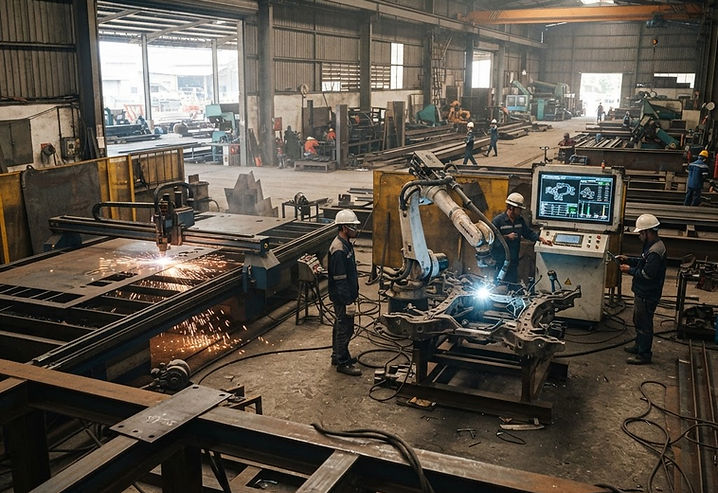
The automanufacturing industry does not have a reputation for being environmentally friendly. Still, many manufacturers have embraced sustainability initiatives to comply with increasing regulations or meet the demands of an eco conscious market. As this trend continues, 3D printing could become a game changing tool in the steel fabrication Australia sector. Also known as “additive manufacturing,” 3D printing is most popular as a consumer hobby, but the technology has extensive applications in the industrial world. Capitalizing on these use cases could provide the catalyst some carmakers need to become more sustainable. This blog will look to deep dive into this topic in greater detail.
Need for Sustainable Auto Manufacturing
The excitement around 3D printing in the automotive industry is easier to understand in light of growing sustainability needs. While vehicles themselves may be the most obvious target for emissions reductions in this sector, the production side needs improvement, too. Manufacturing a single vehicle produces 10 metric tons of CO 2 equivalent, even for electric and hybrid cars. That figure must go down if the industry hopes to meet the ever rising number of government emissions regulations. While many current laws focus on direct vehicle emissions, more general targets may necessitate production stage improvements. In alignment with the future of automotive technology, the world is transitioning to electric vehicles (EVs) and these emissions will stand out more. Consequently, automakers that do not reduce their manufacturing carbon footprints could fall out of public favour. They may face regulatory penalties as environmental laws grow. Even if that does not happen, they risk losing business as consumers become more climate aware.
3D Printing in Auto Manufacturing Today

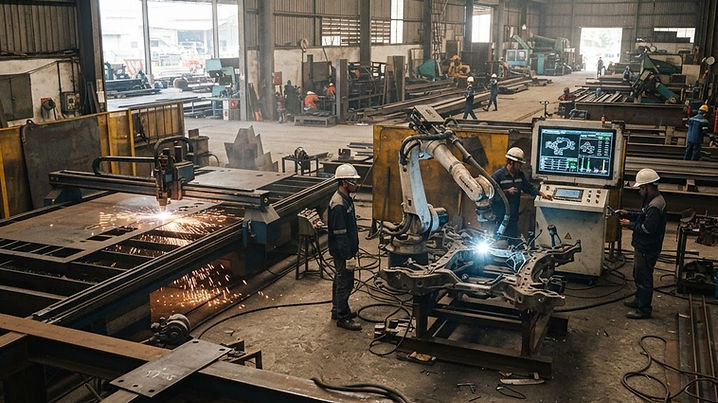
3D printing has a wide range of applications, such as in medical manufacturing, and the advantages of 3D printing for sustainable automanufacturing are more than just theoretical. Several carmakers are already experimenting with the concept. Ford has invested in several 3D printing solutions, including large scale metal printing and 3D printed electronic circuitry. Bringing this process to more areas of car manufacturing will lower each vehicle’s production emissions while maximizing the efficiency benefits of 3D printing. BMW has embraced 3D printing as a way to expand personalization. Customers can design their own panels and accessories, which it then prints and installs. While these adjustments are chiefly cosmetic, similar solutions could help custom vehicles become more sustainable to meet eco conscious buyers’ needs. Automakers’ investments in 3D printing are growing in scale, too. Volkswagen hopes to print 100,000 parts annually by 2025 after installing a new industrial scale additive manufacturing and pipe fabrication Australia process. These components are lighter and less energy intensive than their steel predecessors, resulting in significant sustainability improvements.
Future of Automotive 3D Printing
As more vehicle manufacturers embrace additive manufacturing, this will lead to increased opportunities for battery EVs and metal fabrication. It will become possible to print larger components, not just small parts and circuitry. Some manufacturers may even be able to 3D print entire vehicles in the future. Novel filaments will also emerge as this technology advances. These new materials could provide increased strength to weight ratios, improve recyclability, or reduce material sourcing related emissions. Improvements like these would yield substantial carbon footprint reductions across the automotive supply chain.
Looking Ahead
3D printing’s full range of possibilities and the timeline in which these innovations will occur is still uncertain. This technology is still new, especially in an industrial context. However, it already shows impressive potential for sustainable vehicle manufacturing. As pressures rise for the transportation industry to become more eco friendly, 3D printing will become an increasingly popular solution. While it is not the only step toward sustainable vehicles, it is a crucial one. Automakers must jump on this opportunity today to ensure a greener tomorrow!
K999 Thailand carries out work of this kind through its steel fabrication capability team in Rayong.
Further reading
Follow public procurement tenders in Europe across the wider market on Project Atlas Intel.
Calculation tool
Run the numbers for this yourself with the free storage tank articles from Engineering Toolbox Australia. Treat the result as a first check, then confirm the final design with your engineer.
How K999 can help
How we apply the technology
Faster quoting, cleaner detailing and fewer site surprises come from the tools we use before the first cut, and the articles here explain how those tools change the work.
3D modelling and detailing- 01
3D modelling and shop detailing that resolves clashes before fabrication starts.
- 02
Fibre laser cutting for plate profiles, with nesting planned around the rolling schedule.
- 03
Project management that reports progress against the same model the client approved.
More on Manufacturing & Technology
All articles

Request for quotation
Need fabricated steel to that standard?
Every enquiry is answered within 48 hours by our estimating team in Rayong. The priced quotation follows once drawings, quantities and standards are confirmed. Stainless steel fabrication, structural steel fabrication, pipe spooling, pressure vessels, steel tanks, mining equipment and conveyors, pig launchers, chutes and hoppers, send the package and we will price it.
Before you request a quotation
Steel fabrication quotation questions
What structural steel fabrication, pressure vessel and pipe spooling packages cost, what to send with an enquiry, and how delivery to site works.
Structural steel fabrication is priced from the section and plate tonnage, the detailing and drawing hours, welding and fitting manhours, NDT requirements, blast and coating system, packing and freight. Grade matters as much as weight: AS/NZS, ASTM, JIS and BS sections carry different mill prices, and heavy built up members take longer than rolled sections. Our Rayong workshop produces around 10,000 tonnes of structural steel fabrication a year, so a clear bill of materials is usually enough to price. Send the drawings and we answer within 48 hours; the priced quotation follows once quantities, standards and delivery dates are confirmed.
For steel fabrication work, send the drawings or IFC package, a bill of materials with material grades, the welding and NDT requirements, the coating specification, the delivery port and your site dates. Add the inspection and test plan, any third party inspection requirement, and whether trial assembly or match marking is needed. Where drawings are still in progress, a scope list with sizes, quantities and duty is enough to start, and the estimate is refined once the final package arrives. Every enquiry is answered within 48 hours, and the priced quotation is issued after scope, standards and quantities are confirmed.
Yes. Pressure vessel fabrication is carried out to ASME Section VIII Div. 1 under our ASME U stamp No. 43,462, or to AS/NZS and BS where the project specifies, covering separators, air receivers, water drums, waste heat recovery units and pig launchers. Steel tanks for fuel, biofuel, chemical, water and food duty are designed in house with our E Tank programme to API, ASME, BS and AS/NZS. Because structural steel, vessels, tanks and their supports are built in the same workshops, one enquiry can cover the vessel package, the tank package and the structural steel that carries them, with a single coating and documentation system and one shipment.
Steel fabrication Australia packages are scheduled from a 33,000 m2 Rayong yard with an 80,000 m2 assembly yard inside Sattahip port, so fabrication, trial assembly, blasting, coating and packing run in one place. Programme length depends on tonnage, material lead times, the coating system and inspection scope, and it is confirmed with the quotation. We quote FOB Laem Chabang, Map Ta Phut or Sattahip, or CIF and DAP to your Australian port, with packing lists, weights, lifting points and a data book per shipment. Staged deliveries can follow your site erection sequence instead of shipping everything at once.
There is no fixed minimum. Pipe spooling Australia packages run at up to 3,000 diameter inches per shift on SCH.40, from a single replacement spool to a full plant piping scope, with spools numbered, X rayed where specified and coated to match erection order. Mining equipment fabrication covers chutes, hoppers, ore bins, transfer towers and conveyor structures with Bisalloy, Hardox, rubber lining or hardfacing fitted in house, from one wear liner set to modules of up to 2,500 tonnes assembled at Sattahip. Send the scope list and we will tell you what the smallest sensible batch is for your programme.