


Manufacturing & Technology
The Digital Supply Chain
Shared schedules and status data between mill, fabricator and site shorten lead times and reduce expediting calls.
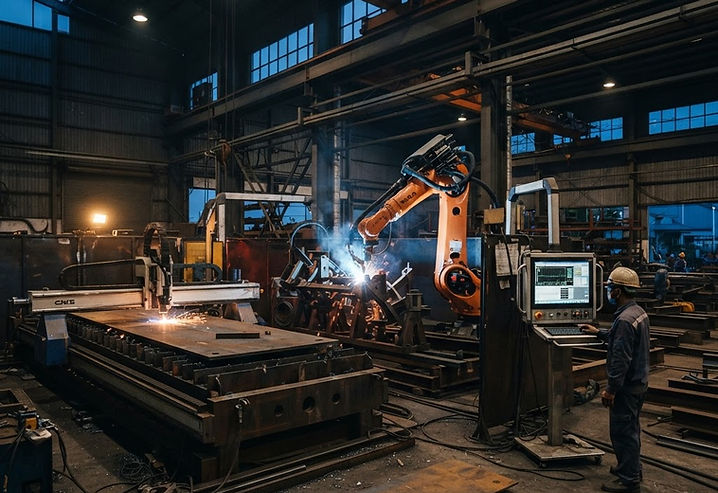
The ability to streamline operations and improve efficiency are crucial aspects of operating in dynamic manufacturing markets. For manufacturers involved in and affected by global and local operations and logistics, the pressure is felt in future proofing supply chains. Supply chain management (SCM) involves complex, multifaceted processes that demand precision, foresight, and adaptability. Enter the power of artificial intelligence (AI) and digital technologies, which are transforming how supply chains operate. The integration of AI in supply chain processes and the adoption of comprehensive supply chain management software are not only ongoing trends, but important strategies for companies seeking to be more efficient, stay competitive, and innovative. This blog deep dives into this exciting topic in greater detail.
Key Components of Digital Supply Chain
There are certain key components that are essential within establishing a digital supply chain:
Comprehensive SCM Solutions: Supply chain management software is at the heart of the digital supply chain, offering a suite of tools that facilitate resource and supply planning, demand management, inventory management, order promising, and more aspects. These integrated solutions allow businesses to manage complex logistics networks efficiently, synchronise supply with demand, and optimise resource allocation and distribution. By automating and streamlining critical supply chain operations, SCM software plays a crucial role in enhancing the agility and resilience of business operations.
Cybersecurity: As supply chains digitalise, the cyber status of manufacturing become crucial to protect data integrity and prevent disruptions. Ensuring secure data flows and protecting against cyber threats are imperative to maintain the reliability and trustworthiness of the digital supply chain.

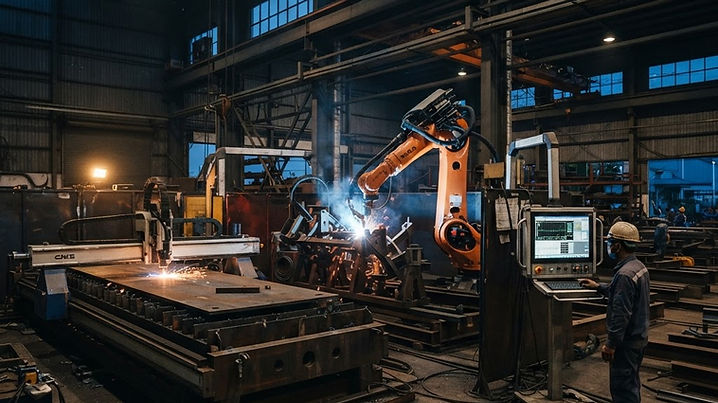
Connectivity and Integration: SCM software integrates with other manufacturing and operational software systems (e.g. MOM or ERP), as well as IoT devices. This connectivity ensures that supply chain managers and executives have full visibility and control over their supply chain. The integration facilitates real time data collection and sharing across various platforms, enabling a unified view of operations, and helping decision makers to respond swiftly and effectively to any operational challenges or opportunities.
Development of Digital Supply Chain
The 3 major trends that manufacturers need to watch and potentially integrate into their operations are as follows:,
Firstly, the future of supply chain management heavily relies on predictive and prescriptive analytics. These technologies go beyond traditional descriptive analytics by not only predicting future scenarios but also suggesting course actions that enhance manufacturing traceability. By utilising machine learning algorithms and big data, supply chain managers can anticipate issues before they arise and prescribe the best strategies to mitigate risks or take advantage of upcoming opportunities.
Secondly, sustainability is becoming a cornerstone in supply chain strategy, driven by consumer demand, regulatory requirements, and a corporate responsibility toward environmental stewardship. AI can play a significant role in enhancing sustainability efforts by optimising routes to reduce fuel consumption, improving inventory accuracy to decrease waste, and facilitating the recycling of materials. As manufacturers strive to meet their sustainability goals, AI provides the tools necessary to achieve these objectives in an efficient and cost effective manner.
Finally, hyper automation, a trend that builds on the foundations of robotics and AI automation, involves the orchestrated use of multiple technologies to automate as many manufacturing processes as possible. In supply chains, hyper automation could mean automated systems for handling heavy products like pressure vessels, managing warehouses, and planning deliveries, all connected through a central AI that continuously learns and improves these operations.
Looking Ahead
The digital transformation of supply chains through AI and advanced SCM software solutions is not just a trend but a necessary evolution in today’s business environment. Manufacturers that are quick to adopt these technologies gain significant advantages, enabling them to outperform competitors and meet the increasing demands of consumers and markets more effectively. From predictive analytics that forecast future trends and optimise operations in areas such as mining plant and equipment Australia, to AI driven automation that enhances efficiency and accuracy, the role of technology in supply chain management has never been more crucial. Now is the time for forward thinking leaders to embrace these innovations and transform their supply chain operations into more responsive, efficient, and customer oriented systems. Investing in digital supply chain solutions is not merely about keeping up with technological advancements but about setting the stage for continued success in an increasingly complex global marketplace!
K999 Thailand carries out work of this kind through its steel fabrication capability team in Rayong.
Further reading
Follow tenders across the entire Middle East across the wider market on Project Atlas Intel.
How K999 can help
How we apply the technology
Faster quoting, cleaner detailing and fewer site surprises come from the tools we use before the first cut, and the articles here explain how those tools change the work.
3D modelling and detailing- 01
3D modelling and shop detailing that resolves clashes before fabrication starts.
- 02
Fibre laser cutting for plate profiles, with nesting planned around the rolling schedule.
- 03
Project management that reports progress against the same model the client approved.
More on Manufacturing & Technology
All articles

Request for quotation
Need fabricated steel to that standard?
Every enquiry is answered within 48 hours by our estimating team in Rayong. The priced quotation follows once drawings, quantities and standards are confirmed. Stainless steel fabrication, structural steel fabrication, pipe spooling, pressure vessels, steel tanks, mining equipment and conveyors, pig launchers, chutes and hoppers, send the package and we will price it.
Before you request a quotation
Steel fabrication quotation questions
What structural steel fabrication, pressure vessel and pipe spooling packages cost, what to send with an enquiry, and how delivery to site works.
Structural steel fabrication is priced from the section and plate tonnage, the detailing and drawing hours, welding and fitting manhours, NDT requirements, blast and coating system, packing and freight. Grade matters as much as weight: AS/NZS, ASTM, JIS and BS sections carry different mill prices, and heavy built up members take longer than rolled sections. Our Rayong workshop produces around 10,000 tonnes of structural steel fabrication a year, so a clear bill of materials is usually enough to price. Send the drawings and we answer within 48 hours; the priced quotation follows once quantities, standards and delivery dates are confirmed.
For steel fabrication work, send the drawings or IFC package, a bill of materials with material grades, the welding and NDT requirements, the coating specification, the delivery port and your site dates. Add the inspection and test plan, any third party inspection requirement, and whether trial assembly or match marking is needed. Where drawings are still in progress, a scope list with sizes, quantities and duty is enough to start, and the estimate is refined once the final package arrives. Every enquiry is answered within 48 hours, and the priced quotation is issued after scope, standards and quantities are confirmed.
Yes. Pressure vessel fabrication is carried out to ASME Section VIII Div. 1 under our ASME U stamp No. 43,462, or to AS/NZS and BS where the project specifies, covering separators, air receivers, water drums, waste heat recovery units and pig launchers. Steel tanks for fuel, biofuel, chemical, water and food duty are designed in house with our E Tank programme to API, ASME, BS and AS/NZS. Because structural steel, vessels, tanks and their supports are built in the same workshops, one enquiry can cover the vessel package, the tank package and the structural steel that carries them, with a single coating and documentation system and one shipment.
Steel fabrication Australia packages are scheduled from a 33,000 m2 Rayong yard with an 80,000 m2 assembly yard inside Sattahip port, so fabrication, trial assembly, blasting, coating and packing run in one place. Programme length depends on tonnage, material lead times, the coating system and inspection scope, and it is confirmed with the quotation. We quote FOB Laem Chabang, Map Ta Phut or Sattahip, or CIF and DAP to your Australian port, with packing lists, weights, lifting points and a data book per shipment. Staged deliveries can follow your site erection sequence instead of shipping everything at once.
There is no fixed minimum. Pipe spooling Australia packages run at up to 3,000 diameter inches per shift on SCH.40, from a single replacement spool to a full plant piping scope, with spools numbered, X rayed where specified and coated to match erection order. Mining equipment fabrication covers chutes, hoppers, ore bins, transfer towers and conveyor structures with Bisalloy, Hardox, rubber lining or hardfacing fitted in house, from one wear liner set to modules of up to 2,500 tonnes assembled at Sattahip. Send the scope list and we will tell you what the smallest sensible batch is for your programme.