


Manufacturing & Technology
The Future of Automotive Technology
Electric drivetrains and lightweight structures are changing the tooling and fabricated parts automotive plants require.
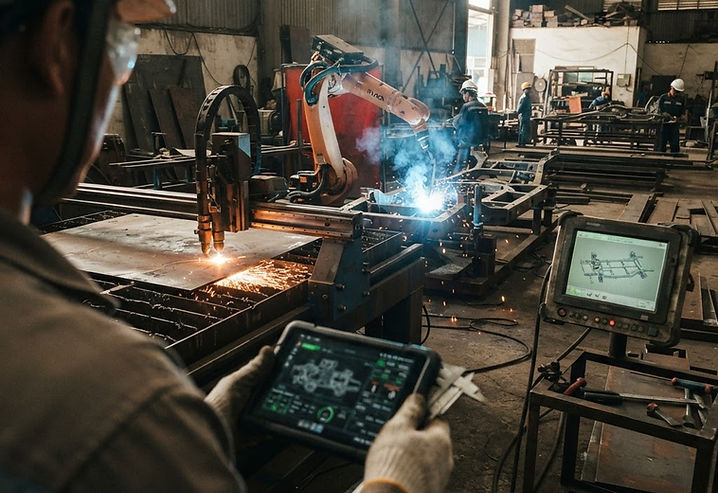
Technology is changing so much in our daily lives, including in how we get around. The electrification of vehicles, autonomous vehicles and connected systems within cities are no longer far off dreams, these technologies and a more connected automotive ecosystem are more of a reality in Australia than ever before. In the early 2000s, electronics accounted for less than 20% of the total cost of a vehicle. In 2020 it was up to 40% and we expect electronics to account for about half of the price of a new car by 2030. We are also expecting to see 300 million electric vehicles (EVs) on global roads by 2030. So, how do we ensure we are ready? How do private companies, cities and the people building the infrastructure to support this transformation come together to make this a reality? This blog will look to answer some of these questions.
Vehicles of the Future
There are many ways technology has improved how we get around, the efficiency in which we do so and the safety of our cars. These are exciting advancements and they are changing and improving transportation globally in the following ways:,
Eliminating the need for a human driver, To maintain a competitive edge, many companies are looking toward driverless vehicles to cut costs and increase efficiency. With autonomous capabilities, we will see material transport and rideshare services operating with nobody in the driver’s seat.
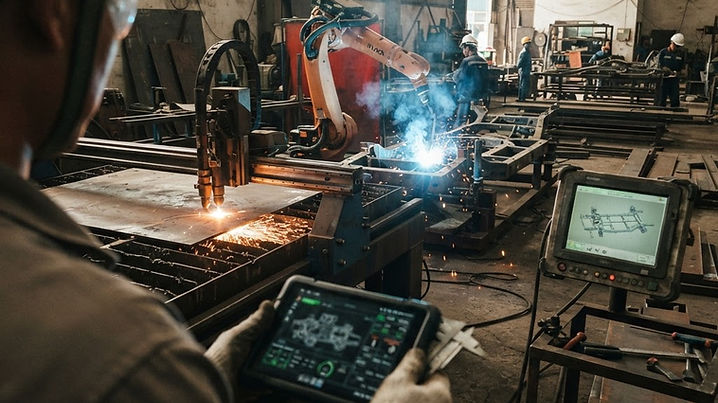
Battery Optimization, Similar to how AI learns your phone use, patterns and behaviours and charges your phone accordingly to best utilize your battery and increase its longevity, this is expected to be possible with car batteries in the future. Electric vehicles are creating new opportunities and batteries are expensive, and an important factor that dictates the lifespan of a car, and these advancements will help keep EVs on the road for longer.
Predictive maintenance, This is the ability to estimate, or predict, when maintenance should be performed on a vehicle. There are already sensors within cars and trucks, and it can be expected to leverage pipe fabrication while monitoring the different parts of a vehicle, like the engine, brakes, and any other moving component. If problems can be detected early and repairs can be made, this avoids costlier, and often time consuming, catastrophic failures down the line.
IoT and Cars, With the rise of automation and intelligent integration, IoT is poised to make a significant impact in the automobile industry. When you bring your car to a mechanic, they will be able to connect to it via their phone, getting a full rundown of what is going on before ever opening the hood of the car. They can start diagnosing problems faster and more efficiently.
Fully Connected Automotive Ecosystem
The ability for vehicles to connect not just with each other, but also with mobile devices and smart ecosystems (smart cities, smart infrastructure, etc.) is an exciting prospect. Rather than rely solely on machine vision systems to perceive what is around them, key objects within communication range can provide feedback to reduce computational burden and increase confidence in what the vehicle “sees”. These objects could include smartphones to identify pedestrians, traffic lights to manage traffic flow at intersections, and road signs to enforce traffic laws. Furthermore, smart infrastructure has the potential to streamline how autonomous vehicles navigate from point A to point B. Beacons staggered along roads and streets can broadcast location data for vehicles to utilize when GPS signals are weak or lost entirely (e.g., when driving through tunnels or amongst tall buildings). Smart parking meters can charge vehicle owners directly, based precisely on how long the space was occupied. Streetlights can increase their brightness as vehicles approach them to increase visibility and decrease their brightness the remainder of the time, to conserve energy. The possibilities are truly endless.
Conclusion
It can be observed that there is immense potential for automotive technology to develop going forward. With the rise of EVs and a fast growing automotive ecosystem as tailwinds, automotive technology led by heavy steel fabrication companies looks poised to take great strides. It is time to embrace this technology globally, especially in countries where battery vehicles are already prevalent in large numbers.
K999 Thailand carries out work of this kind through its steel fabrication capability team in Rayong.
Further reading
Follow tender intelligence across the wider market on Project Atlas Intel.
Calculation tool
Run the numbers for this yourself with the free storage tank articles from Engineering Toolbox Australia. Treat the result as a first check, then confirm the final design with your engineer.
How K999 can help
How we apply the technology
Faster quoting, cleaner detailing and fewer site surprises come from the tools we use before the first cut, and the articles here explain how those tools change the work.
3D modelling and detailing- 01
3D modelling and shop detailing that resolves clashes before fabrication starts.
- 02
Fibre laser cutting for plate profiles, with nesting planned around the rolling schedule.
- 03
Project management that reports progress against the same model the client approved.
More on Manufacturing & Technology
All articles

Request for quotation
Need fabricated steel to that standard?
Every enquiry is answered within 48 hours by our estimating team in Rayong. The priced quotation follows once drawings, quantities and standards are confirmed. Stainless steel fabrication, structural steel fabrication, pipe spooling, pressure vessels, steel tanks, mining equipment and conveyors, pig launchers, chutes and hoppers, send the package and we will price it.
Before you request a quotation
Steel fabrication quotation questions
What structural steel fabrication, pressure vessel and pipe spooling packages cost, what to send with an enquiry, and how delivery to site works.
Structural steel fabrication is priced from the section and plate tonnage, the detailing and drawing hours, welding and fitting manhours, NDT requirements, blast and coating system, packing and freight. Grade matters as much as weight: AS/NZS, ASTM, JIS and BS sections carry different mill prices, and heavy built up members take longer than rolled sections. Our Rayong workshop produces around 10,000 tonnes of structural steel fabrication a year, so a clear bill of materials is usually enough to price. Send the drawings and we answer within 48 hours; the priced quotation follows once quantities, standards and delivery dates are confirmed.
For steel fabrication work, send the drawings or IFC package, a bill of materials with material grades, the welding and NDT requirements, the coating specification, the delivery port and your site dates. Add the inspection and test plan, any third party inspection requirement, and whether trial assembly or match marking is needed. Where drawings are still in progress, a scope list with sizes, quantities and duty is enough to start, and the estimate is refined once the final package arrives. Every enquiry is answered within 48 hours, and the priced quotation is issued after scope, standards and quantities are confirmed.
Yes. Pressure vessel fabrication is carried out to ASME Section VIII Div. 1 under our ASME U stamp No. 43,462, or to AS/NZS and BS where the project specifies, covering separators, air receivers, water drums, waste heat recovery units and pig launchers. Steel tanks for fuel, biofuel, chemical, water and food duty are designed in house with our E Tank programme to API, ASME, BS and AS/NZS. Because structural steel, vessels, tanks and their supports are built in the same workshops, one enquiry can cover the vessel package, the tank package and the structural steel that carries them, with a single coating and documentation system and one shipment.
Steel fabrication Australia packages are scheduled from a 33,000 m2 Rayong yard with an 80,000 m2 assembly yard inside Sattahip port, so fabrication, trial assembly, blasting, coating and packing run in one place. Programme length depends on tonnage, material lead times, the coating system and inspection scope, and it is confirmed with the quotation. We quote FOB Laem Chabang, Map Ta Phut or Sattahip, or CIF and DAP to your Australian port, with packing lists, weights, lifting points and a data book per shipment. Staged deliveries can follow your site erection sequence instead of shipping everything at once.
There is no fixed minimum. Pipe spooling Australia packages run at up to 3,000 diameter inches per shift on SCH.40, from a single replacement spool to a full plant piping scope, with spools numbered, X rayed where specified and coated to match erection order. Mining equipment fabrication covers chutes, hoppers, ore bins, transfer towers and conveyor structures with Bisalloy, Hardox, rubber lining or hardfacing fitted in house, from one wear liner set to modules of up to 2,500 tonnes assembled at Sattahip. Send the scope list and we will tell you what the smallest sensible batch is for your programme.