


Manufacturing & Technology
The Rise and Rise of IIoT
Connected sensors on welders, cranes and compressors now feed the utilisation data fabrication planning depends on.
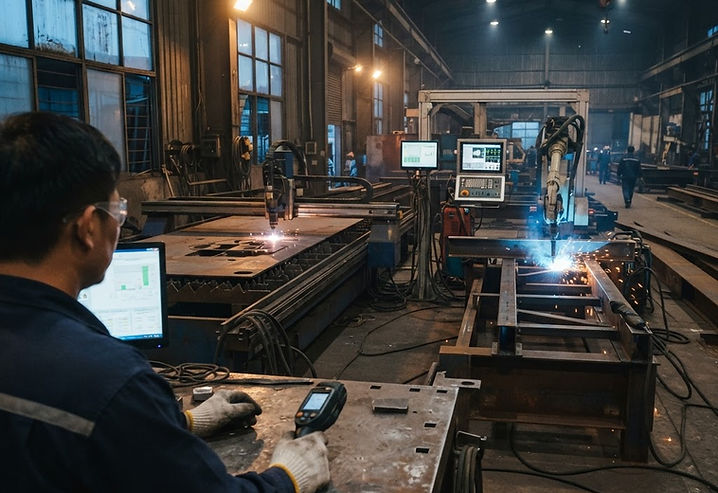
It is a well known fact that IoT (Internet of Things), such as IoT in Oil and Gas, has been a buzzword for some time now. The concept of “smart” living which involves usage of wearables which transmit data on health, performance and monetary matters captured the imagination and led to the development of smart watches, BP trackers etc. This concept has now been extended to the industrial space with Industrial IoT, or IIoT, being the result. So, why should organizations adopt IIoT and what are the considerations and IT’s role in this regard. Let us find out more in this blog.
Uniqueness and Benefits of IIoT
IIoT connects machines and devices in industries such as manufacturing, steel fabrication, transportation, oil and gas, power generation and transmission, mines, and ports. Commercial, enterprise, or consumer IoT, also simply known as IoT, is used to describe connected devices within homes and office spaces, such as cameras, badge readers, and HVAC control systems. Failure of IIoT can have catastrophic consequences, creating high risk and potentially life threatening situations. Downtime of other IoT devices may result in inconveniences, but it does not usually cause emergency situations.
Industrial IoT enables organizations to get a wealth of actionable data from their operations. When properly aggregated and analyzed, the data helps them better control operations, with the potential to improve worker safety, increase production uptime by predictive maintenance of machinery, maintain product quality, ensure regulatory compliance, and improve operational efficiencies.
Major Considerations for IIoT Adoption
Network Equipment, The switches, routers, and wireless equipment that connect IIoT devices must provide the needed bandwidth and be able to withstand punishing physical conditions on factory floors or outdoors. Equipment, such as mining and plant equipment, must support the communication protocols in use to provide visibility and help monitor each endpoint.

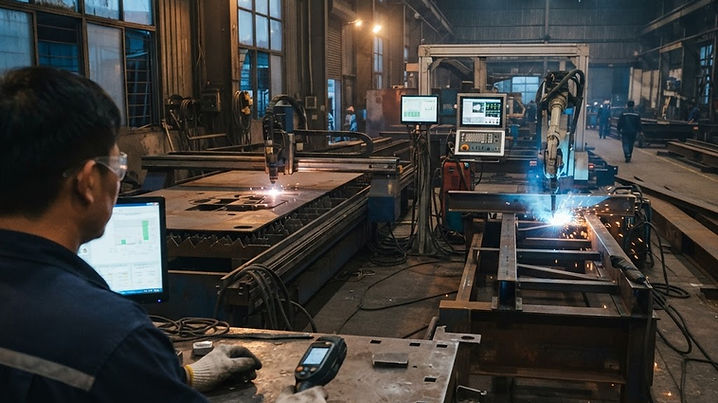
Centralized connectivity deployment and monitoring, For organizations to efficiently monitor and scale their deployments, centralized visibility of device connectivity is of paramount importance. Organizations need to be able to deploy and configure connectivity to their edge devices and equipment quickly and accurately.
Asset tracking and monitoring, Continuous tracking and monitoring of IIoT devices, assets, and facilities is essential to keep them up and running efficiently. Such visibility helps to quickly identify potential issues that could impact operations, worker safety, and revenue.
Role of IT in IIoT
Reliable Network, IT must strive to ensure that a reliable network with sufficient bandwidth capacity is in place so time sensitive data can be transmitted without delay to applications in data centers or the cloud. The network that connects IIoT devices and sensors needs to support diverse physical channels.
Intelligent network control, The network for IIoT must be kept highly available. IIoT devices may be numerous and spread across a large geographical area, but a network controller can automate networking equipment deployment and keep configurations consistent, and firmware updated. It can also help ensure that devices are performing to expectations, and guide administrators to take corrective actions if not.
Security for critical resources, As IT and IIoT networks converge, security practices must also converge. Protecting IIoT is best done with a comprehensive, integrated security solution (including cyber security ) rather than a multitude of point products. The same proven security tools that IT has deployed over the years can benefit IIoT as well.
Closing Statement
With the advent of digital manufacturing and industrial AI based solutions, IIoT has the potential to deliver breakthrough business outcomes with simplicity, speed, and scale. It can empower modern industrial workers and can resolve business challenges by making use of industrial data. Additionally, IIoT can also increase efficiencies, reduce costs, and improve safety and security. IIoT is a revolution in the world of fabrication and manufacturing and it is poised to transform the world of metal operations!
K999 Thailand carries out work of this kind through its steel fabrication capability team in Rayong.
Further reading
Follow Mining across the wider market on Project Atlas Intel.
How K999 can help
How we apply the technology
Faster quoting, cleaner detailing and fewer site surprises come from the tools we use before the first cut, and the articles here explain how those tools change the work.
3D modelling and detailing- 01
3D modelling and shop detailing that resolves clashes before fabrication starts.
- 02
Fibre laser cutting for plate profiles, with nesting planned around the rolling schedule.
- 03
Project management that reports progress against the same model the client approved.
More on Manufacturing & Technology
All articles

Request for quotation
Need fabricated steel to that standard?
Every enquiry is answered within 48 hours by our estimating team in Rayong. The priced quotation follows once drawings, quantities and standards are confirmed. Stainless steel fabrication, structural steel fabrication, pipe spooling, pressure vessels, steel tanks, mining equipment and conveyors, pig launchers, chutes and hoppers, send the package and we will price it.
Before you request a quotation
Steel fabrication quotation questions
What structural steel fabrication, pressure vessel and pipe spooling packages cost, what to send with an enquiry, and how delivery to site works.
Structural steel fabrication is priced from the section and plate tonnage, the detailing and drawing hours, welding and fitting manhours, NDT requirements, blast and coating system, packing and freight. Grade matters as much as weight: AS/NZS, ASTM, JIS and BS sections carry different mill prices, and heavy built up members take longer than rolled sections. Our Rayong workshop produces around 10,000 tonnes of structural steel fabrication a year, so a clear bill of materials is usually enough to price. Send the drawings and we answer within 48 hours; the priced quotation follows once quantities, standards and delivery dates are confirmed.
For steel fabrication work, send the drawings or IFC package, a bill of materials with material grades, the welding and NDT requirements, the coating specification, the delivery port and your site dates. Add the inspection and test plan, any third party inspection requirement, and whether trial assembly or match marking is needed. Where drawings are still in progress, a scope list with sizes, quantities and duty is enough to start, and the estimate is refined once the final package arrives. Every enquiry is answered within 48 hours, and the priced quotation is issued after scope, standards and quantities are confirmed.
Yes. Pressure vessel fabrication is carried out to ASME Section VIII Div. 1 under our ASME U stamp No. 43,462, or to AS/NZS and BS where the project specifies, covering separators, air receivers, water drums, waste heat recovery units and pig launchers. Steel tanks for fuel, biofuel, chemical, water and food duty are designed in house with our E Tank programme to API, ASME, BS and AS/NZS. Because structural steel, vessels, tanks and their supports are built in the same workshops, one enquiry can cover the vessel package, the tank package and the structural steel that carries them, with a single coating and documentation system and one shipment.
Steel fabrication Australia packages are scheduled from a 33,000 m2 Rayong yard with an 80,000 m2 assembly yard inside Sattahip port, so fabrication, trial assembly, blasting, coating and packing run in one place. Programme length depends on tonnage, material lead times, the coating system and inspection scope, and it is confirmed with the quotation. We quote FOB Laem Chabang, Map Ta Phut or Sattahip, or CIF and DAP to your Australian port, with packing lists, weights, lifting points and a data book per shipment. Staged deliveries can follow your site erection sequence instead of shipping everything at once.
There is no fixed minimum. Pipe spooling Australia packages run at up to 3,000 diameter inches per shift on SCH.40, from a single replacement spool to a full plant piping scope, with spools numbered, X rayed where specified and coated to match erection order. Mining equipment fabrication covers chutes, hoppers, ore bins, transfer towers and conveyor structures with Bisalloy, Hardox, rubber lining or hardfacing fitted in house, from one wear liner set to modules of up to 2,500 tonnes assembled at Sattahip. Send the scope list and we will tell you what the smallest sensible batch is for your programme.