


Materials & Coatings
The Role of Chromium in Stainless Steel Properties
Chromium above roughly 10.5 percent creates the passive film that makes stainless steel stainless, with grade choice setting the ceiling.
Understanding Stainless Steel Alloys
Stainless steel is an alloy primarily composed of iron, with a minimum chromium content of 10.5 percent by weight. This essential component is what lends stainless steel its corrosion resistant properties, making it an ideal choice for a multitude of applications in various industries. The unique characteristics of stainless steel stem from its composition, which includes other elements such as nickel, molybdenum, and carbon, each contributing to the material’s overall performance and mechanical properties.
Stainless steel can be categorized into several types based on its microstructure, which is influenced largely by the composition and the method of processing. The three main categories are austenitic, ferritic, and martensitic. Austenitic stainless steels, typically containing high levels of chromium and nickel, exhibit excellent ductility and corrosion resistance. Common grades include 304 and 316, widely used in food processing and medical devices due to their hygienic properties.
In contrast, ferritic stainless steels, which possess chromium in amounts ranging from 10.5 to 30 percent and minimal nickel, are characterized by their magnetic properties and moderate corrosion resistance. They are often used in automotive parts and kitchenware. Finally, martensitic stainless steels contain higher carbon levels, providing increased hardness and strength, making them suitable for cutlery and tools. However, this type has lower corrosion resistance compared to the others.
The role of alloying elements, especially chromium in stainless steel, cannot be overstated. Chromium not only provides resistance to oxidation and corrosion but also enhances the strength and hardness of the material. Understanding the diverse types of stainless steel alloys and their respective compositions is crucial, as it sets the foundation for a more in depth exploration of the significance of chromium in enhancing the overall properties of stainless steel fabrication.
The Importance of Chromium
Chromium plays a fundamental role in the development and performance of stainless steel, significantly enhancing its corrosion resistance and mechanical properties. The introduction of chromium into the steel alloy enables the formation of a thin, passive oxide layer on the surface, known as chromium oxide. This protective layer acts as a barrier between the metal and the environment, preventing the oxidation process that typically leads to rust and decay in plain carbon steels. The effectiveness of this passive layer is pivotal in defining the durability of stainless steel fabrication in various applications, particularly in aggressive or corrosive environments.
To achieve the desirable properties associated with stainless steel, a minimum chromium content of about 10.5% is generally required. Below this threshold, steel fails to exhibit the essential characteristics of corrosion resistance, which is a hallmark of stainless steel. The specific arrangement and interactions between chromium and other alloying elements, such as nickel, molybdenum, and manganese, further enhance these properties. For instance, when nickel is also present, it not only improves formability and toughness but also works synergistically with chromium to bolster the overall resistance to corrosion and oxidation.
In addition to corrosion resistance, chromium contributes to the mechanical properties of stainless steel, helping to increase both its strength and hardness. These attributes are crucial for various industrial applications, where materials must withstand extreme temperatures and stresses without compromising performance. Furthermore, the presence of chromium in stainless steel enables it to maintain its luster and aesthetic appeal over time, making it a preferred choice for architectural and decorative applications. Overall, chromium is an invaluable component of stainless steel, imparting critical properties that ensure its effectiveness across diverse use cases.

Effects of Chromium on Mechanical Properties
Chromium plays an essential role in defining the mechanical properties of stainless steel, significantly influencing attributes such as tensile strength, hardness, ductility, and toughness. Through the addition of chromium, the inherent capabilities of stainless steel can be enhanced, resulting in a material that exhibits superior performance in various applications.
The tensile strength of stainless steel increases with higher chromium content, as this element forms a protective oxide layer that enhances the solid solution strength of the alloy. This is particularly evident in high chromium grades such as Type 304 or Type 316, where chromium content typically ranges from 16 to 18 percent. These grades not only offer increased tensile strength but also improved resistance to stress corrosion cracking under challenging environments.
Moreover, chromium contributes to hardness within stainless steel by promoting the formation of stable carbides, which assist in refining the microstructure. However, there is a trade off to consider; while elevated chromium levels can lead to greater hardness, they may concurrently reduce the material’s ductility. For instance, ultrahigh chromium steels can become exceedingly brittle, rendering them unsuitable for applications requiring significant deformation without fracture.
Toughness is another critical mechanical property influenced by chromium content. Adequate levels of chromium improve the impact resistance of stainless steel, allowing it to absorb energy without failing. Nevertheless, a delicate balance must be maintained. Excessive chromium may deteriorate toughness, particularly at low temperatures, a consideration that must be taken into account when selecting steel grades for cryogenic applications, where toughness is paramount.
Specific stainless steel grades exemplify these attributes, with Type 410 being an example of a martensitic stainless steel that benefits from a moderate chromium content, providing good hardness and moderate corrosion resistance. Thus, the careful calibration of chromium levels is critical to achieving a desirable balance among tensile strength, hardness, ductility, and toughness in stainless steel applications.
Applications and Benefits of Chromium Enhanced Stainless Steel
Chromium in stainless steel is a key element that significantly enhances its properties, making it particularly valuable across various industries. One of the most prominent applications of chromium enhanced stainless steel is in the construction industry. Structures exposed to harsh environmental conditions benefit greatly from the corrosion resistance afforded by chromium. Buildings, bridges, and other constructions utilizing stainless steel with high chromium content demonstrate remarkable durability and lower maintenance costs over time, ensuring safety and cost effectiveness.
Another vital application can be found in the automotive industry. Chromium in stainless steel is essential for components exposed to high temperatures and abrasive environments, such as exhaust systems and chassis parts. By incorporating high levels of chromium, manufacturers ensure that these components exhibit superior resistance to oxidation and corrosion, prolonging their lifespan and improving performance. Moreover, the aesthetic appeal of polished stainless steel makes it a popular choice for visible components, enhancing the overall design quality of vehicles.
The food processing industry also heavily relies on the benefits of chromium enhanced stainless steel. In environments where hygiene and corrosion resistance are paramount, such as in food preparation and storage, stainless steel with high chromium content is favored. This material not only meets health regulations but also ensures that food products remain uncontaminated. Case studies reveal that facilities employing chromium rich stainless steel have reported a decrease in maintenance issues and a significant increase in the longevity of equipment, which directly contributes to operational efficiency.
In conclusion, the integration of chromium in stainless steel leads to considerable advantages across diverse applications. Its robustness against corrosion, combined with enhanced longevity and aesthetic value, establishes chromium enhanced stainless steel as a preferred material in construction, automotive, and food processing industries. The long term benefits and reliability provided by this material make it indispensable for manufacturers aiming to deliver durable and efficient products.
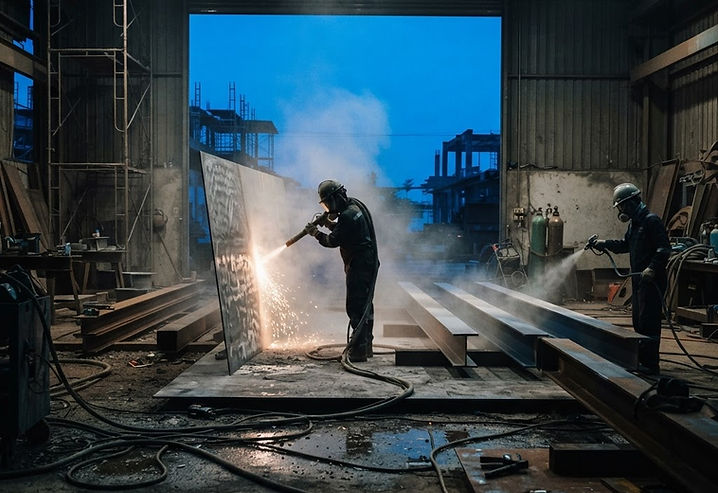
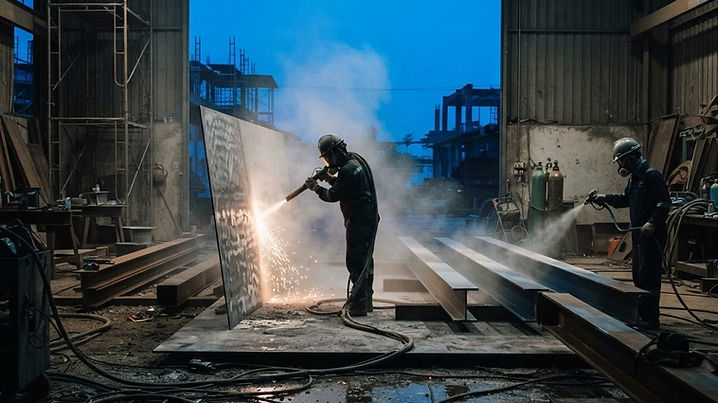
K999 Thailand carries out work of this kind through its abrasive blasting and protective coating team in Rayong.
Further reading
Follow project contacts directory across the wider market on Project Atlas Intel.
How K999 can help
Material selection and surface protection
We fabricate in stainless, duplex, carbon steel and nickel alloys, and we finish those materials for the environment they will live in, from coastal yards to process plants.
Stainless steel fabrication- 01
Stainless and duplex fabrication with matched filler metals and controlled interpass temperature.
- 02
Abrasive blasting to the specified surface profile before protective coating application.
- 03
Rubber lining and hardfacing for abrasive slurries, chutes and wear plates.
More on Materials & Coatings
All articles


Request for quotation
Need fabricated steel to that standard?
Every enquiry is answered within 48 hours by our estimating team in Rayong. The priced quotation follows once drawings, quantities and standards are confirmed. Stainless steel fabrication, structural steel fabrication, pipe spooling, pressure vessels, steel tanks, mining equipment and conveyors, pig launchers, chutes and hoppers, send the package and we will price it.
Before you request a quotation
Steel fabrication quotation questions
What structural steel fabrication, pressure vessel and pipe spooling packages cost, what to send with an enquiry, and how delivery to site works.
Structural steel fabrication is priced from the section and plate tonnage, the detailing and drawing hours, welding and fitting manhours, NDT requirements, blast and coating system, packing and freight. Grade matters as much as weight: AS/NZS, ASTM, JIS and BS sections carry different mill prices, and heavy built up members take longer than rolled sections. Our Rayong workshop produces around 10,000 tonnes of structural steel fabrication a year, so a clear bill of materials is usually enough to price. Send the drawings and we answer within 48 hours; the priced quotation follows once quantities, standards and delivery dates are confirmed.
For steel fabrication work, send the drawings or IFC package, a bill of materials with material grades, the welding and NDT requirements, the coating specification, the delivery port and your site dates. Add the inspection and test plan, any third party inspection requirement, and whether trial assembly or match marking is needed. Where drawings are still in progress, a scope list with sizes, quantities and duty is enough to start, and the estimate is refined once the final package arrives. Every enquiry is answered within 48 hours, and the priced quotation is issued after scope, standards and quantities are confirmed.
Yes. Pressure vessel fabrication is carried out to ASME Section VIII Div. 1 under our ASME U stamp No. 43,462, or to AS/NZS and BS where the project specifies, covering separators, air receivers, water drums, waste heat recovery units and pig launchers. Steel tanks for fuel, biofuel, chemical, water and food duty are designed in house with our E Tank programme to API, ASME, BS and AS/NZS. Because structural steel, vessels, tanks and their supports are built in the same workshops, one enquiry can cover the vessel package, the tank package and the structural steel that carries them, with a single coating and documentation system and one shipment.
Steel fabrication Australia packages are scheduled from a 33,000 m2 Rayong yard with an 80,000 m2 assembly yard inside Sattahip port, so fabrication, trial assembly, blasting, coating and packing run in one place. Programme length depends on tonnage, material lead times, the coating system and inspection scope, and it is confirmed with the quotation. We quote FOB Laem Chabang, Map Ta Phut or Sattahip, or CIF and DAP to your Australian port, with packing lists, weights, lifting points and a data book per shipment. Staged deliveries can follow your site erection sequence instead of shipping everything at once.
There is no fixed minimum. Pipe spooling Australia packages run at up to 3,000 diameter inches per shift on SCH.40, from a single replacement spool to a full plant piping scope, with spools numbered, X rayed where specified and coated to match erection order. Mining equipment fabrication covers chutes, hoppers, ore bins, transfer towers and conveyor structures with Bisalloy, Hardox, rubber lining or hardfacing fitted in house, from one wear liner set to modules of up to 2,500 tonnes assembled at Sattahip. Send the scope list and we will tell you what the smallest sensible batch is for your programme.