


Mining & Resources
The Role of Conveyor Systems
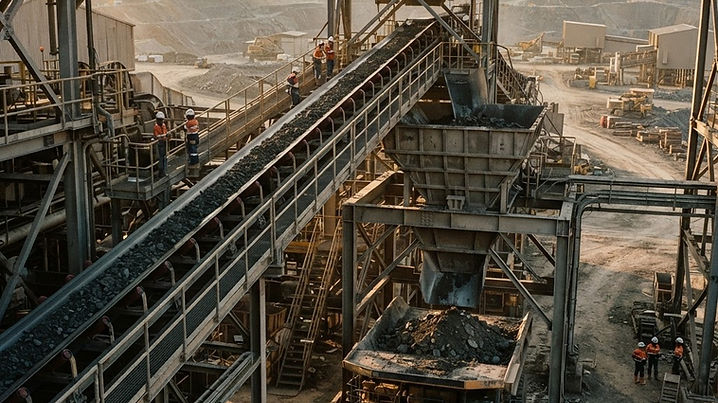
Conveyor structures, chutes and transfer towers are fabricated steelwork packages that decide plant throughput and maintenance cost.
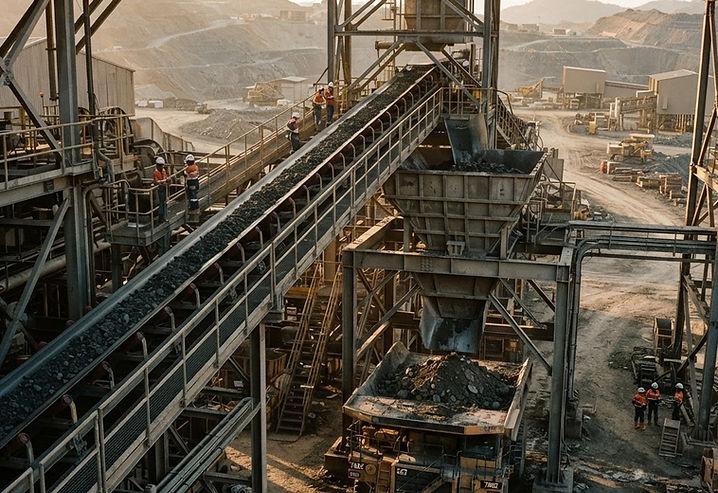
Warehouses are the lynchpin of the logistics industry where efficiency, productivity and safety intertwine. However, in many warehouses there is still a reliance on manual labour and heavy lifting which can put workers at risk, especially for large weight products such as pressure vessels. This is where conveyor systems can completely revolutionise a warehouse operation, alleviating the strain on staff and improving productivity and efficiency. With the right powertrain, a manufacturer will not have to worry about maintenance and repairs for a long time. This blog delves into this topic in more detail.
Applications of Conveyor Systems
There are various roles conveyor systems hold within the warehouse logistic space and therefore numerous reasons that they are considered a vital part of any automation project. These roles include:
Material movement, The most obvious role is the movement of goods within the warehouse without the need for manual labour. This can reduce the amount of time spent meaning the processes become more productive
Continuous operations, Conveyor systems, unlike their human counterparts, can work continually 24/7 without getting tired, slowing down or risking injury. This enables a smooth, organised, and consistent movement of inventory, minimising bottlenecks in the workflow and reducing manufacturing cycle times.
Space optimisation, Conveyor systems are able to utilise both vertical and horizontal space effectively, therefore maximising warehouse capacity. This allows for better organisation and storage by optimising the layout for improved accessibility.
Automation integration, Conveyor systems integrate seamlessly with other automation technology. They can be synchronized with other machinery (such as mining plant and equipment ) and sorting systems, contributing to a fully automated warehouse environment with minimum inconvenience.

Benefits of Conveyor Systems
Incorporating conveyor systems into warehouse operations can be a complete game changer for any business with several quick win benefits including:
Increased efficiency, Conveyor systems streamline warehouse logistics by optimising material flow, reducing manual labour, and minimising handling time. This efficiency translates into faster order fulfilment and reduced operational costs.
Enhanced accuracy, Automation in intralogistics brings benefits by minimising errors and improving accuracy in inventory management and order processing.
Improved staff safety, Reducing the number of manual handling tasks decreases the risk of workplace injuries. Introducing conveyor systems can additionally free up workers to use their skills on more complex tasks.
Scalability, Conveyor systems are scalable and adaptable to evolving warehouse needs. As businesses grow or change, conveyor systems with geared motors can be modified or expanded to accommodate increased demands.
Greater Adaptability, When configuring a unique conveyor system, it is important to find the right geared motor for the precise project requirements. It is important to use a range of electric motors that are specifically designed to meet the robust demands of various industrial environments.
Final Thoughts
It can thus be observed that conveyor systems play an important role in warehouse operations by increasing efficiency and reducing manual labour. An ideal conveyor system should have a high torque output, making it ideal for powering conveyor systems handling heavy loads or those requiring a significant amount of force for movement. With the rise of Industry 4.0 technologies and AI, conveyor systems are likely to get integrated into smart factory operations. Thus, whether it is warehouse automation or supply chain streamlining, conveyor systems are here to stay!
K999 Thailand carries out work of this kind through its mining equipment fabrication team in Rayong.
Further reading
Follow hydrogen projects in Europe across the wider market on Project Atlas Intel.
How K999 can help
Equipment built for the pit
Mining work is where wear life decides the maintenance budget, so the articles in this section feed directly into how we detail chutes, hoppers, conveyors and wear parts.
Mining equipment and conveyors- 01
Mining equipment and conveyor fabrication with replaceable wear liners and hardfaced contact surfaces.
- 02
Chutes, hoppers and transfer structures detailed for access, lifting and shutdown windows.
- 03
Site assembly planning from the Sattahip yard for modules that ship by sea.
More on Mining & Resources
All articles

Request for quotation
Need fabricated steel to that standard?
Every enquiry is answered within 48 hours by our estimating team in Rayong. The priced quotation follows once drawings, quantities and standards are confirmed. Stainless steel fabrication, structural steel fabrication, pipe spooling, pressure vessels, steel tanks, mining equipment and conveyors, pig launchers, chutes and hoppers, send the package and we will price it.
Before you request a quotation
Steel fabrication quotation questions
What structural steel fabrication, pressure vessel and pipe spooling packages cost, what to send with an enquiry, and how delivery to site works.
Structural steel fabrication is priced from the section and plate tonnage, the detailing and drawing hours, welding and fitting manhours, NDT requirements, blast and coating system, packing and freight. Grade matters as much as weight: AS/NZS, ASTM, JIS and BS sections carry different mill prices, and heavy built up members take longer than rolled sections. Our Rayong workshop produces around 10,000 tonnes of structural steel fabrication a year, so a clear bill of materials is usually enough to price. Send the drawings and we answer within 48 hours; the priced quotation follows once quantities, standards and delivery dates are confirmed.
For steel fabrication work, send the drawings or IFC package, a bill of materials with material grades, the welding and NDT requirements, the coating specification, the delivery port and your site dates. Add the inspection and test plan, any third party inspection requirement, and whether trial assembly or match marking is needed. Where drawings are still in progress, a scope list with sizes, quantities and duty is enough to start, and the estimate is refined once the final package arrives. Every enquiry is answered within 48 hours, and the priced quotation is issued after scope, standards and quantities are confirmed.
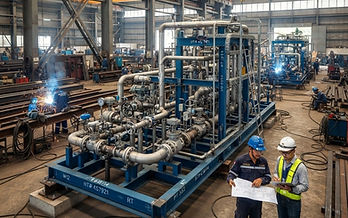
Yes. Pressure vessel fabrication is carried out to ASME Section VIII Div. 1 under our ASME U stamp No. 43,462, or to AS/NZS and BS where the project specifies, covering separators, air receivers, water drums, waste heat recovery units and pig launchers. Steel tanks for fuel, biofuel, chemical, water and food duty are designed in house with our E Tank programme to API, ASME, BS and AS/NZS. Because structural steel, vessels, tanks and their supports are built in the same workshops, one enquiry can cover the vessel package, the tank package and the structural steel that carries them, with a single coating and documentation system and one shipment.
Steel fabrication Australia packages are scheduled from a 33,000 m2 Rayong yard with an 80,000 m2 assembly yard inside Sattahip port, so fabrication, trial assembly, blasting, coating and packing run in one place. Programme length depends on tonnage, material lead times, the coating system and inspection scope, and it is confirmed with the quotation. We quote FOB Laem Chabang, Map Ta Phut or Sattahip, or CIF and DAP to your Australian port, with packing lists, weights, lifting points and a data book per shipment. Staged deliveries can follow your site erection sequence instead of shipping everything at once.
There is no fixed minimum. Pipe spooling Australia packages run at up to 3,000 diameter inches per shift on SCH.40, from a single replacement spool to a full plant piping scope, with spools numbered, X rayed where specified and coated to match erection order. Mining equipment fabrication covers chutes, hoppers, ore bins, transfer towers and conveyor structures with Bisalloy, Hardox, rubber lining or hardfacing fitted in house, from one wear liner set to modules of up to 2,500 tonnes assembled at Sattahip. Send the scope list and we will tell you what the smallest sensible batch is for your programme.