


Manufacturing & Technology
The Shift to Hydrogen-Based Steel: What Fabricators Need to Know
Global steelmakers are accelerating the transition to hydrogen-based direct reduction to lower emissions. This shift impacts supply chains, material availability, and project specifications for industrial fabricators and engineering contractors.
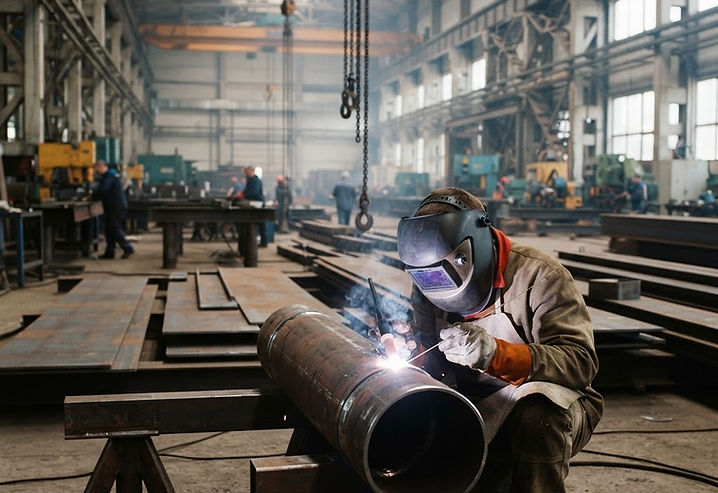
The global steel industry is undergoing a fundamental shift as major producers move toward hydrogen-based direct reduction iron (DRI) production. Recent developments, such as new hydrogen supply tenders in Europe and green steel partnerships in Australia, signal that the transition from traditional blast furnaces is gaining momentum. For industrial fabricators and engineering contractors, this evolution represents a significant change in how raw materials are sourced and processed.
How will the transition to hydrogen-based steel affect material supply chains?
Steelmakers are increasingly integrating hydrogen into their production routes to meet decarbonization targets. Companies like thyssenkrupp Steel are already securing long-term hydrogen supply contracts for their DRI facilities, while others are exploring the use of steel plant off-gases to produce high-purity hydrogen. This transition will eventually change the availability and cost structure of high-quality steel grades used in mining and energy projects.
Fabricators should anticipate a period of adjustment as mills balance traditional production with new, lower-emission methods. While these technologies promise a greener future, they also introduce complexity in supply chain logistics and energy requirements. Project owners must be prepared for potential fluctuations in lead times as steel producers recalibrate their infrastructure to accommodate these new processes.
What should buyers of fabricated steel do to mitigate project risks?
Buyers must prioritize transparency and early engagement with their fabrication partners to navigate this changing landscape. As the industry adopts new methods like heat induction bending to handle specialized steel components, ensuring that your fabricator has the technical capability to work with evolving material specifications is critical. It is no longer enough to simply order standard steel grades without considering the origin and production method of the material.
Buyers should consider the following steps to protect their projects:
- Request detailed material traceability to understand the carbon footprint of the steel being supplied.
- Engage with fabricators early in the design phase to discuss potential material substitutions or availability constraints.
- Monitor regional energy policies, as gas deficits in some parts of the world are already threatening the stability of existing DRI-based steel output.
How does this shift impact engineering and construction standards?
As the industry moves toward near-zero emissions production, engineering contractors will likely see new standards for green steel applications. Projects in the mining, oil, and gas sectors will increasingly require documentation that proves compliance with sustainability targets. This will place a greater burden on fabricators to maintain rigorous quality control and testing protocols for new steel types.
K999 Engineering & Construction remains committed to monitoring these global trends to ensure our clients receive the most reliable and future-proof solutions. By staying informed about the technological pathways of our steel suppliers, we can better manage the risks associated with this industrial transition. We encourage all project stakeholders to maintain open communication channels as these new production technologies reach commercial scale.
More detail on how we deliver this work is on our heat induction bending page.
How K999 can help
How we apply the technology
Faster quoting, cleaner detailing and fewer site surprises come from the tools we use before the first cut, and the articles here explain how those tools change the work.
3D modelling and detailing- 01
3D modelling and shop detailing that resolves clashes before fabrication starts.
- 02
Fibre laser cutting for plate profiles, with nesting planned around the rolling schedule.
- 03
Project management that reports progress against the same model the client approved.
More on Manufacturing & Technology
All articles


Request for quotation
Need fabricated steel to that standard?
Every enquiry is answered within 48 hours by our estimating team in Rayong. The priced quotation follows once drawings, quantities and standards are confirmed. Stainless steel fabrication, structural steel fabrication, pipe spooling, pressure vessels, steel tanks, mining equipment and conveyors, pig launchers, chutes and hoppers, send the package and we will price it.
Before you request a quotation
Steel fabrication quotation questions
What structural steel fabrication, pressure vessel and pipe spooling packages cost, what to send with an enquiry, and how delivery to site works.
Structural steel fabrication is priced from the section and plate tonnage, the detailing and drawing hours, welding and fitting manhours, NDT requirements, blast and coating system, packing and freight. Grade matters as much as weight: AS/NZS, ASTM, JIS and BS sections carry different mill prices, and heavy built up members take longer than rolled sections. Our Rayong workshop produces around 10,000 tonnes of structural steel fabrication a year, so a clear bill of materials is usually enough to price. Send the drawings and we answer within 48 hours; the priced quotation follows once quantities, standards and delivery dates are confirmed.
For steel fabrication work, send the drawings or IFC package, a bill of materials with material grades, the welding and NDT requirements, the coating specification, the delivery port and your site dates. Add the inspection and test plan, any third party inspection requirement, and whether trial assembly or match marking is needed. Where drawings are still in progress, a scope list with sizes, quantities and duty is enough to start, and the estimate is refined once the final package arrives. Every enquiry is answered within 48 hours, and the priced quotation is issued after scope, standards and quantities are confirmed.
Yes. Pressure vessel fabrication is carried out to ASME Section VIII Div. 1 under our ASME U stamp No. 43,462, or to AS/NZS and BS where the project specifies, covering separators, air receivers, water drums, waste heat recovery units and pig launchers. Steel tanks for fuel, biofuel, chemical, water and food duty are designed in house with our E Tank programme to API, ASME, BS and AS/NZS. Because structural steel, vessels, tanks and their supports are built in the same workshops, one enquiry can cover the vessel package, the tank package and the structural steel that carries them, with a single coating and documentation system and one shipment.
Steel fabrication Australia packages are scheduled from a 33,000 m2 Rayong yard with an 80,000 m2 assembly yard inside Sattahip port, so fabrication, trial assembly, blasting, coating and packing run in one place. Programme length depends on tonnage, material lead times, the coating system and inspection scope, and it is confirmed with the quotation. We quote FOB Laem Chabang, Map Ta Phut or Sattahip, or CIF and DAP to your Australian port, with packing lists, weights, lifting points and a data book per shipment. Staged deliveries can follow your site erection sequence instead of shipping everything at once.
There is no fixed minimum. Pipe spooling Australia packages run at up to 3,000 diameter inches per shift on SCH.40, from a single replacement spool to a full plant piping scope, with spools numbered, X rayed where specified and coated to match erection order. Mining equipment fabrication covers chutes, hoppers, ore bins, transfer towers and conveyor structures with Bisalloy, Hardox, rubber lining or hardfacing fitted in house, from one wear liner set to modules of up to 2,500 tonnes assembled at Sattahip. Send the scope list and we will tell you what the smallest sensible batch is for your programme.