


Manufacturing & Technology
The Shift to PaaS
Platform services let manufacturers rent scheduling and quality software instead of building and maintaining it.
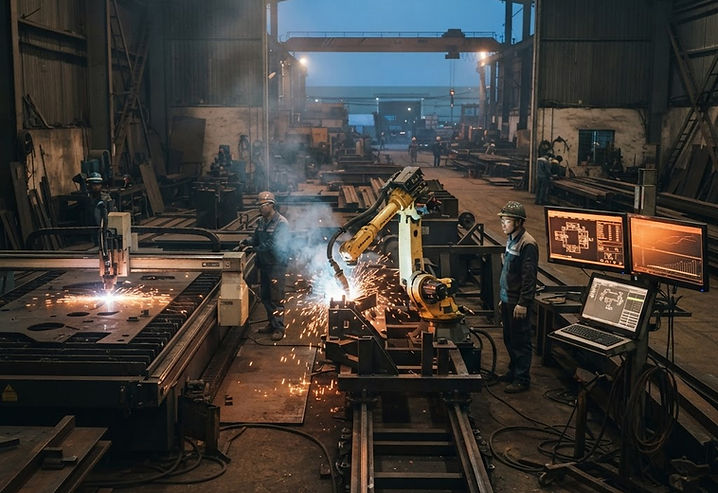
It is a sobering fact that the future for manufacturers over the next 2 to 3 decades lies in selling consumption of outcome based services, not in sales and ownership of manufactured goods. This is because manufacturing in the digital age is dynamic and the industry cannot compete solely on quality and cost any longer. This shift, Servitization, is a natural response to increased competition, fluctuating demand and rising market costs and, in some cases, sustainability pressures/drivers. A servitization model offers B2B manufacturers the potential to grow recurring and sustainable revenue streams. What are the opportunities and challenges facing manufacturers as they consider shifting from a make, sell business model to Product as a Service (PaaS) revenue streams? This blog will delve deeper into this subject.
Reinventing Sales Revenues
In the automotive sector, manufacturers like Mercedes Benz, BMW, Fiat and Volvo all offer car as a service subscriptions, with the option for customers to change models over time when they wish. A study by Aston Business School found a 5 to 10% increase in growth rates and 25 to 30% reduction in costs for companies adopting a servitization model for their business. Servicing and repair have traditionally been seen as a secondary part of a heavy steel fabrication company ’s operations. Products are invariably sold with warranties, and customers can also take out optional service contracts for service and maintenance. Service interventions are typically field repair for failure (reactive), maintenance based (preventative) or, where a product is digitally connected, predictive. Servitization, however, sees a fundamental shift in the approach to, and shape of, service offers. In a servitized model customers can subscribe to business related services that directly and pro actively address their own strategic and operational needs. This is a world apart from focusing on product related or technical issues alone, for example, the repair of pressure vessels. Recent research compared the financial performance of B2B manufacturers providing industrial services. It found that organizations offering predictive and proactive services, such as optimizing business processes and delivering business outcomes, generate the highest gross margin and enjoy increased recurring revenues and contract penetration rates.

Role of Technology
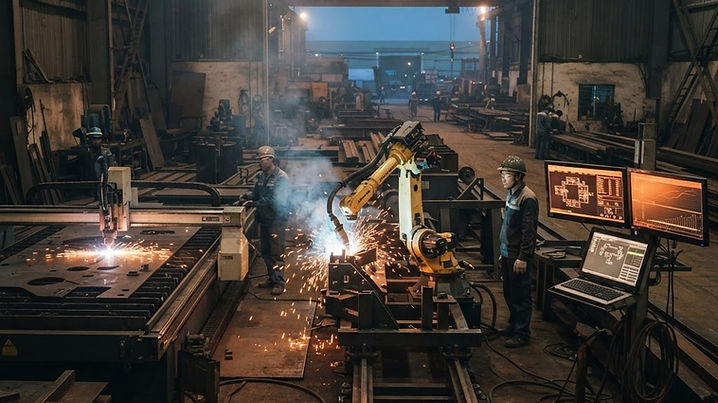
The business transformation required to introduce servitization is technology enabled and requires careful investment in digitalization and digital service eco systems. It also requires a cultural shift to embrace unfamiliar business challenges. The way a manufacturer captures value is changing: it is no longer about producing products well; servitization is about engineering outcomes that create greater value for customers, whilst also collecting real time data that can then be monetized. Manufacturing CFOs, for instance, are faced with the dilemma of pricing and selling an entirely new product as a service value proposition. The commercial aspects and the data monetization can be difficult to scope and product management software can help in that regard. Rigid manufacturers are used to cannibalizing the revenues of physical products. Whilst service revenues will take time to build, they will eventually outperform revenue from hardware sales. An effective corporate IT platform, with the ability to leverage data and digitalization, is a prerequisite of any pivot towards PaaS offers. A service based model also means that maximizing product performance and longevity becomes more important than minimizing the cost of production.
Finishing Touches
Manufacturers and fabricators are gradually understanding that when they start selling outcomes, it allows organizations to differentiate and move away from commoditized saturated product sectors. Solutions are expected to emerge where manufacturers can manage production, distribution, maintenance, and service operations on a single platform, all informed by a unified database. It is time to find higher value, and more difficult to replicate products and services, and manufacturers need to bring their A game to the table!
K999 Thailand carries out work of this kind through its steel fabrication capability team in Rayong.
Further reading
Follow project contacts directory across the wider market on Project Atlas Intel.
Calculation tool
Run the numbers for this yourself with the free steel grade comparison from Engineering Toolbox Australia. Treat the result as a first check, then confirm the final design with your engineer.
How K999 can help
How we apply the technology
Faster quoting, cleaner detailing and fewer site surprises come from the tools we use before the first cut, and the articles here explain how those tools change the work.
3D modelling and detailing- 01
3D modelling and shop detailing that resolves clashes before fabrication starts.
- 02
Fibre laser cutting for plate profiles, with nesting planned around the rolling schedule.
- 03
Project management that reports progress against the same model the client approved.
More on Manufacturing & Technology
All articles

Request for quotation
Need fabricated steel to that standard?
Every enquiry is answered within 48 hours by our estimating team in Rayong. The priced quotation follows once drawings, quantities and standards are confirmed. Stainless steel fabrication, structural steel fabrication, pipe spooling, pressure vessels, steel tanks, mining equipment and conveyors, pig launchers, chutes and hoppers, send the package and we will price it.
Before you request a quotation
Steel fabrication quotation questions
What structural steel fabrication, pressure vessel and pipe spooling packages cost, what to send with an enquiry, and how delivery to site works.
Structural steel fabrication is priced from the section and plate tonnage, the detailing and drawing hours, welding and fitting manhours, NDT requirements, blast and coating system, packing and freight. Grade matters as much as weight: AS/NZS, ASTM, JIS and BS sections carry different mill prices, and heavy built up members take longer than rolled sections. Our Rayong workshop produces around 10,000 tonnes of structural steel fabrication a year, so a clear bill of materials is usually enough to price. Send the drawings and we answer within 48 hours; the priced quotation follows once quantities, standards and delivery dates are confirmed.
For steel fabrication work, send the drawings or IFC package, a bill of materials with material grades, the welding and NDT requirements, the coating specification, the delivery port and your site dates. Add the inspection and test plan, any third party inspection requirement, and whether trial assembly or match marking is needed. Where drawings are still in progress, a scope list with sizes, quantities and duty is enough to start, and the estimate is refined once the final package arrives. Every enquiry is answered within 48 hours, and the priced quotation is issued after scope, standards and quantities are confirmed.
Yes. Pressure vessel fabrication is carried out to ASME Section VIII Div. 1 under our ASME U stamp No. 43,462, or to AS/NZS and BS where the project specifies, covering separators, air receivers, water drums, waste heat recovery units and pig launchers. Steel tanks for fuel, biofuel, chemical, water and food duty are designed in house with our E Tank programme to API, ASME, BS and AS/NZS. Because structural steel, vessels, tanks and their supports are built in the same workshops, one enquiry can cover the vessel package, the tank package and the structural steel that carries them, with a single coating and documentation system and one shipment.
Steel fabrication Australia packages are scheduled from a 33,000 m2 Rayong yard with an 80,000 m2 assembly yard inside Sattahip port, so fabrication, trial assembly, blasting, coating and packing run in one place. Programme length depends on tonnage, material lead times, the coating system and inspection scope, and it is confirmed with the quotation. We quote FOB Laem Chabang, Map Ta Phut or Sattahip, or CIF and DAP to your Australian port, with packing lists, weights, lifting points and a data book per shipment. Staged deliveries can follow your site erection sequence instead of shipping everything at once.
There is no fixed minimum. Pipe spooling Australia packages run at up to 3,000 diameter inches per shift on SCH.40, from a single replacement spool to a full plant piping scope, with spools numbered, X rayed where specified and coated to match erection order. Mining equipment fabrication covers chutes, hoppers, ore bins, transfer towers and conveyor structures with Bisalloy, Hardox, rubber lining or hardfacing fitted in house, from one wear liner set to modules of up to 2,500 tonnes assembled at Sattahip. Send the scope list and we will tell you what the smallest sensible batch is for your programme.