


Industry News
Throw in Transmitters - Choice and Installation
Level transmitters are only as good as their mounting position, so installation detail belongs in the fabrication drawing.
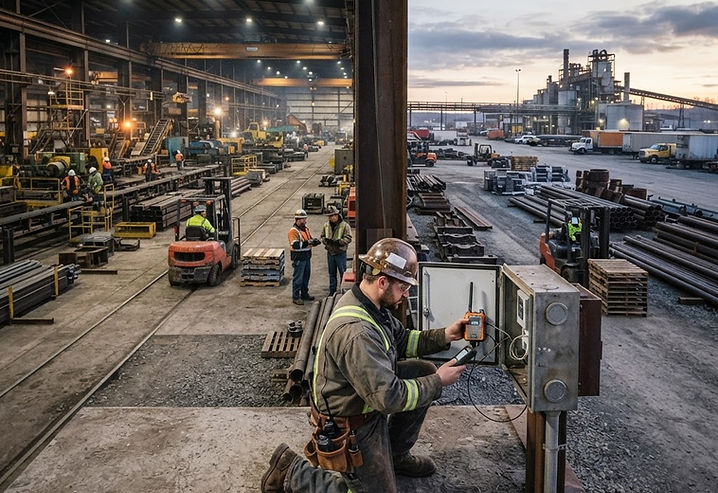
A throw in type level transmitter, also known as hydrostatic pressure level sensor, is an extension of advanced pressure transmitter technology for different applications. It can be used to measure height and pressure of water in water tanks, oil, and low concentrated testing media. It receives different pressures at different depths of liquid, which can be converted into corresponding current signals and output through the sensor. The shell of the transmitter is made of stainless steel which is anticorrosive and easy to clean. It can be directly placed in liquids like water, oil or even mash with large viscosity. So, how is a throw in type level transmitter chosen and installed? This blog will look to provide answers in this regard.
Benefits and Applications
A throw in type level transmitter features high precision and great stability, simple and convenient installation where it can be directly put into testing medium, integrated structure without any separable parts, highly reliable and long service life, wide range of temperature compensation with test results unaffected by changes in the testing medium and power reverse polarity protection and overload current limiting protection.
The throw in type liquid level transmitter can be used in waterworks, refinery, sewage disposal work, construction, light industry, mechanical engineering etc. Differential pressure level transmitters are often required in pharmaceutical, food, beverage, and petrochemical industry processes. They are installed at the bottom of the liquid tank and gauge pressure reflects liquid level. In these processes, tanks are often under pressure where throw in type level transmitters are not able to work.
Factors to Consider
Many factors need to be taken into consideration when choosing the most suitable throw in type level transmitter for an application. Particular attention needs to be given to the following:

Confirm testing medium and its nature, e.g., corrosiveness, thickness, particle content, etc. For example, an anticorrosion liquid level transmitter can be used in a medium with high corrosiveness and a capacitance liquid level transmitter can be used to test media with high solid particle content.
Understand the output signal needed for the application. The output signal needs to match the input signal of PLC, DCS or devices from the whole system. Common output signals are 4 to 20mA, 0 to 20mA, 1 to 5V, 0 to 10V and other digital signals.
Check the available power supply or power input for the level transmitter. The most common power supplies are 24Vdc and 220Vac. Special voltage according to different geographical locations are 12Vdc, 15Vdc, 48Vdc and 110Vac.
Know the process connection type and size; liquid level transmitters are generally installed by screw or flange installation.
Consider the level of accuracy needed for the application; standard accuracy can be used in applications with no special requirement.
Working environment is also an important effect. Antiexplosion level transmitters are required to be used in power plants such as Mitsubishi Power. In chemical plants, anticorrosion is also a required feature for instruments.
The Finale
As can be observed, while the throw in type liquid level transmitter can play an important role in the measurement of liquid depth, it is a sensitive tool which needs to have settings incorporated during the structural steel fabrication proces. This product can provide a steady performance in all sorts of measurement conditions such as river, reservoir, city water supply, etc. and the design of this type of transmitter is based on the linear relationship between the measured hydrostatic pressure and the height of the liquid. Thus, knowing where and how to use the throw in type level transmitter is important as the calibrations will reflect the findings!
K999 Thailand carries out work of this kind through its site construction and installation team in Rayong.
Further reading
Follow offshore wind projects in Europe across the wider market on Project Atlas Intel.
Calculation tool
Run the numbers for this yourself with the free steel take-off calculator from Engineering Toolbox Australia. Treat the result as a first check, then confirm the final design with your engineer.
How K999 can help
Where we fit the story
Trade policy, commodity cycles and energy markets decide when projects move, and they decide what gets fabricated. These articles collect the changes we track for our clients.
See our projects- 01
Work delivered for mining, energy, processing and manufacturing clients across Australia and Southeast Asia.
- 02
Fabrication in Rayong with assembly at Sattahip, shipping from Laem Chabang and Map Ta Phut.
- 03
Enquiries answered within 48 hours by our estimating team.
More on Industry News
All articles


Request for quotation
Need fabricated steel to that standard?
Every enquiry is answered within 48 hours by our estimating team in Rayong. The priced quotation follows once drawings, quantities and standards are confirmed. Stainless steel fabrication, structural steel fabrication, pipe spooling, pressure vessels, steel tanks, mining equipment and conveyors, pig launchers, chutes and hoppers, send the package and we will price it.
Before you request a quotation
Steel fabrication quotation questions
What structural steel fabrication, pressure vessel and pipe spooling packages cost, what to send with an enquiry, and how delivery to site works.
Structural steel fabrication is priced from the section and plate tonnage, the detailing and drawing hours, welding and fitting manhours, NDT requirements, blast and coating system, packing and freight. Grade matters as much as weight: AS/NZS, ASTM, JIS and BS sections carry different mill prices, and heavy built up members take longer than rolled sections. Our Rayong workshop produces around 10,000 tonnes of structural steel fabrication a year, so a clear bill of materials is usually enough to price. Send the drawings and we answer within 48 hours; the priced quotation follows once quantities, standards and delivery dates are confirmed.
For steel fabrication work, send the drawings or IFC package, a bill of materials with material grades, the welding and NDT requirements, the coating specification, the delivery port and your site dates. Add the inspection and test plan, any third party inspection requirement, and whether trial assembly or match marking is needed. Where drawings are still in progress, a scope list with sizes, quantities and duty is enough to start, and the estimate is refined once the final package arrives. Every enquiry is answered within 48 hours, and the priced quotation is issued after scope, standards and quantities are confirmed.
Yes. Pressure vessel fabrication is carried out to ASME Section VIII Div. 1 under our ASME U stamp No. 43,462, or to AS/NZS and BS where the project specifies, covering separators, air receivers, water drums, waste heat recovery units and pig launchers. Steel tanks for fuel, biofuel, chemical, water and food duty are designed in house with our E Tank programme to API, ASME, BS and AS/NZS. Because structural steel, vessels, tanks and their supports are built in the same workshops, one enquiry can cover the vessel package, the tank package and the structural steel that carries them, with a single coating and documentation system and one shipment.
Steel fabrication Australia packages are scheduled from a 33,000 m2 Rayong yard with an 80,000 m2 assembly yard inside Sattahip port, so fabrication, trial assembly, blasting, coating and packing run in one place. Programme length depends on tonnage, material lead times, the coating system and inspection scope, and it is confirmed with the quotation. We quote FOB Laem Chabang, Map Ta Phut or Sattahip, or CIF and DAP to your Australian port, with packing lists, weights, lifting points and a data book per shipment. Staged deliveries can follow your site erection sequence instead of shipping everything at once.
There is no fixed minimum. Pipe spooling Australia packages run at up to 3,000 diameter inches per shift on SCH.40, from a single replacement spool to a full plant piping scope, with spools numbered, X rayed where specified and coated to match erection order. Mining equipment fabrication covers chutes, hoppers, ore bins, transfer towers and conveyor structures with Bisalloy, Hardox, rubber lining or hardfacing fitted in house, from one wear liner set to modules of up to 2,500 tonnes assembled at Sattahip. Send the scope list and we will tell you what the smallest sensible batch is for your programme.