


Fabrication
Tipping and Bowing of Metal Parts
Why formed and welded parts tip and bow, and the fixturing, heat input and sequencing controls that hold geometry flat.
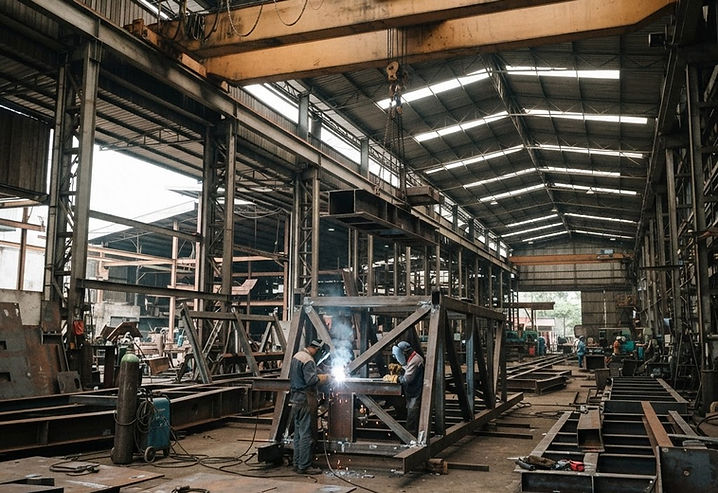
It is well known that the primary cutting operation at most metal fabricators is performed by the fiber laser. This has made steel laser cutting very productive, until a part tips and causes a head to stop or crash. This can harm the productivity and cosmetic value of metal forming and increase the expenditure required to create the final product. This blog will look to explore this topic in more detail and also cover the subject of tabbing.
Reasons for Tip and Bow
Years ago, many machine providers and software vendors focused on transitioning operators from punch presses to the flying optic lasers. Because the punch moves the sheet, everything needs to be tabbed in place, at least until they are evacuated down a chute or lifted by suction cups on an automated part removal system. Otherwise, parts do not fall out of a nest until operators snap or shake them out. When shops jumped to the flying optic lasers, sheets no longer moved, and many parts that were punched with microtabs no longer needed them. Of course, such lasers introduced a new variable: the slat position.
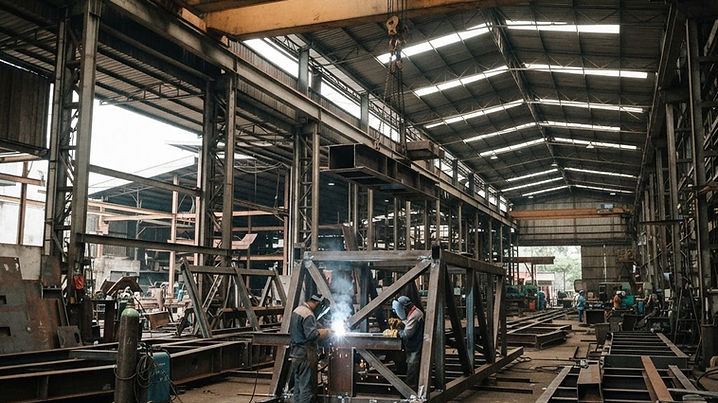
Slats generally are placed 2 to 3 inches apart, depending on the model of the machine. So, if a part (or slug from an internal feature) has at least one dimension less than 6 inches, it has the potential to tip. Most slats consist of tips or “teeth” that support the work. Certain part geometries could end up tipping into the “V” of the slat. Smaller parts can tip, but larger parts, especially those that are long and thin, can bow upward and throw a wrench into process stability of products such as pressure vessels. Material touted as being “laser flat” ideally should have equalized stresses such that, when a part is cut in the optimal way (to control the effects of heat, for instance), it does not bow.
Ripple Effects of Tabbing
These days, software can automatically detect and rotate parts so that the longest dimension is oriented perpendicular to the slats. Programmers also can set different tabbing strategies for different part sizes; a very small part might require just one tab, while larger parts up to a certain dimension require progressively more. Beyond a certain dimension, software will not place any tab at all. Tab placement can vary depending on the job requirements and the best practices at a particular structural steel fabrication company. For instance, some operations might choose to tab parts directly on the corners, while others prefer tabs on straight edges and, if a corner needs something for stability, a tab can be put several thousands of an inch away from the actual corner. It all depends on what benefits downstream operations and the part’s ultimate fit and function. Tab geometry can change depending on material thickness and grade, but it can also change based on what operations a part will undergo downstream. Those tab geometries affect how they break away from the part. At the laser offloading area, operators might shake parts out of a nest before running them through a flat part deburring machine. Microtabs typically leave a burr on the part and a divot in the skeleton. This assumes that a fabricator will want to deburr the piece to create a perfectly flat edge.
Closing Statement
It needs to be understood that every machine part does not need a perfectly flat edge. For edges hidden within an assembly or covered by a weld, shops might choose to skip deburring and send the parts directly to forming. This may help in ensuring that parts do not form tips and bows, however that would also depend on other variables like the cut path strategy, nesting etc. In essence, it is possible to manage material from forming tips and bows, however there needs to be a greater understanding of the laser cutting process to manage this phenomenon.
Further reading
Follow procurement opportunities across the wider market on Project Atlas Intel.
Calculation tool
Run the numbers for this yourself with the free mechanical engineering calculator from Engineering Toolbox Australia. Treat the result as a first check, then confirm the final design with your engineer.
How K999 can help
Fabrication capacity behind the article
Articles in this section describe work we run every week in Rayong: cutting, forming, welding and assembly, under cover and in the yard, with the documentation that goes with it.
Structural steel fabrication- 01
Two workshops totalling more than 33,000 m² plus an 80,000 m² assembly yard at Sattahip.
- 02
Structural steel fabrication to 10,000 tonnes a year, with the largest single module built at 2,500 tonnes.
- 03
Blast, prime and paint before dispatch, with dimensional reports issued against the approved drawings.
More on Fabrication
All articles


Request for quotation
Need fabricated steel to that standard?
Every enquiry is answered within 48 hours by our estimating team in Rayong. The priced quotation follows once drawings, quantities and standards are confirmed. Stainless steel fabrication, structural steel fabrication, pipe spooling, pressure vessels, steel tanks, mining equipment and conveyors, pig launchers, chutes and hoppers, send the package and we will price it.
Before you request a quotation
Steel fabrication quotation questions
What structural steel fabrication, pressure vessel and pipe spooling packages cost, what to send with an enquiry, and how delivery to site works.
Structural steel fabrication is priced from the section and plate tonnage, the detailing and drawing hours, welding and fitting manhours, NDT requirements, blast and coating system, packing and freight. Grade matters as much as weight: AS/NZS, ASTM, JIS and BS sections carry different mill prices, and heavy built up members take longer than rolled sections. Our Rayong workshop produces around 10,000 tonnes of structural steel fabrication a year, so a clear bill of materials is usually enough to price. Send the drawings and we answer within 48 hours; the priced quotation follows once quantities, standards and delivery dates are confirmed.
For steel fabrication work, send the drawings or IFC package, a bill of materials with material grades, the welding and NDT requirements, the coating specification, the delivery port and your site dates. Add the inspection and test plan, any third party inspection requirement, and whether trial assembly or match marking is needed. Where drawings are still in progress, a scope list with sizes, quantities and duty is enough to start, and the estimate is refined once the final package arrives. Every enquiry is answered within 48 hours, and the priced quotation is issued after scope, standards and quantities are confirmed.
Yes. Pressure vessel fabrication is carried out to ASME Section VIII Div. 1 under our ASME U stamp No. 43,462, or to AS/NZS and BS where the project specifies, covering separators, air receivers, water drums, waste heat recovery units and pig launchers. Steel tanks for fuel, biofuel, chemical, water and food duty are designed in house with our E Tank programme to API, ASME, BS and AS/NZS. Because structural steel, vessels, tanks and their supports are built in the same workshops, one enquiry can cover the vessel package, the tank package and the structural steel that carries them, with a single coating and documentation system and one shipment.
Steel fabrication Australia packages are scheduled from a 33,000 m2 Rayong yard with an 80,000 m2 assembly yard inside Sattahip port, so fabrication, trial assembly, blasting, coating and packing run in one place. Programme length depends on tonnage, material lead times, the coating system and inspection scope, and it is confirmed with the quotation. We quote FOB Laem Chabang, Map Ta Phut or Sattahip, or CIF and DAP to your Australian port, with packing lists, weights, lifting points and a data book per shipment. Staged deliveries can follow your site erection sequence instead of shipping everything at once.
There is no fixed minimum. Pipe spooling Australia packages run at up to 3,000 diameter inches per shift on SCH.40, from a single replacement spool to a full plant piping scope, with spools numbered, X rayed where specified and coated to match erection order. Mining equipment fabrication covers chutes, hoppers, ore bins, transfer towers and conveyor structures with Bisalloy, Hardox, rubber lining or hardfacing fitted in house, from one wear liner set to modules of up to 2,500 tonnes assembled at Sattahip. Send the scope list and we will tell you what the smallest sensible batch is for your programme.