


Materials & Coatings
Understanding the Properties and Attributes of 316 Stainless Steel
316 and 316L balance molybdenum corrosion resistance with weldability, making them the default for process and marine equipment.
Introduction to 316 Stainless Steel
316 stainless steel is a high performance alloy that is often hailed as one of the most versatile stainless steels available in the market. Its unique composition is a key factor behind its widespread use across numerous industries, particularly in environments that require enhanced corrosion resistance. Comprising iron, chromium, nickel, and an essential addition of molybdenum, 316 stainless steel differentiates itself from other grades, such as 304 stainless steel, by the presence of this additional molybdenum. This variation plays a significant role in improving its overall resistance to pitting and crevice corrosion, particularly in chloride rich settings.
The chemical composition of 316 stainless steel typically consists of about 16% chromium, 10% nickel, and 2% molybdenum. This combination not only enhances its durability and strength but also contributes to its ability to withstand high temperatures and hostile environments. As a result, 316 stainless steel is preferred in marine applications, chemical processing, and other settings where exposure to corrosive substances is inevitable. Industries ranging from pharmaceuticals to food processing greatly benefit from its robustness and reliability, highlighting its importance in maintaining safety and efficiency in operations.
Furthermore, the mechanical properties of 316 stainless steel, such as tensile strength and ductility, make it suitable for a wide range of applications, including pipe spool fabrication, tanks, and even surgical instruments. Its ability to retain structural integrity even in harsh conditions underscores why many engineers and architects consider 316 stainless steel a go to material for critical projects. Whether used in construction, technology, or healthcare, its remarkable attributes consistently deliver reliable performance and longevity, marking 316 stainless steel as a top choice among stainless steel grades.
Mechanical Properties of 316 Stainless Steel
316 stainless steel is renowned for its exceptional mechanical properties that make it a preferred choice in various industrial applications. One of its key attributes is tensile strength, which refers to the maximum amount of tensile (pulling) stress that the material can withstand before failure. The tensile strength of 316 stainless steel typically ranges between 480 to 620 MPa. This high tensile strength ensures that components made from 316 stainless steel can endure significant stress and strain in demanding environments without compromising their integrity.
Yield strength is another critical mechanical property of 316 stainless steel, indicating the stress at which the material begins to deform plastically. For 316 stainless steel fabrication, the yield strength is generally around 290 MPa. This means that the material can resist deformation under load, making it particularly valuable in applications such as construction and manufacturing where reliability is paramount.
Elongation, a measure of ductility, indicates how much a material can stretch before breaking. The elongation of 316 stainless steel is typically about 40% in a standard test, allowing it to deform without fracturing. This characteristic is beneficial in various applications where flexibility is necessary while maintaining structural integrity. Hardness, another essential mechanical property, varies depending on the specific heat treatment applied, but generally, 316 stainless steel exhibits a moderate hardness that balances malleability and strength.
Additionally, 316 stainless steel demonstrates excellent temperature resistance, maintaining its mechanical properties in elevated temperatures. Its performance under stress further enhances its utility in environments subject to fluctuating conditions. These mechanical properties collectively contribute to the material’s reputation for durability and reliability, making 316 stainless steel an indispensable choice in numerous fields, including aerospace, marine, and chemical processing industries.

Corrosion Resistance and Environmental Benefits
316 stainless steel is notably recognized for its exceptional corrosion resistance, primarily owing to its chemical composition, which includes molybdenum. This element enhances the alloy’s ability to withstand corrosive environments, particularly those containing chlorides. As a result, 316 stainless steel is particularly effective in marine settings where saltwater can lead to significant degradation in lesser materials. In such environments, the alloy forms a protective passive layer that mitigates the risk of pitting and crevice corrosion, allowing it to maintain its integrity and performance over time.
Additionally, 316 stainless steel is widely adopted in the chemical processing industry, where it is exposed to a range of harsh chemicals and aggressive environments. For instance, it is often used in the manufacturing of pharmaceutical and chemical storage tanks, delivery systems, and processing equipment. Its resistance to corrosive agents ensures that products remain uncontaminated and machinery operates efficiently, reducing the risk of costly failures.
In the food production sector, 316 stainless steel stands out due to its hygienic properties and ability to resist corrosion caused by food acids and cleaning chemicals. The robustness of 316 stainless steel helps prevent corrosion related contamination, ensuring food safety and compliance with health regulations. This quality is particularly vital in facilities where sanitation is paramount, such as in dairy, beverage, and pharmaceutical production.
Beyond its practical applications, 316 stainless steel also offers significant environmental benefits. Its recyclability is a crucial factor in promoting sustainable practices, as stainless steel can be recycled multiple times without losing its properties. This feature not only conserves natural resources but also reduces waste. Moreover, the longevity of 316 stainless steel, often lasting for decades without degradation, means less frequent replacement, further lowering the environmental impact associated with sourcing and manufacturing new materials.
Applications and Industries Utilizing 316 Stainless Steel
316 stainless steel, recognized for its superior corrosion resistance and durability, is employed in a myriad of applications across various industries. Its unique composition, particularly the addition of molybdenum, enhances its performance in hostile environments, making it a preferred choice in applications where exposure to harsh chemicals and conditions is prevalent.
In the manufacturing sector, 316 stainless steel is commonly utilized for components that require high strength and resistance to corrosive elements. For instance, it is widely used in the production of pumps, valves, and fittings in chemical processing plants, where resistance to aggressive solvents is paramount. Additionally, its sanitary qualities make it a popular material in producing food processing equipment, ensuring compliance with health regulations and standards.
In construction, 316 stainless steel is often found in architectural applications, including façade cladding, handrails, and structural components. Its aesthetic appeal, coupled with long lasting performance against environmental factors, makes it an ideal material for both commercial and residential projects. Furthermore, in the automotive industry, it is utilized in the manufacturing of exhaust systems and fuel tanks, where durability and corrosion resistance are essential considerations.
The medical field also benefits significantly from 316 stainless steel, particularly in surgical instruments and medical devices. Its biocompatibility and resistance to bodily fluids emphasize its importance in this sector, enhancing both the longevity and safety of medical tools. Moreover, the marine industry heavily relies on 316 stainless steel due to its resilience against seawater corrosion, making it vital for applications such as boat fittings, rigging, and other maritime components.
Looking to the future, advancements in the usage of 316 stainless steel are anticipated. Innovations in metallurgy and manufacturing processes may further enhance its properties, leading to new applications and improved performance across these industries. As technology evolves, 316 stainless steel will likely continue to be a cornerstone material, showcasing its adaptability in addressing the challenges presented by diverse environments.
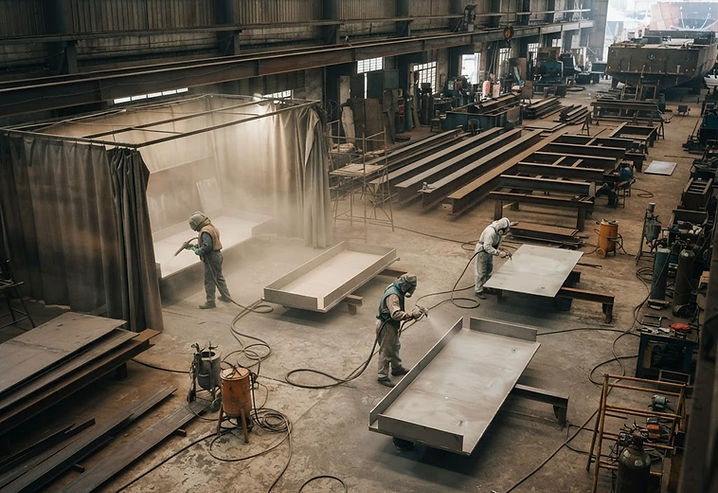
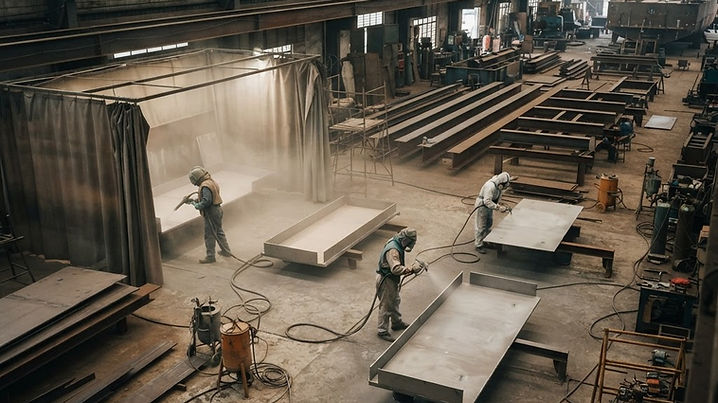
K999 Thailand carries out work of this kind through its abrasive blasting and protective coating team in Rayong.
Further reading
Follow Battery Materials across the wider market on Project Atlas Intel.
Calculation tool
Run the numbers for this yourself with the free engineering formulas australia from Engineering Toolbox Australia. Treat the result as a first check, then confirm the final design with your engineer.
How K999 can help
Material selection and surface protection
We fabricate in stainless, duplex, carbon steel and nickel alloys, and we finish those materials for the environment they will live in, from coastal yards to process plants.
Stainless steel fabrication- 01
Stainless and duplex fabrication with matched filler metals and controlled interpass temperature.
- 02
Abrasive blasting to the specified surface profile before protective coating application.
- 03
Rubber lining and hardfacing for abrasive slurries, chutes and wear plates.
More on Materials & Coatings
All articles


Request for quotation
Need fabricated steel to that standard?
Every enquiry is answered within 48 hours by our estimating team in Rayong. The priced quotation follows once drawings, quantities and standards are confirmed. Stainless steel fabrication, structural steel fabrication, pipe spooling, pressure vessels, steel tanks, mining equipment and conveyors, pig launchers, chutes and hoppers, send the package and we will price it.
Before you request a quotation
Steel fabrication quotation questions
What structural steel fabrication, pressure vessel and pipe spooling packages cost, what to send with an enquiry, and how delivery to site works.
Structural steel fabrication is priced from the section and plate tonnage, the detailing and drawing hours, welding and fitting manhours, NDT requirements, blast and coating system, packing and freight. Grade matters as much as weight: AS/NZS, ASTM, JIS and BS sections carry different mill prices, and heavy built up members take longer than rolled sections. Our Rayong workshop produces around 10,000 tonnes of structural steel fabrication a year, so a clear bill of materials is usually enough to price. Send the drawings and we answer within 48 hours; the priced quotation follows once quantities, standards and delivery dates are confirmed.
For steel fabrication work, send the drawings or IFC package, a bill of materials with material grades, the welding and NDT requirements, the coating specification, the delivery port and your site dates. Add the inspection and test plan, any third party inspection requirement, and whether trial assembly or match marking is needed. Where drawings are still in progress, a scope list with sizes, quantities and duty is enough to start, and the estimate is refined once the final package arrives. Every enquiry is answered within 48 hours, and the priced quotation is issued after scope, standards and quantities are confirmed.
Yes. Pressure vessel fabrication is carried out to ASME Section VIII Div. 1 under our ASME U stamp No. 43,462, or to AS/NZS and BS where the project specifies, covering separators, air receivers, water drums, waste heat recovery units and pig launchers. Steel tanks for fuel, biofuel, chemical, water and food duty are designed in house with our E Tank programme to API, ASME, BS and AS/NZS. Because structural steel, vessels, tanks and their supports are built in the same workshops, one enquiry can cover the vessel package, the tank package and the structural steel that carries them, with a single coating and documentation system and one shipment.
Steel fabrication Australia packages are scheduled from a 33,000 m2 Rayong yard with an 80,000 m2 assembly yard inside Sattahip port, so fabrication, trial assembly, blasting, coating and packing run in one place. Programme length depends on tonnage, material lead times, the coating system and inspection scope, and it is confirmed with the quotation. We quote FOB Laem Chabang, Map Ta Phut or Sattahip, or CIF and DAP to your Australian port, with packing lists, weights, lifting points and a data book per shipment. Staged deliveries can follow your site erection sequence instead of shipping everything at once.
There is no fixed minimum. Pipe spooling Australia packages run at up to 3,000 diameter inches per shift on SCH.40, from a single replacement spool to a full plant piping scope, with spools numbered, X rayed where specified and coated to match erection order. Mining equipment fabrication covers chutes, hoppers, ore bins, transfer towers and conveyor structures with Bisalloy, Hardox, rubber lining or hardfacing fitted in house, from one wear liner set to modules of up to 2,500 tonnes assembled at Sattahip. Send the scope list and we will tell you what the smallest sensible batch is for your programme.