


Mining & Resources
Upcoming Mining Construction Projects in Western Australia for 2025
Western Australia is a pivotal player in the global mining sector, boasting some of the richest mineral resources on the planet.
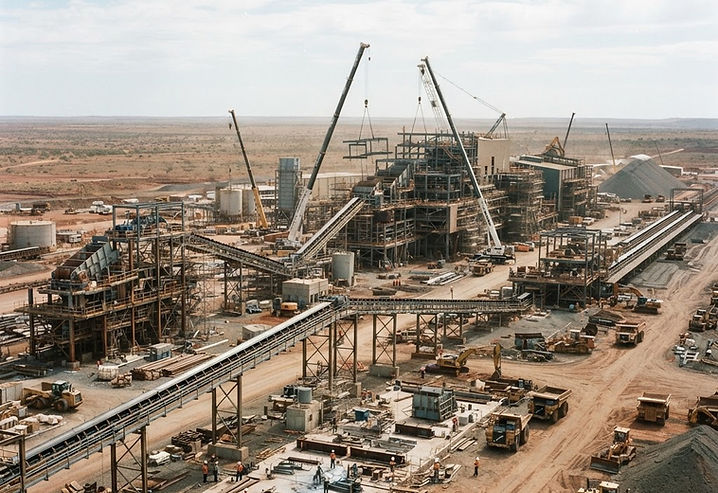
Overview of Western Australia ‘s Mining Industry
Western Australia is a pivotal player in the global mining sector, boasting some of the richest mineral resources on the planet. As one of the world’s leading producers of various minerals, including iron ore, gold, and nickel, the state contributes significantly to both the Australian economy and the global supply chain. According to recent statistics, mining accounts for approximately 30% of Western Australia’s GDP, underscoring its crucial role in bolstering the local and national economy.
The region’s mineral wealth is complemented by a strong infrastructure network, which facilitates efficient extraction and transportation. This network has seen significant investments in road, rail, and port facilities, enhancing the ability to respond to growing global demands. Furthermore, the mining industry employs thousands of individuals in Western Australia, directly and indirectly supporting local communities and contributing to regional development. In 2021, it was reported that over 120,000 people were employed in the mining sector, showcasing its importance as a key employment driver.
Over the years, the mining industry in Western Australia has undergone substantial transformations, evolving from manual labor practices to embracing advanced technological innovations. This modernization has led to increased efficiency, reduced operational costs, and improved safety standards. Noteworthy advancements in machinery and equipment, including automated mining vehicles and digital monitoring systems, have further positioned Western Australia as a leader in mining innovation.
As the demand for minerals continues to rise globally, Western Australia stands poised for future expansion in the mining industry. The upcoming mining construction projects scheduled for 2025 will not only bolster production capabilities but also create additional job opportunities across various sectors. In conclusion, the significance of the mining industry in Western Australia cannot be overstated; it remains a cornerstone of economic prosperity and a driving force for sustainable development in the region.
Key Mining Projects Scheduled for 2025
Western Australia continues to cement its reputation as a leading hub for mining construction, with numerous projects slated to commence in 2025. These projects span various minerals, showcasing the diverse investment landscape and the evolving nature of the mining sector. One noteworthy project is the expansion of the Iron Ore facility at Pilbara, which focuses on increasing production capacity in response to the growing global demand. The investment is estimated to reach $300 million, emphasizing the significance of iron as a core component in steel and stainless steel manufacturing.
Another significant undertaking involves the development of the lithium extraction facility in the Goldfields region. As electric vehicle technology gains traction worldwide, the expectation for lithium supply surges, prompting investment forecasts of around $200 million. This project aims to enhance operational efficiencies through the incorporation of innovative processing technologies, which highlights an ongoing trend toward automation and sustainability in the industry.
A prominent player in the industry, BHP, is set to initiate construction on a new copper mine in the Yilgarn region. This venture is anticipated to attract an investment of approximately $400 million. The mine aims not only to increase copper supply but also to minimize environmental impacts through advanced mining techniques and practices tailored to preserve the surrounding ecosystems.

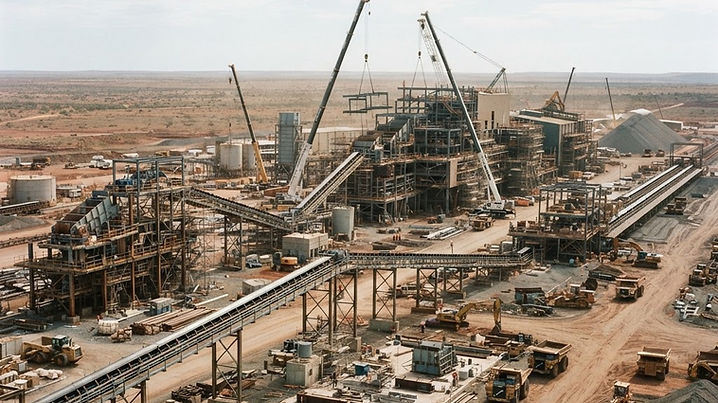
Additionally, the gold mining sector is witnessing the inception of a state of the art facility aimed at harnessing gold deposits in the Pilbara region. Significant advancements in processing techniques, particularly those utilizing stainless steel structures in the manufacturing process, will enable better efficiency and lower operational costs.
Furthermore, with advancements in technology, projects are increasingly focusing on sustainability, ensuring that metal fabrication and stainless steel use enhance the overall efficiency and safety of mining operations. Overall, 2025 will herald a new era of mining activity in Western Australia, characterized by a diverse array of projects, an influx of investments, and burgeoning technological innovation.
Economic and Environmental Impacts
The upcoming mining construction projects in Western Australia for 2025 are anticipated to play a significant role in bolstering the state’s economy. These projects are expected to create numerous job opportunities, not only within the mining sector but also in associated industries such as transportation, engineering, and fabrication. Specifically, the demand for skilled labor in fields like metal fabrication stainless steel and stainless steel manufacturing will likely rise, promoting local employment and skill development. As businesses ramp up to support these projects, local economies will benefit from increased spending and investment, ultimately contributing to a stronger gross domestic product (GDP) for the state.
Infrastructure development will also be a key component of these mining projects. Enhancements in transportation networks, including roads, railways, and port facilities, will be essential for efficiently moving resources. Such improvements not only facilitate mining operations but also benefit surrounding communities by improving access to services and markets. With the increased demand for materials, the role of steel and stainless steel in construction and machinery will become even more prominent, catalyzing growth in local manufacturing sectors.
However, the economic benefits of such projects come with environmental considerations that must be carefully navigated. Mining activities can have adverse impacts on ecosystems, including land degradation, water resource depletion, and biodiversity loss. It is crucial for mining companies to adopt sustainability measures, including the implementation of efficient waste management practices and rehabilitation projects to mitigate these effects. The challenge lies in striking a balance between driving economic growth and preserving the environment. This delicate equilibrium is essential for ensuring that future generations can enjoy natural resources while benefiting from a thriving economic landscape.
Addressing these multifaceted impacts will require collaboration among government, industry stakeholders, and local communities. By developing comprehensive policies that emphasize both economic and environmental stewardship, Western Australia can optimize the outcomes of its upcoming mining initiatives.
Future Outlook for Mining in Western Australia
The mining industry in Western Australia is poised for significant transformations as it navigates the evolving landscape beyond 2025. As global demand for minerals, including essential metals such as lithium, nickel, and iron ore, continues to rise, Western Australia is strategically positioned to leverage its vast mineral resources. This demand is largely driven by the global transition toward cleaner energy solutions, where materials like lithium are pivotal for battery manufacturing and renewable technologies. Consequently, Western Australia’s mining sector is likely to experience increased investment and expansion initiatives aimed at meeting these evolving market needs.
Technological advancements will play a critical role in shaping the future of mining in Western Australia. With the introduction of automation and smart mining technologies, companies are expected to enhance operational efficiencies, reduce costs, and minimize environmental impact. The integration of robotics and artificial intelligence into mining processes can streamline operations, ensuring the consistent and effective extraction of minerals. Furthermore, innovations in metal fabrication stainless steel processes may present opportunities for producing more durable and efficient machinery, which can ultimately contribute to a more sustainable mining environment.
Regulatory changes also warrant attention, as both state and federal governments are likely to implement updated frameworks to promote sustainability and environmental stewardship in mining practices. As the global community becomes increasingly focused on sustainability, mining operations in Western Australia may be required to adopt greener technologies and practices that align with international climate agreements. Stakeholders must therefore prepare for a landscape where compliance with stringent regulations is crucial for operational licenses and social acceptance.
In conclusion, the future of mining in Western Australia appears promising, underpinned by robust global demand, technological innovations, and evolving regulations that emphasize sustainability. By capitalizing on its resources, embracing advancements in manufacturing technologies, and aligning with environmental expectations, the mining sector can thrive in the years to come.
K999 Thailand carries out work of this kind through its mining equipment fabrication team in Rayong.
Further reading
Follow Mining across the wider market on Project Atlas Intel.
Calculation tool
Run the numbers for this yourself with the free structural engineering calculator from Engineering Toolbox Australia. Treat the result as a first check, then confirm the final design with your engineer.
How K999 can help
Equipment built for the pit
Mining work is where wear life decides the maintenance budget, so the articles in this section feed directly into how we detail chutes, hoppers, conveyors and wear parts.
Mining equipment and conveyors- 01
Mining equipment and conveyor fabrication with replaceable wear liners and hardfaced contact surfaces.
- 02
Chutes, hoppers and transfer structures detailed for access, lifting and shutdown windows.
- 03
Site assembly planning from the Sattahip yard for modules that ship by sea.
More on Mining & Resources
All articles

Request for quotation
Need fabricated steel to that standard?
Every enquiry is answered within 48 hours by our estimating team in Rayong. The priced quotation follows once drawings, quantities and standards are confirmed. Stainless steel fabrication, structural steel fabrication, pipe spooling, pressure vessels, steel tanks, mining equipment and conveyors, pig launchers, chutes and hoppers, send the package and we will price it.
Before you request a quotation
Steel fabrication quotation questions
What structural steel fabrication, pressure vessel and pipe spooling packages cost, what to send with an enquiry, and how delivery to site works.
Structural steel fabrication is priced from the section and plate tonnage, the detailing and drawing hours, welding and fitting manhours, NDT requirements, blast and coating system, packing and freight. Grade matters as much as weight: AS/NZS, ASTM, JIS and BS sections carry different mill prices, and heavy built up members take longer than rolled sections. Our Rayong workshop produces around 10,000 tonnes of structural steel fabrication a year, so a clear bill of materials is usually enough to price. Send the drawings and we answer within 48 hours; the priced quotation follows once quantities, standards and delivery dates are confirmed.
For steel fabrication work, send the drawings or IFC package, a bill of materials with material grades, the welding and NDT requirements, the coating specification, the delivery port and your site dates. Add the inspection and test plan, any third party inspection requirement, and whether trial assembly or match marking is needed. Where drawings are still in progress, a scope list with sizes, quantities and duty is enough to start, and the estimate is refined once the final package arrives. Every enquiry is answered within 48 hours, and the priced quotation is issued after scope, standards and quantities are confirmed.
Yes. Pressure vessel fabrication is carried out to ASME Section VIII Div. 1 under our ASME U stamp No. 43,462, or to AS/NZS and BS where the project specifies, covering separators, air receivers, water drums, waste heat recovery units and pig launchers. Steel tanks for fuel, biofuel, chemical, water and food duty are designed in house with our E Tank programme to API, ASME, BS and AS/NZS. Because structural steel, vessels, tanks and their supports are built in the same workshops, one enquiry can cover the vessel package, the tank package and the structural steel that carries them, with a single coating and documentation system and one shipment.
Steel fabrication Australia packages are scheduled from a 33,000 m2 Rayong yard with an 80,000 m2 assembly yard inside Sattahip port, so fabrication, trial assembly, blasting, coating and packing run in one place. Programme length depends on tonnage, material lead times, the coating system and inspection scope, and it is confirmed with the quotation. We quote FOB Laem Chabang, Map Ta Phut or Sattahip, or CIF and DAP to your Australian port, with packing lists, weights, lifting points and a data book per shipment. Staged deliveries can follow your site erection sequence instead of shipping everything at once.
There is no fixed minimum. Pipe spooling Australia packages run at up to 3,000 diameter inches per shift on SCH.40, from a single replacement spool to a full plant piping scope, with spools numbered, X rayed where specified and coated to match erection order. Mining equipment fabrication covers chutes, hoppers, ore bins, transfer towers and conveyor structures with Bisalloy, Hardox, rubber lining or hardfacing fitted in house, from one wear liner set to modules of up to 2,500 tonnes assembled at Sattahip. Send the scope list and we will tell you what the smallest sensible batch is for your programme.