


Fabrication
Utility of Press Brake Machine
Press brake tonnage, tooling and back gauge control decide bend accuracy, and how to plan a bend sequence that avoids collision.
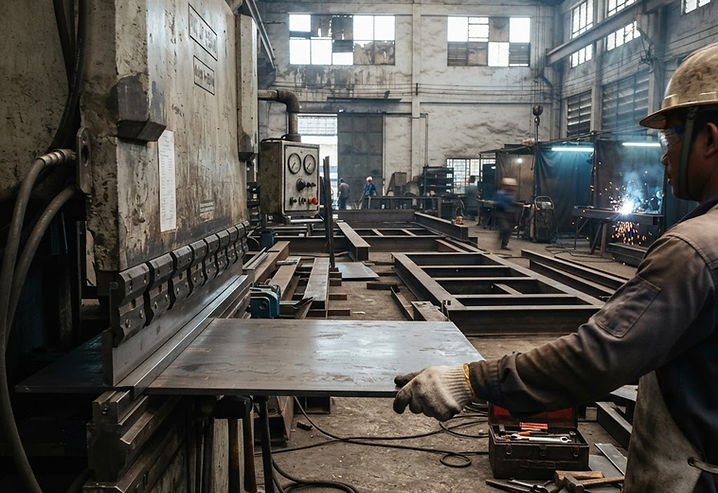
Metal fabricators in Australia may find that a press brake machine is an indispensable piece of equipment. It provides a multitude of benefits, including an enhanced capacity for complicated tasks, automation, improved tolerance, and an overall improvement in the effectiveness of the working environment. As a result, the press brake machine is ubiquitous in many fabrication projects and is preferred by fabricators. This blog will take a deeper dive into the nuts and bolts of this versatile tool and whether its fantastic reputation is well deserved.
Working of Press Brake Machine
A press brake is a type of equipment that can carry out a variety of metal fabrication techniques, such as blanking, punching, and cutting, among others. Sheet metal components of bespoke and OEM design have been manufactured by various businesses using the equipment in question. The press brake is undeniably among the most useful devices utilized in producing goods at this time, and its history can be traced back to the 20th century.
Benefits of Press Brake Machine
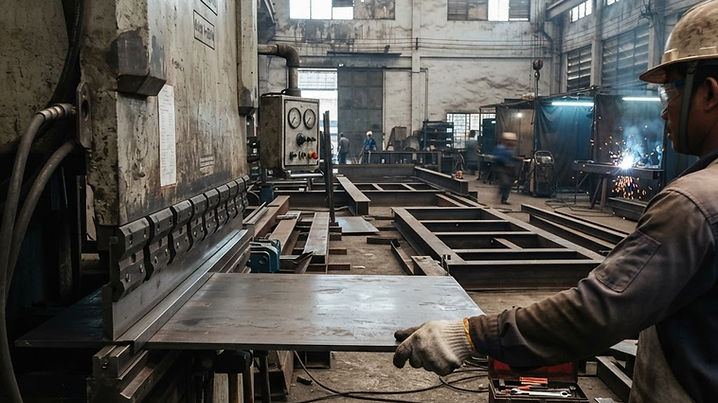
Less Waste, Compared to other production methods, the press brake results in a significantly lower amount of waste material. This can be ascribed to the machine’s capability of bending, cutting, or curving sheet metal into precise pieces via heat induction bending services. Most press brake machines are computer numerically controlled, often known as CNC. This indicates that they are fully automated and that every design component must adhere to an efficient process. Because of this, there is a reduction in the amount of trash created. Because of this, operators can conduct press brake operations promptly and effectively. Additionally, it shortens the amount of time required for manufacturing and lowers the costs incurred by consumers. Postprocessing the manufactured metal pieces are also required less often, thanks to this development.
Development of Complicated Designs, The production of sheet metal is crucial in virtually all manufacturing processes. As an illustration, construction organizations require fabrications to build rafters, beams, and other structural elements for the projects they are working on. Conveyor belts, weighing scales, mixers, and other critical pieces of food service equipment are all examples of the kinds of metal fabrications the food and beverage industry needs to produce. It is interesting to look back and see how far the press brake machine has come. It used to be equipped to bend metals into shape, but now it can generate far more complicated shapes. These days, press brakes come with interchangeable components, which enables heavy steel fabrication companies to conduct a wide variety of operations. Some examples of these operations include burring, coining, and bending.
Robotic Process Automation, Manual operation of a press brake machine is an option. However, this depends on the needs of the business. It is also possible for the task to be entirely or partially automated. This piece of machinery, regardless of how it is operated, is crucial for enhancing the precision of the components and reducing the costs associated with labour. Tasks that formerly required human intervention may now be carried out in a manner that is both quicker and more effective, thanks to the development of automation technology. This is a realizable goal because of the press brake’s capacity for construction.
Final Takeaways
A press brake machine may improve a company’s production process by speeding it up, reducing waste, creating intricate designs, and much more. Thanks to this technology, many businesses may now have the exact tools they require for their art.
Further reading
Follow fabrication yards in Southeast Asia across the wider market on Project Atlas Intel.
How K999 can help
Fabrication capacity behind the article
Articles in this section describe work we run every week in Rayong: cutting, forming, welding and assembly, under cover and in the yard, with the documentation that goes with it.
Structural steel fabrication- 01
Two workshops totalling more than 33,000 m² plus an 80,000 m² assembly yard at Sattahip.
- 02
Structural steel fabrication to 10,000 tonnes a year, with the largest single module built at 2,500 tonnes.
- 03
Blast, prime and paint before dispatch, with dimensional reports issued against the approved drawings.
More on Fabrication
All articles


Request for quotation
Need fabricated steel to that standard?
Every enquiry is answered within 48 hours by our estimating team in Rayong. The priced quotation follows once drawings, quantities and standards are confirmed. Stainless steel fabrication, structural steel fabrication, pipe spooling, pressure vessels, steel tanks, mining equipment and conveyors, pig launchers, chutes and hoppers, send the package and we will price it.
Before you request a quotation
Steel fabrication quotation questions
What structural steel fabrication, pressure vessel and pipe spooling packages cost, what to send with an enquiry, and how delivery to site works.
Structural steel fabrication is priced from the section and plate tonnage, the detailing and drawing hours, welding and fitting manhours, NDT requirements, blast and coating system, packing and freight. Grade matters as much as weight: AS/NZS, ASTM, JIS and BS sections carry different mill prices, and heavy built up members take longer than rolled sections. Our Rayong workshop produces around 10,000 tonnes of structural steel fabrication a year, so a clear bill of materials is usually enough to price. Send the drawings and we answer within 48 hours; the priced quotation follows once quantities, standards and delivery dates are confirmed.
For steel fabrication work, send the drawings or IFC package, a bill of materials with material grades, the welding and NDT requirements, the coating specification, the delivery port and your site dates. Add the inspection and test plan, any third party inspection requirement, and whether trial assembly or match marking is needed. Where drawings are still in progress, a scope list with sizes, quantities and duty is enough to start, and the estimate is refined once the final package arrives. Every enquiry is answered within 48 hours, and the priced quotation is issued after scope, standards and quantities are confirmed.
Yes. Pressure vessel fabrication is carried out to ASME Section VIII Div. 1 under our ASME U stamp No. 43,462, or to AS/NZS and BS where the project specifies, covering separators, air receivers, water drums, waste heat recovery units and pig launchers. Steel tanks for fuel, biofuel, chemical, water and food duty are designed in house with our E Tank programme to API, ASME, BS and AS/NZS. Because structural steel, vessels, tanks and their supports are built in the same workshops, one enquiry can cover the vessel package, the tank package and the structural steel that carries them, with a single coating and documentation system and one shipment.
Steel fabrication Australia packages are scheduled from a 33,000 m2 Rayong yard with an 80,000 m2 assembly yard inside Sattahip port, so fabrication, trial assembly, blasting, coating and packing run in one place. Programme length depends on tonnage, material lead times, the coating system and inspection scope, and it is confirmed with the quotation. We quote FOB Laem Chabang, Map Ta Phut or Sattahip, or CIF and DAP to your Australian port, with packing lists, weights, lifting points and a data book per shipment. Staged deliveries can follow your site erection sequence instead of shipping everything at once.
There is no fixed minimum. Pipe spooling Australia packages run at up to 3,000 diameter inches per shift on SCH.40, from a single replacement spool to a full plant piping scope, with spools numbered, X rayed where specified and coated to match erection order. Mining equipment fabrication covers chutes, hoppers, ore bins, transfer towers and conveyor structures with Bisalloy, Hardox, rubber lining or hardfacing fitted in house, from one wear liner set to modules of up to 2,500 tonnes assembled at Sattahip. Send the scope list and we will tell you what the smallest sensible batch is for your programme.