


Fabrication
Waterjet Cutting in Metal Fabrication
Cold cutting with water and abrasive suits thick plate, heat sensitive alloys and parts where no heat affected edge is acceptable.
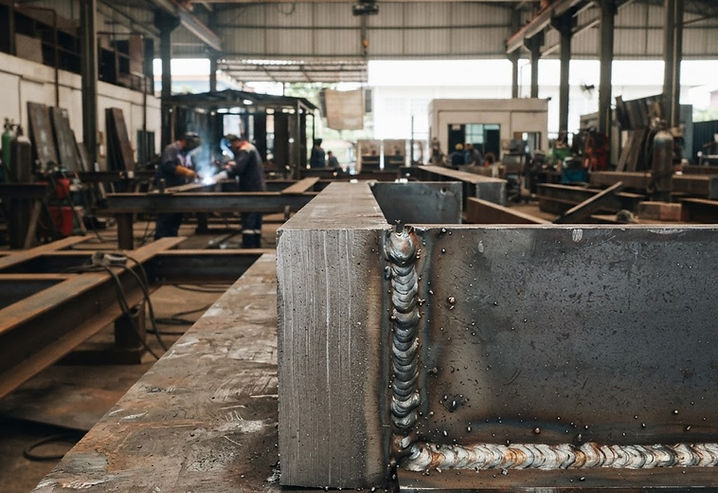
Waterjet cutting is an innovative technology that has revolutionized metal fabrication and other industries. It involves using a high pressure jet of water to cut through various materials including metals, plastics, and composites. Depending on the application, abrasive particles can be added to the water jet stream to further enhance the cutting ability. Waterjet cutting has become a popular choice in metal cutting because it offers a wide range of benefits compared to other metal cutting methods such as plasma cutting and laser cutting. In this blog post, we will discuss how waterjet cutting works and its advantages in metal fabrication.
How Does Waterjet Cutting Work?
Waterjet cutting involves a series of processes that include:
Material preparation: This involves cleaning and drying the material to remove any debris or contaminants that could impede the cutting process.
Design: The material is then designed using computer aided design software (CAD). The CAD software generates a file that contains the exact design of the material to be cut.
Programming: The CAD file is then transferred to a waterjet cutting machine that is programmed to follow the design specifications.
Cutting: The waterjet machine cuts the material by directing a high pressure jet of water through a small nozzle at the material. The force of the water cuts through the material, creating a clean and precise cut.
Advantages in Metal Fabrication
Precise cuts: Waterjet cutting is a highly precise cutting method that can achieve a cut accuracy of up to 0.005 inches. This precision is due to its ability to produce a narrow and powerful cutting stream. This precision is essential in metal fabrication since it helps in creating parts with tight tolerances.

Versatility: Waterjet cutting can cut through a wide range of materials, including metals, plastics, and composites. This versatility makes it a popular choice for metal fabrication, especially for materials that are difficult to cut using traditional cutting methods.
Decreased material waste: Waterjet cutting generates reduced waste or scrap compared to other cutting methods. This is because the cutting process is very precise, and the kerf (the width of the cutting stream) is very narrow. This results in less material waste and reduced material costs.
No Heat Affected Zone (HAZ): Other cutting methods such as plasma and laser cutting use heat to cut through materials. This heat can cause the material to warp, distort, or change its characteristics, leading to a HAZ. With waterjet cutting, there is no heat used in the cutting process, meaning that there is no HAZ.
Eco friendly: Waterjet cutting is eco friendly compared to other cutting methods. This is because it does not generate any hazardous gases or dust, and it reduces water and energy consumption.
Applications in Metal Fabrication
Waterjet cutting has a wide range of applications in metal fabrication, including:
Aerospace: The aerospace industry uses waterjet cutting in the fabrication of airplane parts such as wings, engine parts, and landing gears.
Automotive: Waterjet cutting is used in the fabrication of automotive components such as body panels, exhaust systems, and engine parts.
Architectural Metalwork: Waterjet cutting is used to create architectural metalwork such as railings, stairs, and decorative metal features in buildings.
Medical Devices: Waterjet cutting is used in the fabrication of devices in the medical industry such as surgical instruments, prosthetics, and orthopaedic implants.
Industrial Machinery: Waterjet cutting is used in the fabrication of industrial machinery such as pumps, valves, pressure vessels and gears.
Closing Comments
Waterjet cutting has become a popular choice in structural steel fabrication due to its precision, versatility, and eco friendliness. It offers several benefits compared to other cutting methods and has a wide range of applications in various industries. Its precision and ability to cut through difficult to cut materials make it a valuable tool in metal fabrication.
Further reading
Follow procurement intelligence across the wider market on Project Atlas Intel.
How K999 can help
Fabrication capacity behind the article
Articles in this section describe work we run every week in Rayong: cutting, forming, welding and assembly, under cover and in the yard, with the documentation that goes with it.
Structural steel fabrication- 01
Two workshops totalling more than 33,000 m² plus an 80,000 m² assembly yard at Sattahip.
- 02
Structural steel fabrication to 10,000 tonnes a year, with the largest single module built at 2,500 tonnes.
- 03
Blast, prime and paint before dispatch, with dimensional reports issued against the approved drawings.
More on Fabrication
All articles


Request for quotation
Need fabricated steel to that standard?
Every enquiry is answered within 48 hours by our estimating team in Rayong. The priced quotation follows once drawings, quantities and standards are confirmed. Stainless steel fabrication, structural steel fabrication, pipe spooling, pressure vessels, steel tanks, mining equipment and conveyors, pig launchers, chutes and hoppers, send the package and we will price it.
Before you request a quotation
Steel fabrication quotation questions
What structural steel fabrication, pressure vessel and pipe spooling packages cost, what to send with an enquiry, and how delivery to site works.
Structural steel fabrication is priced from the section and plate tonnage, the detailing and drawing hours, welding and fitting manhours, NDT requirements, blast and coating system, packing and freight. Grade matters as much as weight: AS/NZS, ASTM, JIS and BS sections carry different mill prices, and heavy built up members take longer than rolled sections. Our Rayong workshop produces around 10,000 tonnes of structural steel fabrication a year, so a clear bill of materials is usually enough to price. Send the drawings and we answer within 48 hours; the priced quotation follows once quantities, standards and delivery dates are confirmed.
For steel fabrication work, send the drawings or IFC package, a bill of materials with material grades, the welding and NDT requirements, the coating specification, the delivery port and your site dates. Add the inspection and test plan, any third party inspection requirement, and whether trial assembly or match marking is needed. Where drawings are still in progress, a scope list with sizes, quantities and duty is enough to start, and the estimate is refined once the final package arrives. Every enquiry is answered within 48 hours, and the priced quotation is issued after scope, standards and quantities are confirmed.
Yes. Pressure vessel fabrication is carried out to ASME Section VIII Div. 1 under our ASME U stamp No. 43,462, or to AS/NZS and BS where the project specifies, covering separators, air receivers, water drums, waste heat recovery units and pig launchers. Steel tanks for fuel, biofuel, chemical, water and food duty are designed in house with our E Tank programme to API, ASME, BS and AS/NZS. Because structural steel, vessels, tanks and their supports are built in the same workshops, one enquiry can cover the vessel package, the tank package and the structural steel that carries them, with a single coating and documentation system and one shipment.
Steel fabrication Australia packages are scheduled from a 33,000 m2 Rayong yard with an 80,000 m2 assembly yard inside Sattahip port, so fabrication, trial assembly, blasting, coating and packing run in one place. Programme length depends on tonnage, material lead times, the coating system and inspection scope, and it is confirmed with the quotation. We quote FOB Laem Chabang, Map Ta Phut or Sattahip, or CIF and DAP to your Australian port, with packing lists, weights, lifting points and a data book per shipment. Staged deliveries can follow your site erection sequence instead of shipping everything at once.
There is no fixed minimum. Pipe spooling Australia packages run at up to 3,000 diameter inches per shift on SCH.40, from a single replacement spool to a full plant piping scope, with spools numbered, X rayed where specified and coated to match erection order. Mining equipment fabrication covers chutes, hoppers, ore bins, transfer towers and conveyor structures with Bisalloy, Hardox, rubber lining or hardfacing fitted in house, from one wear liner set to modules of up to 2,500 tonnes assembled at Sattahip. Send the scope list and we will tell you what the smallest sensible batch is for your programme.