


Energy & Oil Gas
Advancements in Drilling Technologies - Part I
Directional drilling and better materials extended reach, opening reservoirs that were once uneconomic.
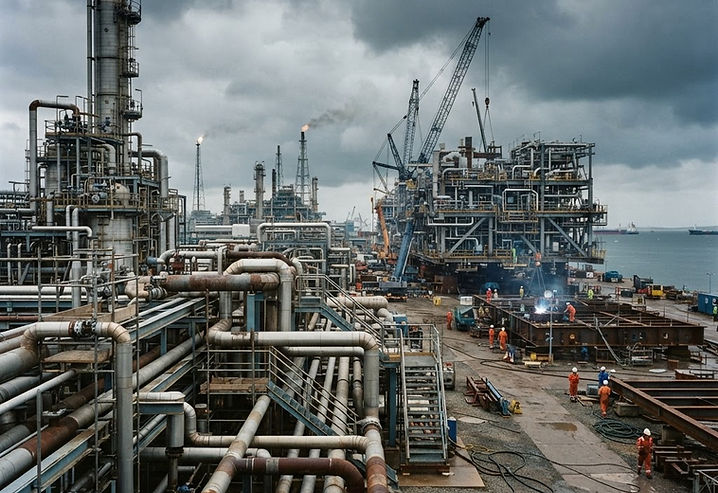
Recent advances in technologies used for oil well drilling have enabled the energy industry to access new sources of oil and natural gas to meet rising demand around the world. These new technologies have also helped reduce the environmental impact of energy production by allowing more oil and gas to be produced with fewer wells. Advances in technologies play an important role in meeting global energy demand because they enable the discovery of new resources, access to harsh or remote locations and the development of oil and gas reservoirs which were previously not economically viable. This is the first part of a two part blog which discusses these technological advancements in oil drilling.
Horizontal drilling is a directional drilling process aimed to target oil or gas reservoir intersecting it at the “entry point” with a near horizontal inclination, and remaining within the reservoir until the desired bottom hole location is reached. While the construction of a directional well often costs much more than a conventional well, initial production is greater of a conventional well. Horizontal drilling provides more contact to a reservoir formation than a vertical well and allows more hydrocarbons to be produced from a given wellbore. For example, six to eight horizontal wells drilled from one location, or well pad, can access the same reservoir volume as 16 vertical wells.
Using multiwell pads via steel fabrication can significantly reduce the overall number of well pads, access roads, pipeline routes and production facilities, minimizing habitat disturbance, impact to the public and overall environmental footprint. Horizontal wells are usually drilled to enhance oil production and in some situations the improvement may be dramatic, enabling development of a reservoir which would otherwise have been considered uneconomic. There are many kinds of reservoir where the potential benefits of horizontal drilling are evident:
In conventional reservoirs

Thin reservoirs; Reservoirs with natural vertical fractures; Reservoirs where water (and gas) coning will develop; thin layered reservoirs; heterogeneous reservoirs;
In unconventional reservoirs
Shale gas/oil, tight gas/oil, CBM, heavy oil, oil sands, etc.
At times oil and natural gas reserves are located in separate layers underground and multilateral drilling allows producers to branch out from the main well to tap reserves at different depths. This increases production from a single well and reduces the number of wells drilled on the surface. A multilateral well is a single well with one or more wellbore branches radiating from the main borehole. It may be an exploration well, an infill development well or a reentry into an existing well.
These wells generally represent two basic types: vertically staggered laterals and horizontally spread laterals in fan, spine and rib or dual opposing T shapes. A successful multilateral well that replaces several vertical wellbores can reduce overall drilling and completion costs, increase production and provide more efficient drainage of a reservoir. Furthermore, multilaterals can make reservoir management more efficient and help increase recoverable reserves. In shallow or depleted reservoirs, branched horizontal wellbores are often most efficient, whereas in layered reservoirs, vertically stacked drain holes are usually best.
As observed, horizontal and multilateral drilling techniques offer more advantages in certain cases than conventional well development. Increased efficiency and greater productivity are some of the benefits while also minimizing the environmental impact in case of horizontal drilling. However, there are other new drilling techniques which are likely to add value to drilling operations in the near future. Those will be discussed in the second part of this blog!
K999 Thailand carries out work of this kind through its pressure vessel fabrication team in Rayong.
Further reading
Follow critical minerals projects in the United States across the wider market on Project Atlas Intel.
How K999 can help
Process equipment for energy projects
Pressure containment and pipeline work carries the tightest documentation on the shop floor, and the articles here track the codes and market conditions behind that work.
Pressure vessels and tanks- 01
Pressure vessels, steel tanks and pig launchers built to ASME and client specifications.
- 02
Pipe spool fabrication with heat induction bending for long radius and tight radius bends.
- 03
Full traceability from mill certificates through weld maps to hydrotest records.
More on Energy & Oil Gas
All articles


Request for quotation
Need fabricated steel to that standard?
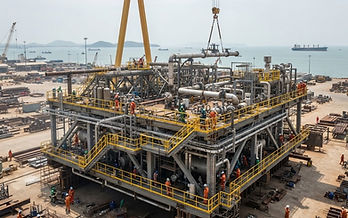
Every enquiry is answered within 48 hours by our estimating team in Rayong. The priced quotation follows once drawings, quantities and standards are confirmed. Stainless steel fabrication, structural steel fabrication, pipe spooling, pressure vessels, steel tanks, mining equipment and conveyors, pig launchers, chutes and hoppers, send the package and we will price it.
Before you request a quotation
Steel fabrication quotation questions
What structural steel fabrication, pressure vessel and pipe spooling packages cost, what to send with an enquiry, and how delivery to site works.
Structural steel fabrication is priced from the section and plate tonnage, the detailing and drawing hours, welding and fitting manhours, NDT requirements, blast and coating system, packing and freight. Grade matters as much as weight: AS/NZS, ASTM, JIS and BS sections carry different mill prices, and heavy built up members take longer than rolled sections. Our Rayong workshop produces around 10,000 tonnes of structural steel fabrication a year, so a clear bill of materials is usually enough to price. Send the drawings and we answer within 48 hours; the priced quotation follows once quantities, standards and delivery dates are confirmed.
For steel fabrication work, send the drawings or IFC package, a bill of materials with material grades, the welding and NDT requirements, the coating specification, the delivery port and your site dates. Add the inspection and test plan, any third party inspection requirement, and whether trial assembly or match marking is needed. Where drawings are still in progress, a scope list with sizes, quantities and duty is enough to start, and the estimate is refined once the final package arrives. Every enquiry is answered within 48 hours, and the priced quotation is issued after scope, standards and quantities are confirmed.
Yes. Pressure vessel fabrication is carried out to ASME Section VIII Div. 1 under our ASME U stamp No. 43,462, or to AS/NZS and BS where the project specifies, covering separators, air receivers, water drums, waste heat recovery units and pig launchers. Steel tanks for fuel, biofuel, chemical, water and food duty are designed in house with our E Tank programme to API, ASME, BS and AS/NZS. Because structural steel, vessels, tanks and their supports are built in the same workshops, one enquiry can cover the vessel package, the tank package and the structural steel that carries them, with a single coating and documentation system and one shipment.
Steel fabrication Australia packages are scheduled from a 33,000 m2 Rayong yard with an 80,000 m2 assembly yard inside Sattahip port, so fabrication, trial assembly, blasting, coating and packing run in one place. Programme length depends on tonnage, material lead times, the coating system and inspection scope, and it is confirmed with the quotation. We quote FOB Laem Chabang, Map Ta Phut or Sattahip, or CIF and DAP to your Australian port, with packing lists, weights, lifting points and a data book per shipment. Staged deliveries can follow your site erection sequence instead of shipping everything at once.
There is no fixed minimum. Pipe spooling Australia packages run at up to 3,000 diameter inches per shift on SCH.40, from a single replacement spool to a full plant piping scope, with spools numbered, X rayed where specified and coated to match erection order. Mining equipment fabrication covers chutes, hoppers, ore bins, transfer towers and conveyor structures with Bisalloy, Hardox, rubber lining or hardfacing fitted in house, from one wear liner set to modules of up to 2,500 tonnes assembled at Sattahip. Send the scope list and we will tell you what the smallest sensible batch is for your programme.