


Energy & Oil Gas
Advancements in Drilling Technologies - Part II
Automated rigs and improved bit designs continue the drilling efficiency gains started by horizontal techniques.
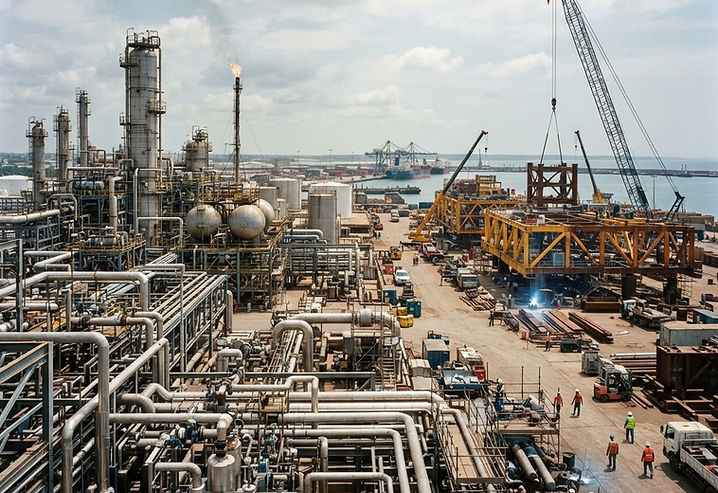
Continuing from the first part of the blog on drilling technological advancements, this blog will discuss a couple of newer drilling technologies. Industry adoption of these technologies is an indicator of success and, while these methodologies are doubtless expensive, they have shown to offer savings in resources and materials utilized to extract energy from oil wells and hence, they are being gradually adopted by the major oil and gas players. So, what are the other two drilling technologies to be discussed and what’s their point of difference compared to horizontal and multilateral drilling? Let’s find out in this blog.
An extended reach well is one in which the ratio of the measured depth (MD) vs. the true vertical depth (TVD) is at least 2:1. Extended reach wells are expensive and technically challenging as they require the involvement of heavy steel fabrication companies, however, they can add value to drilling operations by making it possible to reduce costly subsea equipment and pipelines, by using satellite field development, by developing near shore fields from onshore, and by reducing the environmental impact by developing fields from pads.
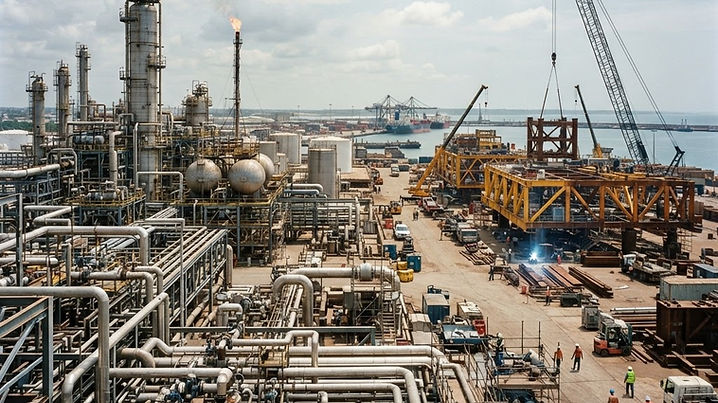
Extended Reach Drilling allows producers to reach deposits that are great distances away from the drilling rig and this help producers tap oil and natural gas deposits under surface areas where a vertical well cannot be drilled, such as under developed or environmentally sensitive areas. Offshore, the use of extended reach drilling allows producers to reach accumulations far from offshore platforms, minimizing the number of platforms needed to produce all the oil and gas. Similar to horizontal drilling, Extended Reach Drilling uses the technology of the “RSS: Rotary Steerable System” that permit to steer a hole continuing the rotation of the drilling string with an improvement of the safety and the drilling efficiency.
Automated drilling is one of the oil industry’s most important innovation targets. The sources now being tapped, such as shale gas and coal bed methane, require a very large number of wells and usage of pipe fabrication, and automating the drilling process would be an obvious way to keep the costs under control, and also gets around a problem which many sectors of engineering are experiencing. Automated drilling would be faster, more efficient, and safer, as it reduces the number of workers on site. In this R&D sector, Shell has developed an automated drilling system called SCADAdrill (SCADA being the acronym for supervisory control and data acquisition, a type of software used for automated factory and process control), and is a component of a new well manufacturing system that it is currently trialing in Europe and North America. The SCADAdrill system is used on the horizontal dewatering bores. Through sensors mounted on the drill bit, the system monitors the trajectory of the drill and its performance as it travels through the site geology and controls its path to ensure that it meets the top hole precisely. Automating drilling takes in three stages of autonomy: firstly, to mechanize the drilling equipment; secondly to monitor torque and weight on the drill bit and thirdly, to automate the entire process.
It can be seen that Extended Reach drilling and Automated drilling both bring in their unique flavors to the world of oil drilling technologies. A degree of technical expertise is required to ensure proper implementation of these methodologies and people and software have to be trained accordingly so as to maximize the benefits. It’s an exciting time to be in the midst of the oil and gas sector and these advancements are poised to take the industry forward!
K999 Thailand carries out work of this kind through its pressure vessel fabrication team in Rayong.
Further reading
Follow Renewable Energy across the wider market on Project Atlas Intel.
Calculation tool
Run the numbers for this yourself with the free welding engineering articles from Engineering Toolbox Australia. Treat the result as a first check, then confirm the final design with your engineer.
How K999 can help
Process equipment for energy projects
Pressure containment and pipeline work carries the tightest documentation on the shop floor, and the articles here track the codes and market conditions behind that work.
Pressure vessels and tanks- 01
Pressure vessels, steel tanks and pig launchers built to ASME and client specifications.
- 02
Pipe spool fabrication with heat induction bending for long radius and tight radius bends.
- 03
Full traceability from mill certificates through weld maps to hydrotest records.
More on Energy & Oil Gas
All articles


Request for quotation
Need fabricated steel to that standard?
Every enquiry is answered within 48 hours by our estimating team in Rayong. The priced quotation follows once drawings, quantities and standards are confirmed. Stainless steel fabrication, structural steel fabrication, pipe spooling, pressure vessels, steel tanks, mining equipment and conveyors, pig launchers, chutes and hoppers, send the package and we will price it.
Before you request a quotation
Steel fabrication quotation questions
What structural steel fabrication, pressure vessel and pipe spooling packages cost, what to send with an enquiry, and how delivery to site works.
Structural steel fabrication is priced from the section and plate tonnage, the detailing and drawing hours, welding and fitting manhours, NDT requirements, blast and coating system, packing and freight. Grade matters as much as weight: AS/NZS, ASTM, JIS and BS sections carry different mill prices, and heavy built up members take longer than rolled sections. Our Rayong workshop produces around 10,000 tonnes of structural steel fabrication a year, so a clear bill of materials is usually enough to price. Send the drawings and we answer within 48 hours; the priced quotation follows once quantities, standards and delivery dates are confirmed.
For steel fabrication work, send the drawings or IFC package, a bill of materials with material grades, the welding and NDT requirements, the coating specification, the delivery port and your site dates. Add the inspection and test plan, any third party inspection requirement, and whether trial assembly or match marking is needed. Where drawings are still in progress, a scope list with sizes, quantities and duty is enough to start, and the estimate is refined once the final package arrives. Every enquiry is answered within 48 hours, and the priced quotation is issued after scope, standards and quantities are confirmed.
Yes. Pressure vessel fabrication is carried out to ASME Section VIII Div. 1 under our ASME U stamp No. 43,462, or to AS/NZS and BS where the project specifies, covering separators, air receivers, water drums, waste heat recovery units and pig launchers. Steel tanks for fuel, biofuel, chemical, water and food duty are designed in house with our E Tank programme to API, ASME, BS and AS/NZS. Because structural steel, vessels, tanks and their supports are built in the same workshops, one enquiry can cover the vessel package, the tank package and the structural steel that carries them, with a single coating and documentation system and one shipment.
Steel fabrication Australia packages are scheduled from a 33,000 m2 Rayong yard with an 80,000 m2 assembly yard inside Sattahip port, so fabrication, trial assembly, blasting, coating and packing run in one place. Programme length depends on tonnage, material lead times, the coating system and inspection scope, and it is confirmed with the quotation. We quote FOB Laem Chabang, Map Ta Phut or Sattahip, or CIF and DAP to your Australian port, with packing lists, weights, lifting points and a data book per shipment. Staged deliveries can follow your site erection sequence instead of shipping everything at once.
There is no fixed minimum. Pipe spooling Australia packages run at up to 3,000 diameter inches per shift on SCH.40, from a single replacement spool to a full plant piping scope, with spools numbered, X rayed where specified and coated to match erection order. Mining equipment fabrication covers chutes, hoppers, ore bins, transfer towers and conveyor structures with Bisalloy, Hardox, rubber lining or hardfacing fitted in house, from one wear liner set to modules of up to 2,500 tonnes assembled at Sattahip. Send the scope list and we will tell you what the smallest sensible batch is for your programme.