


Welding & Testing
Attracting Welding Gen Z With Advanced Technologies
Robotics, digital weld records and cleaner workshops are how fabrication businesses recruit and keep the next generation of welders.
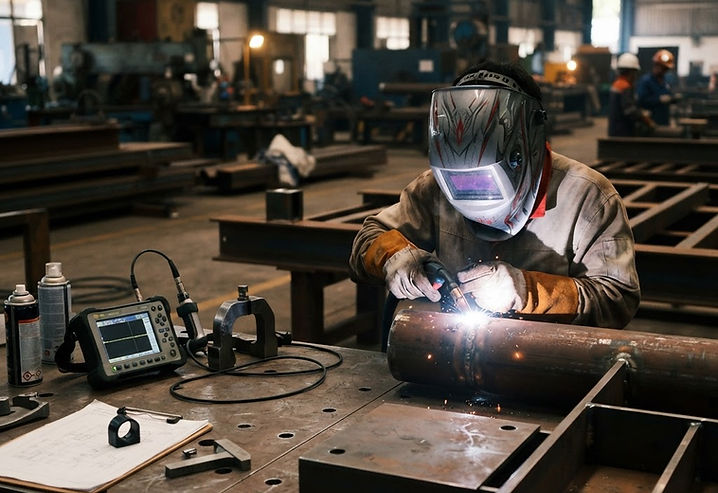
The heavy steel fabrication industry has been plagued by a shortage of skilled welders for a number of years. Millennials and Generation Z (or even Generation Alpha) do not have a very positive view of working in this sector, and the rise of the service industry which offered high renumeration in a comfortable job environment meant that there was a feasible alternative towards working in production or manual jobs. Also, with experienced welders edging close to retirement or embarking on entirely new careers, there is likely to be a vacuum of welding experts in the near future. How can this problem be addressed? Technology is likely to be an enabler in this regard and this blog will delve deeper in this topic.
Older Welders’ Attitude Towards Technology
Experienced and weathered welders may be skeptical about advanced technologies, such as traditional robotic welding systems or new welding cobots. The sheer fear of losing control over their jobs is real, as is apprehension about being fired as a metal fabrication business relies more and more on robotic automation. In this regard, it may be worth expanding on the true benefits that technology can bring to the table. A conversation with welders can commence by telling then that welding robots will handle all the mundane and repetitive jobs. A follow up conversation can be envisioned explaining that they can work on more complex, important, and strategic tasks. It may take them a bit of time at first to accept these details, however by involving traditional welders in Industry 4.0 project right from the start and investing in training, an earlier adoption of technology can be possible.

Enticing Tech First Welding Employees
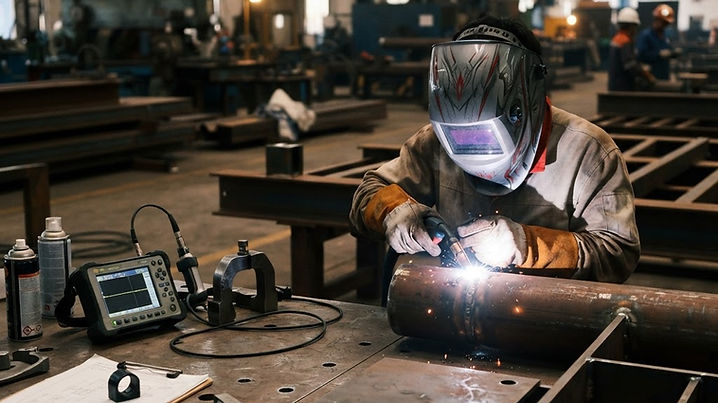
It is estimated that Generation Z, people born between mid 1990s and 2000s, will make up about 27% of the workforce by 2025. The priorities of Gen Z are less with regard to salary and more with alignment of their values to an organization which also fosters a healthy work/life balance. Technology is an inherent aspect of their lives and they focus on being up to date on the latest technology that makes their lives easier. Hence, to boost the curb appeal of open welder positions, pipe fabrication shops and manufacturers inevitably need to invest in technologies that can upskill welders and tap into their curiosity and creativity.
New solutions like welding cobots and dedicated apps democratize technology and lower the barrier of entry. These solutions can be adapted to the trade and to all business sizes. For instance, traditional welding robots are difficult to set up, require a lot of time to program, and are not suited for companies that deal with high mix/low volume production. However, welding cobots, especially those using dedicated apps, require no robotics knowledge. They not only leverage the expertise of current welders but also alleviate some of the gripes they have with their jobs. These new automated welding systems are designed for fast onboarding and minimal programming. The end result is that younger welders feel the companies they work for actually invest in their potential and contribute to advancing their careers.
Final Thoughts
In the current labor market where it is tough to find qualified and dedicated welders, businesses will have no choice but to adopt new work methods and equipment to transform welding from a manual and dangerous job into a cognitive career that is valued and highly coveted. On these lines, companies like BOC have opened Application Technology Centres in Australia to showcase state of the art welding processes. New technologies, such as welding robots and cobots, are providing highly compelling growth opportunities for welders of all generations. Hence, despite the staffing doom and gloom, strategies exist that can help welding or manufacturing teams looking to hire skilled welders or the few and far between newcomers to the art of welding!
Further reading
Follow EPC procurement across the wider market on Project Atlas Intel.
How K999 can help
Welding and inspection practice
The welding procedures, welder qualifications and inspection routines described here are the ones applied to every spool, vessel and frame that leaves our workshop.
Inspection and expediting- 01
Qualified procedures for carbon steel, stainless steel and nickel alloys, with welder performance records held per joint type.
- 02
Dimensional and weld inspection in house, with third party witness arranged for client hold points.
- 03
Inspection and expediting support that follows the job from raw material receipt through to load out.
More on Welding & Testing
All articles


Request for quotation
Need fabricated steel to that standard?
Every enquiry is answered within 48 hours by our estimating team in Rayong. The priced quotation follows once drawings, quantities and standards are confirmed. Stainless steel fabrication, structural steel fabrication, pipe spooling, pressure vessels, steel tanks, mining equipment and conveyors, pig launchers, chutes and hoppers, send the package and we will price it.
Before you request a quotation
Steel fabrication quotation questions
What structural steel fabrication, pressure vessel and pipe spooling packages cost, what to send with an enquiry, and how delivery to site works.
Structural steel fabrication is priced from the section and plate tonnage, the detailing and drawing hours, welding and fitting manhours, NDT requirements, blast and coating system, packing and freight. Grade matters as much as weight: AS/NZS, ASTM, JIS and BS sections carry different mill prices, and heavy built up members take longer than rolled sections. Our Rayong workshop produces around 10,000 tonnes of structural steel fabrication a year, so a clear bill of materials is usually enough to price. Send the drawings and we answer within 48 hours; the priced quotation follows once quantities, standards and delivery dates are confirmed.
For steel fabrication work, send the drawings or IFC package, a bill of materials with material grades, the welding and NDT requirements, the coating specification, the delivery port and your site dates. Add the inspection and test plan, any third party inspection requirement, and whether trial assembly or match marking is needed. Where drawings are still in progress, a scope list with sizes, quantities and duty is enough to start, and the estimate is refined once the final package arrives. Every enquiry is answered within 48 hours, and the priced quotation is issued after scope, standards and quantities are confirmed.
Yes. Pressure vessel fabrication is carried out to ASME Section VIII Div. 1 under our ASME U stamp No. 43,462, or to AS/NZS and BS where the project specifies, covering separators, air receivers, water drums, waste heat recovery units and pig launchers. Steel tanks for fuel, biofuel, chemical, water and food duty are designed in house with our E Tank programme to API, ASME, BS and AS/NZS. Because structural steel, vessels, tanks and their supports are built in the same workshops, one enquiry can cover the vessel package, the tank package and the structural steel that carries them, with a single coating and documentation system and one shipment.
Steel fabrication Australia packages are scheduled from a 33,000 m2 Rayong yard with an 80,000 m2 assembly yard inside Sattahip port, so fabrication, trial assembly, blasting, coating and packing run in one place. Programme length depends on tonnage, material lead times, the coating system and inspection scope, and it is confirmed with the quotation. We quote FOB Laem Chabang, Map Ta Phut or Sattahip, or CIF and DAP to your Australian port, with packing lists, weights, lifting points and a data book per shipment. Staged deliveries can follow your site erection sequence instead of shipping everything at once.
There is no fixed minimum. Pipe spooling Australia packages run at up to 3,000 diameter inches per shift on SCH.40, from a single replacement spool to a full plant piping scope, with spools numbered, X rayed where specified and coated to match erection order. Mining equipment fabrication covers chutes, hoppers, ore bins, transfer towers and conveyor structures with Bisalloy, Hardox, rubber lining or hardfacing fitted in house, from one wear liner set to modules of up to 2,500 tonnes assembled at Sattahip. Send the scope list and we will tell you what the smallest sensible batch is for your programme.