


Welding & Testing
Boeing To Inspect For Potential Loose Bolts
Boeing is asking airlines to inspect its 737 Max jets for a potential loose bolt in the rudder control system, the airplane maker and Federal Aviation Administration confirmed this week.
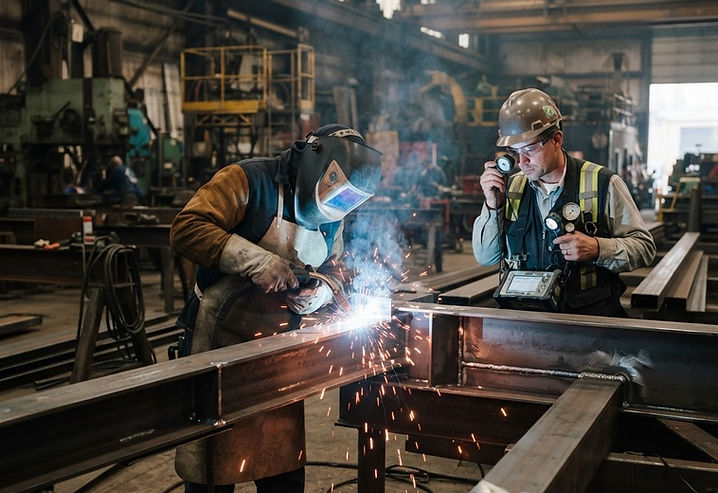
Boeing is asking airlines to inspect its 737 Max jets for a potential loose bolt in the rudder control system, the airplane maker and Federal Aviation Administration confirmed this week. The FAA said it would be “closely monitoring” the targeted inspections. The agency said Thursday that Boeing issued its inspection guidance to airlines after an international operator found a bolt with a missing nut during routine maintenance, which highlighted challenges faced by heavy industries with giant nuts. In a separate case, Boeing also discovered an undelivered aircraft that had a nut that was not properly tightened.
“The issue identified on the particular airplane has been remedied,” the Arlington, Virginia, company told The Associated Press on Friday. “Out of an abundance of caution, we are recommending operators inspect their 737 MAX airplanes and inform us of any findings.” The FAA said it was “closely monitoring targeted inspections of Boeing 737 Max airplanes to look for a possible loose bolt in the rudder control system”. Anthony Brickhouse, an air safety expert at the Embry Riddle Aeronautical University, said that airlines and steel fabrication companies “need to take it seriously”. “But as a member of the flying public, I don’t see this as an issue to be concerned about,” he told Reuters news agency.
Boeing added that it will continue to update both customers and federal regulators on the progress. The FAA said it will remain in contact with Boeing and impacted airlines as the inspections are performed, and potentially “consider additional action based on any further discovery of loose or missing hardware.” According to Boeing, there have been no in flight incidents caused by this condition to date, noting that crews’ routine checks would signal if the rudder was not working properly before an aircraft pushes back from the gate. The company added that all airplanes Boeing is set to deliver onward after completion of aerospace fabrication will have the inspection (which is estimated to take about two hours per plane) prior to delivery.
U.S. carriers with 737 Max jets in their fleet include United Airlines, Southwest Airlines, American Airlines and Alaska Airlines. All four of these carriers told The Associated Press Friday that they do not expect operational impacts. Southwest, for example, said it was currently performing all these inspections during routine overnight maintenance. A firm timeline for the inspections was not provided for each airline, but Alaska said it expected to complete the process by the first half of January. Boeing’s 737 Max jets were grounded worldwide for 20 months after two crashes in 2018 and 2019 killed a total of 346 people. Investigations focused on an automated flight control system that pushed the nose of the plane down based on faulty sensor readings. Boeing did not tell pilots and airlines about the system until after the first crash. The FAA, which also faced criticism for the way it approved the Max jets prior to these deadly crashes, has since moved to provide a more detailed certification process for large planes and required safety disclosures. Recently, Boeing awarded contracts to Australian SMEs to develop its supply chain and to enhance business readiness and defence maturity.
K999 Thailand carries out work of this kind through its pipe spool fabrication team in Rayong.
Further reading
Follow project intelligence platform across the wider market on Project Atlas Intel.
How K999 can help
Welding and inspection practice
The welding procedures, welder qualifications and inspection routines described here are the ones applied to every spool, vessel and frame that leaves our workshop.
Inspection and expediting- 01
Qualified procedures for carbon steel, stainless steel and nickel alloys, with welder performance records held per joint type.
- 02
Dimensional and weld inspection in house, with third party witness arranged for client hold points.
- 03
Inspection and expediting support that follows the job from raw material receipt through to load out.
More on Welding & Testing
All articles


Request for quotation
Need fabricated steel to that standard?
Every enquiry is answered within 48 hours by our estimating team in Rayong. The priced quotation follows once drawings, quantities and standards are confirmed. Stainless steel fabrication, structural steel fabrication, pipe spooling, pressure vessels, steel tanks, mining equipment and conveyors, pig launchers, chutes and hoppers, send the package and we will price it.
Before you request a quotation
Steel fabrication quotation questions
What structural steel fabrication, pressure vessel and pipe spooling packages cost, what to send with an enquiry, and how delivery to site works.
Structural steel fabrication is priced from the section and plate tonnage, the detailing and drawing hours, welding and fitting manhours, NDT requirements, blast and coating system, packing and freight. Grade matters as much as weight: AS/NZS, ASTM, JIS and BS sections carry different mill prices, and heavy built up members take longer than rolled sections. Our Rayong workshop produces around 10,000 tonnes of structural steel fabrication a year, so a clear bill of materials is usually enough to price. Send the drawings and we answer within 48 hours; the priced quotation follows once quantities, standards and delivery dates are confirmed.
For steel fabrication work, send the drawings or IFC package, a bill of materials with material grades, the welding and NDT requirements, the coating specification, the delivery port and your site dates. Add the inspection and test plan, any third party inspection requirement, and whether trial assembly or match marking is needed. Where drawings are still in progress, a scope list with sizes, quantities and duty is enough to start, and the estimate is refined once the final package arrives. Every enquiry is answered within 48 hours, and the priced quotation is issued after scope, standards and quantities are confirmed.
Yes. Pressure vessel fabrication is carried out to ASME Section VIII Div. 1 under our ASME U stamp No. 43,462, or to AS/NZS and BS where the project specifies, covering separators, air receivers, water drums, waste heat recovery units and pig launchers. Steel tanks for fuel, biofuel, chemical, water and food duty are designed in house with our E Tank programme to API, ASME, BS and AS/NZS. Because structural steel, vessels, tanks and their supports are built in the same workshops, one enquiry can cover the vessel package, the tank package and the structural steel that carries them, with a single coating and documentation system and one shipment.
Steel fabrication Australia packages are scheduled from a 33,000 m2 Rayong yard with an 80,000 m2 assembly yard inside Sattahip port, so fabrication, trial assembly, blasting, coating and packing run in one place. Programme length depends on tonnage, material lead times, the coating system and inspection scope, and it is confirmed with the quotation. We quote FOB Laem Chabang, Map Ta Phut or Sattahip, or CIF and DAP to your Australian port, with packing lists, weights, lifting points and a data book per shipment. Staged deliveries can follow your site erection sequence instead of shipping everything at once.
There is no fixed minimum. Pipe spooling Australia packages run at up to 3,000 diameter inches per shift on SCH.40, from a single replacement spool to a full plant piping scope, with spools numbered, X rayed where specified and coated to match erection order. Mining equipment fabrication covers chutes, hoppers, ore bins, transfer towers and conveyor structures with Bisalloy, Hardox, rubber lining or hardfacing fitted in house, from one wear liner set to modules of up to 2,500 tonnes assembled at Sattahip. Send the scope list and we will tell you what the smallest sensible batch is for your programme.