


Welding & Testing
Clean Aluminum is Weldable Aluminum
Oxide, oil and moisture are what fail an aluminium weld, and the surface preparation routine that keeps porosity out of the finished joint.
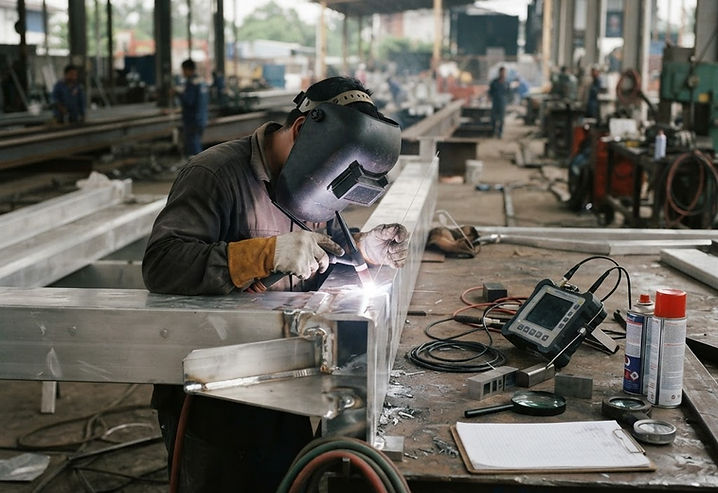
As one of the most abundant naturally occurring metals on the planet, aluminum is used everywhere. From pocket electronics to skyscrapers, aluminum is part of our everyday world, which means it is also a major part of the welding industry. This lightweight metal conducts heat exceptionally well, making it tricky to weld, especially at higher thicknesses. While a clean surface is important in every weld, it is especially important when welding aluminum. Failing to clean the surface properly can lead to sheet metal defects such as porosity, weld cracks, and other problems leading to rework or scrapping the piece altogether. This blog delves into this topic in more detail.
Pre Weld Aluminum Preparation
As part of Australia’s cutting edge aluminum fabrication enhancements, it is necessary to preheat or bevel aluminum anytime the material is more than 3/16 in. thick. Beveling allows for full penetration without overheating the person welding, burning through parts, or exceeding the duty cycle of the machine. Good joint design and planning go a long way to ensuring a quality weld. An industrial solvent such as acetone or a citrus based degreaser can be used to break down oils without leaving a residue. One has to be careful when using chemicals because they can harm the skin or be toxic when inhaled. One should also never use a wire brush before degreasing as it will simply push oils into small depressions and scratches and cause problems later.
Oxides form on the surface of aluminum when it is exposed to air and can cause porosity if not removed. Most often the oxides are removed with an alkaline solution or by grinding away a small amount of material. If one chooses grinding, it is necessary to avoid consumables such as a grinding wheel or sandpaper that can embed foreign material into the base metal. If a brush is used that has been used previously on steel, it can deposit tiny particles in the softer aluminum surface. In pressure vessel welding, the grinding can go all the way into the base material to ensure all contaminants are removed. In most other welding, the tolerances are not as strict, and an alkaline solution or small amount of grinding is all that is needed.

Challenge of Repair Welding
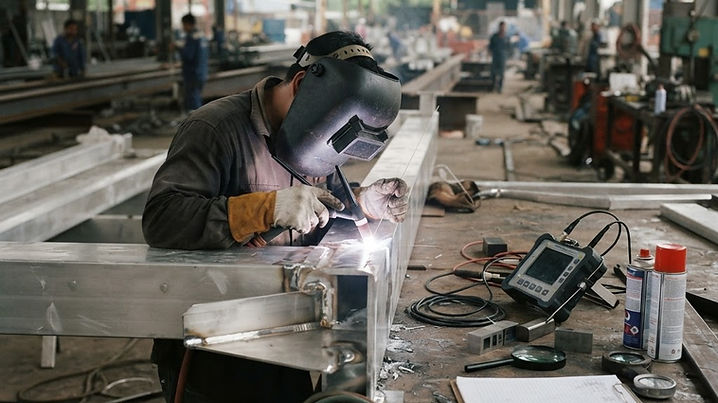
Making new aluminum welds is tricky enough, but repair welding adds unique challenges. The clean area around the weld needs to be much larger in repair welding applications for steel fabrication Australia. Once the aluminum heats it can act as a sponge, pulling in any nearby contaminants. Knowing how large the heat affected zone of the repair weld could be will help determine how large of an area needs to be cleaned. If the material or part is porous or heavily pitted, use a torch to help remove inaccessible contaminants. One may have to repeat the grinding and cleaning processes more than once to mitigate embedded contaminants.
Once the area is as clean as possible, plan the repair weld carefully. If it is suspected that cracks are present within the weld, it is necessary to heat the area with a torch for a few seconds. The metal will expand as it heats and contract as it cools, possibly revealing cracks. If one is using TIG welding (gas tungsten arc welding (GTAW)), a positive AC balance can help break up surface contaminants on dirty parts. Low amperage and slow travel speed are important, but it is important to make sure that proper heat input and penetration is reached. Adjusting the shielding gas also can help one achieve a clean repair weld.
Final Thoughts
Sometimes getting the surface perfectly clean is not possible, especially with repair welding. In that case, having a power source with upgraded technology can be extremely beneficial. At the end of the day, it boils down to the fact that, while new welding technology can make up for a lot of problems, it can never do its best work on a dirty surface. To get the best possible weld, starting with a properly prepped surface will work wonders!
K999 Thailand carries out work of this kind through its pipe spool fabrication team in Rayong.
Further reading
Follow the major European markets across the wider market on Project Atlas Intel.
How K999 can help
Welding and inspection practice
The welding procedures, welder qualifications and inspection routines described here are the ones applied to every spool, vessel and frame that leaves our workshop.
Inspection and expediting- 01
Qualified procedures for carbon steel, stainless steel and nickel alloys, with welder performance records held per joint type.
- 02
Dimensional and weld inspection in house, with third party witness arranged for client hold points.
- 03
Inspection and expediting support that follows the job from raw material receipt through to load out.
More on Welding & Testing
All articles


Request for quotation
Need fabricated steel to that standard?
Every enquiry is answered within 48 hours by our estimating team in Rayong. The priced quotation follows once drawings, quantities and standards are confirmed. Stainless steel fabrication, structural steel fabrication, pipe spooling, pressure vessels, steel tanks, mining equipment and conveyors, pig launchers, chutes and hoppers, send the package and we will price it.
Before you request a quotation
Steel fabrication quotation questions
What structural steel fabrication, pressure vessel and pipe spooling packages cost, what to send with an enquiry, and how delivery to site works.
Structural steel fabrication is priced from the section and plate tonnage, the detailing and drawing hours, welding and fitting manhours, NDT requirements, blast and coating system, packing and freight. Grade matters as much as weight: AS/NZS, ASTM, JIS and BS sections carry different mill prices, and heavy built up members take longer than rolled sections. Our Rayong workshop produces around 10,000 tonnes of structural steel fabrication a year, so a clear bill of materials is usually enough to price. Send the drawings and we answer within 48 hours; the priced quotation follows once quantities, standards and delivery dates are confirmed.
For steel fabrication work, send the drawings or IFC package, a bill of materials with material grades, the welding and NDT requirements, the coating specification, the delivery port and your site dates. Add the inspection and test plan, any third party inspection requirement, and whether trial assembly or match marking is needed. Where drawings are still in progress, a scope list with sizes, quantities and duty is enough to start, and the estimate is refined once the final package arrives. Every enquiry is answered within 48 hours, and the priced quotation is issued after scope, standards and quantities are confirmed.
Yes. Pressure vessel fabrication is carried out to ASME Section VIII Div. 1 under our ASME U stamp No. 43,462, or to AS/NZS and BS where the project specifies, covering separators, air receivers, water drums, waste heat recovery units and pig launchers. Steel tanks for fuel, biofuel, chemical, water and food duty are designed in house with our E Tank programme to API, ASME, BS and AS/NZS. Because structural steel, vessels, tanks and their supports are built in the same workshops, one enquiry can cover the vessel package, the tank package and the structural steel that carries them, with a single coating and documentation system and one shipment.
Steel fabrication Australia packages are scheduled from a 33,000 m2 Rayong yard with an 80,000 m2 assembly yard inside Sattahip port, so fabrication, trial assembly, blasting, coating and packing run in one place. Programme length depends on tonnage, material lead times, the coating system and inspection scope, and it is confirmed with the quotation. We quote FOB Laem Chabang, Map Ta Phut or Sattahip, or CIF and DAP to your Australian port, with packing lists, weights, lifting points and a data book per shipment. Staged deliveries can follow your site erection sequence instead of shipping everything at once.
There is no fixed minimum. Pipe spooling Australia packages run at up to 3,000 diameter inches per shift on SCH.40, from a single replacement spool to a full plant piping scope, with spools numbered, X rayed where specified and coated to match erection order. Mining equipment fabrication covers chutes, hoppers, ore bins, transfer towers and conveyor structures with Bisalloy, Hardox, rubber lining or hardfacing fitted in house, from one wear liner set to modules of up to 2,500 tonnes assembled at Sattahip. Send the scope list and we will tell you what the smallest sensible batch is for your programme.