


Energy & Oil Gas
ExxonMobil using Natural Gas for Mining Cryptocurrency
ExxonMobil Corp., the largest producer of oil in the United States, is testing a program whereby excess natural gas from North Dakota’s oil wells would instead be used for mining...
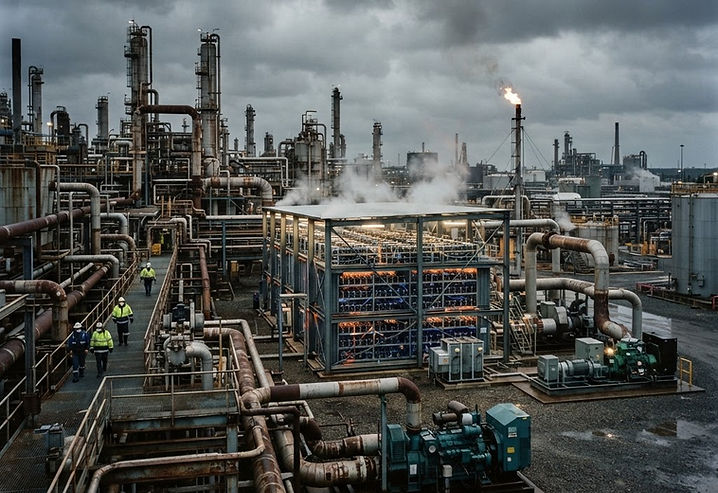
ExxonMobil Corp., the largest producer of oil in the United States, is testing a program whereby excess natural gas from North Dakota’s oil wells would instead be used for mining Proof of Work cryptocurrencies. The pilot program is being conducted in collaboration with Crusoe Energy Systems, Inc.
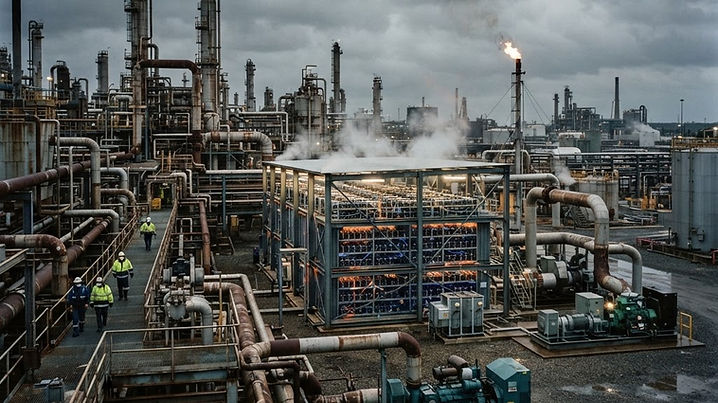
In a pilot program with Crusoe Energy Systems Inc., ExxonMobil is using natural gas that would otherwise be burned off and wasted as energy to power cryptocurrency mining rigs. The information is apparently not supposed to be public, said the anonymous sources. While this would not be considered clean or green Bitcoin mining, it would be utilizing resources that otherwise would have been wasted. Launched in January 2021, the pilot project has used 18 million cubic feet of gas on a monthly basis. This is apparently due to an insufficient number of pipelines and pressure vessels. The process consists of utilizing natural gas from a Bakken shale basin oil well for the operation of on site mobile generators. These mobile generators host Bitcoin mining servers. The sources suggest that similar pilot projects are being considered in Alaska, Nigeria, Argentina, Germany and Guyana.
The news comes after another major oil company, ConocoPhillips (COP), said it’s running its own pilot project to route excess natural gas from one of its Bakken region projects in North Dakota to supply necessary power for a bitcoin (BTC) mining operation. Similar to ConocoPhillips’ mining scheme in North Dakota’s Bakken region, Exxon is using mining plant and equipment to divert natural gas that would otherwise be burned off into generators, which convert the gas into electricity used to power shipping containers full of thousands of bitcoin miners. Exxon launched the pilot in late January 2021 and expanded its buildout in July. The problem Exxon and Conoco are addressing has existed for years: What happens when drillers accidentally hit a natural gas formation? Ordinarily, gas leaks are subject to greater regulation and scrutiny are burned off as gas flares, the curious jets of flame that illuminate oil fields. But Exxon, like many other oil producers, has pledged to eliminate “routine gas flaring” by 2030, to reduce carbon dioxide and other greenhouse gas emissions. Unlike oil, which can be trucked out to a remote destination, gas delivery requires a pipeline. If a drilling site is close to a pipeline, producers can sell it right away. But if the pipe is full or if the gas is 20 miles away, drillers often burn it off. That’s why you typically see flames rising from oil fields. In addition to the environmental hazards, drillers are also burning cash.
Enter bitcoin mining, which only requires an internet connection and can be done from anywhere. And because miners’ primary variable cost is energy, they’reincentivized to find the cheapest sources of power. Oil and gas producers are increasingly under pressure from regulators and investors to reduce their carbon footprint to help combat climate change. That includes reducing the amount of gas they flare. At the same time, there is a rush of miners trying to use cheap gas in oil producing fields to fuel their operations. The gas is still burned, releasing carbon dioxide into the atmosphere, but the energy is put to use instead of simply being wasted. Shale oil produces so much excess gas that it ends up being vented into the air or burned off. Natural gas is comprised mostly of methane, a global warming agent that is more than 80 times more powerful than carbon dioxide during its first two decades in the atmosphere. North Dakota, Colorado and Wyoming are among the first places to use crypto mining to slash methane emissions.
K999 Thailand carries out work of this kind through its mining equipment fabrication team in Rayong.
Further reading
Follow Mineral Processing across the wider market on Project Atlas Intel.
How K999 can help
Process equipment for energy projects
Pressure containment and pipeline work carries the tightest documentation on the shop floor, and the articles here track the codes and market conditions behind that work.
Pressure vessels and tanks- 01
Pressure vessels, steel tanks and pig launchers built to ASME and client specifications.
- 02
Pipe spool fabrication with heat induction bending for long radius and tight radius bends.
- 03
Full traceability from mill certificates through weld maps to hydrotest records.
More on Energy & Oil Gas
All articles


Request for quotation
Need fabricated steel to that standard?
Every enquiry is answered within 48 hours by our estimating team in Rayong. The priced quotation follows once drawings, quantities and standards are confirmed. Stainless steel fabrication, structural steel fabrication, pipe spooling, pressure vessels, steel tanks, mining equipment and conveyors, pig launchers, chutes and hoppers, send the package and we will price it.
Before you request a quotation
Steel fabrication quotation questions
What structural steel fabrication, pressure vessel and pipe spooling packages cost, what to send with an enquiry, and how delivery to site works.
Structural steel fabrication is priced from the section and plate tonnage, the detailing and drawing hours, welding and fitting manhours, NDT requirements, blast and coating system, packing and freight. Grade matters as much as weight: AS/NZS, ASTM, JIS and BS sections carry different mill prices, and heavy built up members take longer than rolled sections. Our Rayong workshop produces around 10,000 tonnes of structural steel fabrication a year, so a clear bill of materials is usually enough to price. Send the drawings and we answer within 48 hours; the priced quotation follows once quantities, standards and delivery dates are confirmed.
For steel fabrication work, send the drawings or IFC package, a bill of materials with material grades, the welding and NDT requirements, the coating specification, the delivery port and your site dates. Add the inspection and test plan, any third party inspection requirement, and whether trial assembly or match marking is needed. Where drawings are still in progress, a scope list with sizes, quantities and duty is enough to start, and the estimate is refined once the final package arrives. Every enquiry is answered within 48 hours, and the priced quotation is issued after scope, standards and quantities are confirmed.
Yes. Pressure vessel fabrication is carried out to ASME Section VIII Div. 1 under our ASME U stamp No. 43,462, or to AS/NZS and BS where the project specifies, covering separators, air receivers, water drums, waste heat recovery units and pig launchers. Steel tanks for fuel, biofuel, chemical, water and food duty are designed in house with our E Tank programme to API, ASME, BS and AS/NZS. Because structural steel, vessels, tanks and their supports are built in the same workshops, one enquiry can cover the vessel package, the tank package and the structural steel that carries them, with a single coating and documentation system and one shipment.
Steel fabrication Australia packages are scheduled from a 33,000 m2 Rayong yard with an 80,000 m2 assembly yard inside Sattahip port, so fabrication, trial assembly, blasting, coating and packing run in one place. Programme length depends on tonnage, material lead times, the coating system and inspection scope, and it is confirmed with the quotation. We quote FOB Laem Chabang, Map Ta Phut or Sattahip, or CIF and DAP to your Australian port, with packing lists, weights, lifting points and a data book per shipment. Staged deliveries can follow your site erection sequence instead of shipping everything at once.
There is no fixed minimum. Pipe spooling Australia packages run at up to 3,000 diameter inches per shift on SCH.40, from a single replacement spool to a full plant piping scope, with spools numbered, X rayed where specified and coated to match erection order. Mining equipment fabrication covers chutes, hoppers, ore bins, transfer towers and conveyor structures with Bisalloy, Hardox, rubber lining or hardfacing fitted in house, from one wear liner set to modules of up to 2,500 tonnes assembled at Sattahip. Send the scope list and we will tell you what the smallest sensible batch is for your programme.