


Energy & Oil Gas
Funds to Future Proof Regional Steel Manufacturing
The future of Australian steelmaking is up as the federal government spends $200 million in grants to steelmakers and projects which will help transform the energy system and keep...
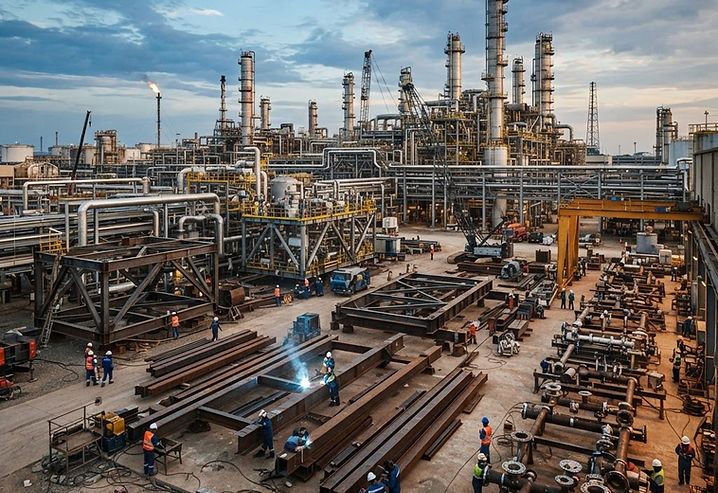
The future of Australian steelmaking is up as the federal government spends $200 million in grants to steelmakers and projects which will help transform the energy system and keep Australian producers internationally competitive while creating jobs. In the first round of the Powering the Regions Fund (PRF) has granted $136.8 million to BlueScope Steel in New South Wales and $63.2 million to Liberty Steel Australia in South Australia. BlueScope will put the funds towards relining and upgrading its No. 6 Blast Furnace at the Port Kembla Steelworks to maintain domestic production, reduce emissions, and support pathways to producing even lower emissions steel. Liberty’s funding will go to the purchase and commission of a low carbon electric arc furnace (EAF) to replace its existing traditional blast furnace at the Whyalla Steelworks. The new state of the art EAF will support the manufacturing of green steel and help achieve Liberty’s aim of carbon neutrality by 2030.
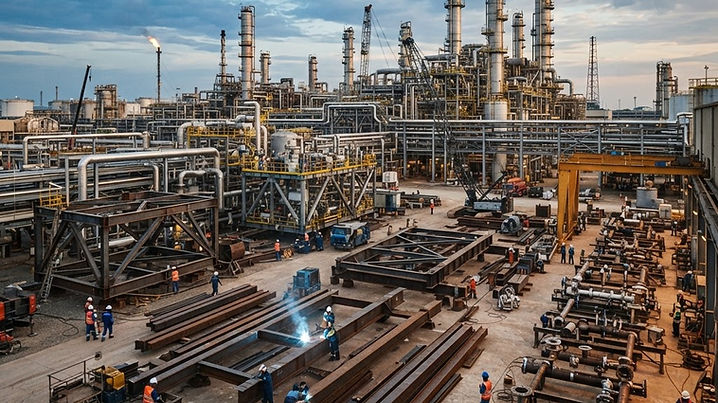
The Minister for Climate Change and Energy Chris Bowen said the $200 million investment in the steel sector aimed to secure its long term future. “Steel is essential for our energy transformation and there are multiple benefits of using local Australian steel companies. Ninety percent of the materials that go into making a wind turbine are steel and cement, and we are going to need a lot more of it. Total steel demand for the energy transformation from 2022 to 2050 will be almost 5 billion tonnes, accounting for 75% of the total material requirement, and that steel will increasingly be green steel.” The Minister said the government wants to make sure products vital to Australia’s economic future, such as green steel are made here, but this will require innovation (such as old tyres and boots used in steel manufacturing ) and new ways of processing iron ore that decarbonise the steel industry. “Regions like the Illawarra and Whyalla have been industrial powerhouses for generations, making the steel used in building our houses, infrastructure and industry while creating jobs, and we want to see this continue.”
BlueScope will add about 250 workers to its site during the blast furnace upgrade and will help secure the local workforce over the long term, including the thousands of jobs at the Port Kembla Steelworks. Liberty’s shift to green iron and steel will increase its workforce by around 24% over five years and help provide many existing employees with retraining and new skills in steel fabrication. Australian Workers’ Union National Secretary Paul Farrow said the AWU has long argued that Australia is ideally placed to become a global, green steel powerhouse of the 21st century. “But to realise that exciting future we need strategic investment today. Thankfully that is what we are finally seeing through the government’s Powering the Regions Fund,” he said. “The decision to fund projects at BlueScope and Liberty is a testament to our nation’s readiness to embrace a clean steel future.”
Farrow said the transition is more than just an environmental imperative. “ Sustainability is a buzzword in steel manufacturing and it is an economic opportunity for Australia to become a clean steel leader in Asia and globally. We tend to hear a lot of doom and gloom about manufacturing in Australia, but the fact is the future looks extremely bright if we seize our opportunities.” The two grants are the first under the PRF’s Critical Inputs to Clean Energy Industries program, which supports hard to abate sectors so Australia can keep making the things that are vital to the energy transition, including electricity and rail infrastructure such as wind towers, solar farms and energy transmission, and the construction of energy efficient buildings using heat induction bending services. The Albanese Government has also committed $200 million in grant funding for the hard to abate cement and lime, and alumina and aluminium sectors, with successful projects to be announced in the coming months.
K999 Thailand carries out work of this kind through its pressure vessel fabrication team in Rayong.
Further reading
Follow procurement intelligence across the wider market on Project Atlas Intel.
How K999 can help
Process equipment for energy projects
Pressure containment and pipeline work carries the tightest documentation on the shop floor, and the articles here track the codes and market conditions behind that work.
Pressure vessels and tanks- 01
Pressure vessels, steel tanks and pig launchers built to ASME and client specifications.
- 02
Pipe spool fabrication with heat induction bending for long radius and tight radius bends.
- 03
Full traceability from mill certificates through weld maps to hydrotest records.
More on Energy & Oil Gas
All articles


Request for quotation
Need fabricated steel to that standard?
Every enquiry is answered within 48 hours by our estimating team in Rayong. The priced quotation follows once drawings, quantities and standards are confirmed. Stainless steel fabrication, structural steel fabrication, pipe spooling, pressure vessels, steel tanks, mining equipment and conveyors, pig launchers, chutes and hoppers, send the package and we will price it.
Before you request a quotation
Steel fabrication quotation questions
What structural steel fabrication, pressure vessel and pipe spooling packages cost, what to send with an enquiry, and how delivery to site works.
Structural steel fabrication is priced from the section and plate tonnage, the detailing and drawing hours, welding and fitting manhours, NDT requirements, blast and coating system, packing and freight. Grade matters as much as weight: AS/NZS, ASTM, JIS and BS sections carry different mill prices, and heavy built up members take longer than rolled sections. Our Rayong workshop produces around 10,000 tonnes of structural steel fabrication a year, so a clear bill of materials is usually enough to price. Send the drawings and we answer within 48 hours; the priced quotation follows once quantities, standards and delivery dates are confirmed.
For steel fabrication work, send the drawings or IFC package, a bill of materials with material grades, the welding and NDT requirements, the coating specification, the delivery port and your site dates. Add the inspection and test plan, any third party inspection requirement, and whether trial assembly or match marking is needed. Where drawings are still in progress, a scope list with sizes, quantities and duty is enough to start, and the estimate is refined once the final package arrives. Every enquiry is answered within 48 hours, and the priced quotation is issued after scope, standards and quantities are confirmed.
Yes. Pressure vessel fabrication is carried out to ASME Section VIII Div. 1 under our ASME U stamp No. 43,462, or to AS/NZS and BS where the project specifies, covering separators, air receivers, water drums, waste heat recovery units and pig launchers. Steel tanks for fuel, biofuel, chemical, water and food duty are designed in house with our E Tank programme to API, ASME, BS and AS/NZS. Because structural steel, vessels, tanks and their supports are built in the same workshops, one enquiry can cover the vessel package, the tank package and the structural steel that carries them, with a single coating and documentation system and one shipment.
Steel fabrication Australia packages are scheduled from a 33,000 m2 Rayong yard with an 80,000 m2 assembly yard inside Sattahip port, so fabrication, trial assembly, blasting, coating and packing run in one place. Programme length depends on tonnage, material lead times, the coating system and inspection scope, and it is confirmed with the quotation. We quote FOB Laem Chabang, Map Ta Phut or Sattahip, or CIF and DAP to your Australian port, with packing lists, weights, lifting points and a data book per shipment. Staged deliveries can follow your site erection sequence instead of shipping everything at once.
There is no fixed minimum. Pipe spooling Australia packages run at up to 3,000 diameter inches per shift on SCH.40, from a single replacement spool to a full plant piping scope, with spools numbered, X rayed where specified and coated to match erection order. Mining equipment fabrication covers chutes, hoppers, ore bins, transfer towers and conveyor structures with Bisalloy, Hardox, rubber lining or hardfacing fitted in house, from one wear liner set to modules of up to 2,500 tonnes assembled at Sattahip. Send the scope list and we will tell you what the smallest sensible batch is for your programme.