


Energy & Oil Gas
Impact of US Regulations on the Oil and Gas Sector
Permitting, emissions rules and pipeline approvals in the United States set equipment and documentation expectations worldwide.
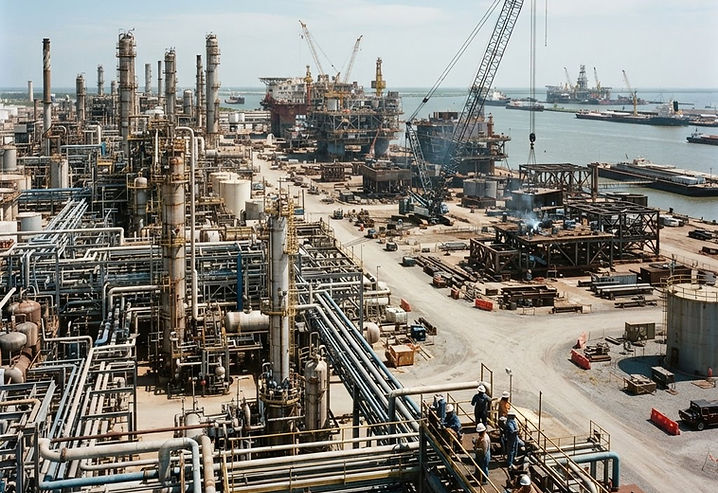
The Oil and Gas sector is considered to be a vital part of the US economy. There are many moving parts which make up this industry, some of these are conditions for drilling, mining plant and equipment, worker safety, environmental issues and chemicals management. With the rise in alternative energy production, there has been a corresponding increase in scrutiny and regulatory oversight of this sector. This has led to concerns that Oil and Gas may be adversely impacted by tightening regulations and this can lead to losses in the long term. Are these fears justified? Let’s discuss further on this blog.
There is no national oil and gas company in the United States. Instead, there are numerous private businesses operating in the sector, including large international corporations. The activities of these companies are regulated on the state and federal level. To begin exploration for oil and gas drilling, the business must obtain a development permit, a drilling permit and an operating permit, the requirements for which are stipulated at the state level. There must also be a public review period, which is often disputed. All permits must be obtained prior to beginning exploration, or the applicant may face delays and financial and legal penalties. In addition to permits, there are various standards and rules that companies must comply with when operating in the oil and gas industry.
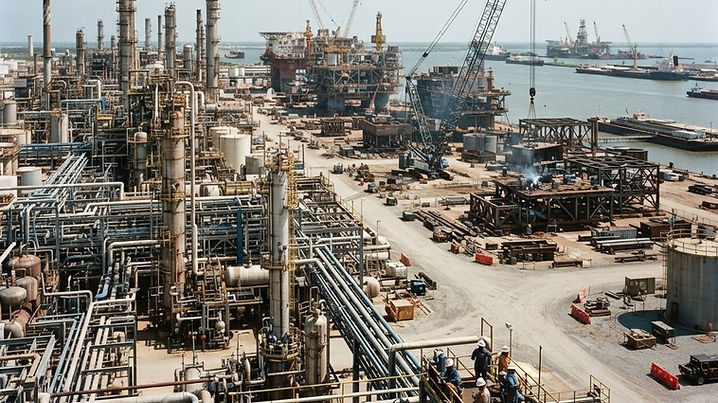
Environmental regulations, such as those on methane leaks and oil spills, can be seen as having a generally positive impact on the gas drilling sector in particular. Existing measures aimed at reducing greenhouse gas emissions mainly have a negative impact on established coal power plants. The resulting economic impacts have led to an artificial acceleration in the natural gas sector. The government is interested in further exploration of shale gas and has taken measures, such as the House of Representatives approved Natural Gas Pipeline Permitting Reform Act, to expedite the federal review process for applications for interstate gas pipelines.
The effects of the Clean Air Act have mainly been positive for the gas drilling industry. The overall aim of the act is a reduction in the emissions of greenhouse gases, with a long term goal of 95% reduction in volatile organic compounds. The act stipulates that operators must take measures to capture natural gas that escapes into the air (green completion). Also, there are incentives for businesses to implement this technology ahead of the deadlines. The technology allows for the natural gases to be caught and treated and then sold instead of being released as waste. The estimated revenues are expected to exceed the costs of compliance. The U.S. Environmental Protection Agency (EPA) suggests that while meeting the Clean Air Act regulations will cost $65 billion from 1990 to 2020, the savings realized from fewer premature deaths, lower health costs, and increased productivity will add up to $2 trillion.
While the implementation of regulatory initiatives ought to be simpler for large, multinational corporations, smaller companies may not be able to budget for the initial implementation costs. About 80% of the domestic oil and gas companies in the U.S. are very small, often with fewer than 10 employees. These initiatives may have a severe impact on the economic viability of these smaller operations.
K999 Thailand carries out work of this kind through its pressure vessel fabrication team in Rayong.
Further reading
Follow project lifecycle intelligence across the wider market on Project Atlas Intel.
How K999 can help
Process equipment for energy projects
Pressure containment and pipeline work carries the tightest documentation on the shop floor, and the articles here track the codes and market conditions behind that work.
Pressure vessels and tanks- 01
Pressure vessels, steel tanks and pig launchers built to ASME and client specifications.
- 02
Pipe spool fabrication with heat induction bending for long radius and tight radius bends.
- 03
Full traceability from mill certificates through weld maps to hydrotest records.
More on Energy & Oil Gas
All articles


Request for quotation
Need fabricated steel to that standard?
Every enquiry is answered within 48 hours by our estimating team in Rayong. The priced quotation follows once drawings, quantities and standards are confirmed. Stainless steel fabrication, structural steel fabrication, pipe spooling, pressure vessels, steel tanks, mining equipment and conveyors, pig launchers, chutes and hoppers, send the package and we will price it.
Before you request a quotation
Steel fabrication quotation questions
What structural steel fabrication, pressure vessel and pipe spooling packages cost, what to send with an enquiry, and how delivery to site works.
Structural steel fabrication is priced from the section and plate tonnage, the detailing and drawing hours, welding and fitting manhours, NDT requirements, blast and coating system, packing and freight. Grade matters as much as weight: AS/NZS, ASTM, JIS and BS sections carry different mill prices, and heavy built up members take longer than rolled sections. Our Rayong workshop produces around 10,000 tonnes of structural steel fabrication a year, so a clear bill of materials is usually enough to price. Send the drawings and we answer within 48 hours; the priced quotation follows once quantities, standards and delivery dates are confirmed.
For steel fabrication work, send the drawings or IFC package, a bill of materials with material grades, the welding and NDT requirements, the coating specification, the delivery port and your site dates. Add the inspection and test plan, any third party inspection requirement, and whether trial assembly or match marking is needed. Where drawings are still in progress, a scope list with sizes, quantities and duty is enough to start, and the estimate is refined once the final package arrives. Every enquiry is answered within 48 hours, and the priced quotation is issued after scope, standards and quantities are confirmed.
Yes. Pressure vessel fabrication is carried out to ASME Section VIII Div. 1 under our ASME U stamp No. 43,462, or to AS/NZS and BS where the project specifies, covering separators, air receivers, water drums, waste heat recovery units and pig launchers. Steel tanks for fuel, biofuel, chemical, water and food duty are designed in house with our E Tank programme to API, ASME, BS and AS/NZS. Because structural steel, vessels, tanks and their supports are built in the same workshops, one enquiry can cover the vessel package, the tank package and the structural steel that carries them, with a single coating and documentation system and one shipment.
Steel fabrication Australia packages are scheduled from a 33,000 m2 Rayong yard with an 80,000 m2 assembly yard inside Sattahip port, so fabrication, trial assembly, blasting, coating and packing run in one place. Programme length depends on tonnage, material lead times, the coating system and inspection scope, and it is confirmed with the quotation. We quote FOB Laem Chabang, Map Ta Phut or Sattahip, or CIF and DAP to your Australian port, with packing lists, weights, lifting points and a data book per shipment. Staged deliveries can follow your site erection sequence instead of shipping everything at once.
There is no fixed minimum. Pipe spooling Australia packages run at up to 3,000 diameter inches per shift on SCH.40, from a single replacement spool to a full plant piping scope, with spools numbered, X rayed where specified and coated to match erection order. Mining equipment fabrication covers chutes, hoppers, ore bins, transfer towers and conveyor structures with Bisalloy, Hardox, rubber lining or hardfacing fitted in house, from one wear liner set to modules of up to 2,500 tonnes assembled at Sattahip. Send the scope list and we will tell you what the smallest sensible batch is for your programme.