


Energy & Oil Gas
Oil Transportation by Sea
Tankers and marine terminals carry most traded crude, with loading systems and hull structures built from fabricated steel.
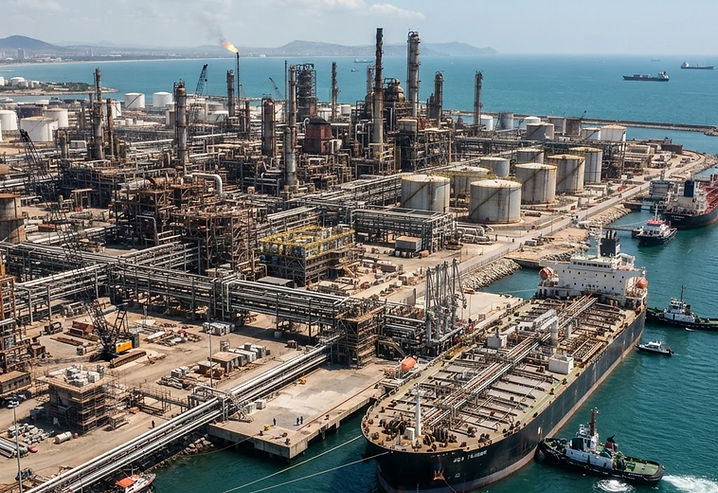
Following the extraction of crude oil from the ground, the next step is transportation to refineries and points of consumption globally. Pipelines are one of the common means of transportation, and there are others like rail cabs and heavy goods vehicles. However, the earliest method of oil transportation is via water. This is due to the fact that our planet is predominantly water based and traveling over seas to new destinations has been prevalent since ancient times. So, what are the types of oil tankers and maritime routes which are popular for transporting oil via the seas? This blog will look to answer some of these questions.
The U.S. Coast Guard defines a tank vessel (such as Water tank Thailand supplier ) as one that is constructed or adapted using steel fabrication to carry oil or hazardous material in bulk as cargo or cargo residue. There are various types of tankers: oil tanker, parcel tanker (chemical vessels), combination carrier (designed to carry oil or solid cargoes in bulk), and barges. International bulk chemical codes govern the safe transport of chemical cargoes and provide various levels of protection against the uncontrolled release of substances. Tank vessels are classified by the trade in which they routinely operate over a period of time. The three most common categories are crude oil carriers, product carriers: which can carry clean (e.g., gasoline, jet fuel) and dirty (e.g., black oils) fuels. Tankers tend to remain in one trade but market conditions can dictate a change, even though the process to change a vessel’s trade involves extensive work.
One of the major concerns in the safe transport of bulk liquid cargos by tank vessel is the stress on the hull. Bending in the form of sagging (concentration of weight in the mid section of the vessel causing the deck to be subjected to compression forces while at the same time the keel is under tension), hogging (concentration of weight at both ends of the vessel causing the deck to experience tensile forces while the keel is under compression), and shear force, which occurs when two forces act in opposite directions parallel to each other, such as at a bulkhead between an empty ballast tank and a full cargo tank. The weight or gravitational and buoyant action experienced on either side of the bulkhead causes the shear force phenomenon.
The most commonly used crude oil shipping routes originate in the Middle East. They pass through the Bab el Mandeb Strait, which separates Djibouti in Africa from Yemen in the Arabian Peninsula, or the Strait of Hormuz, the world’s main oil shipping lane, which separates the United Arab Emirates and Oman from Iran. After this, during trips that last two weeks to a month, the tankers travel to:

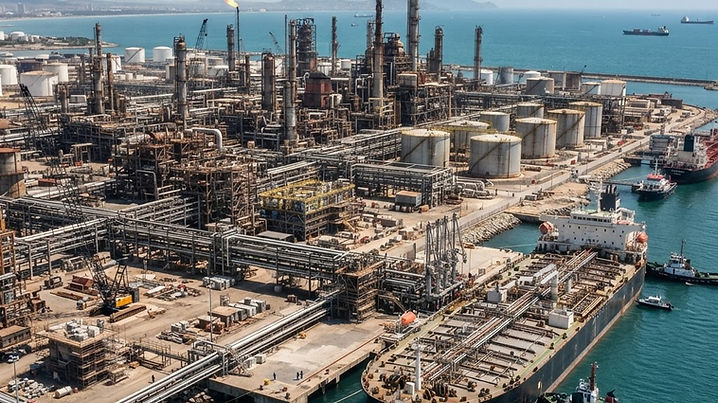
The United States and the rest of North and South America via the Cape of Good Hope.
Asia via the Strait of Malacca between Sumatra and Malaysia.
Europe via the Suez Canal or, if they are too wide, via the Cape of Good Hope, then on to Northern Europe via the Strait of Dover.
The amount of oil transiting through the Panama Canal, which celebrated its 100th anniversary in August 2014, has increased considerably due to growing demand in Asia. In August 2014, Egypt too announced plans to double the capacity of the Suez Canal, though the financing terms have yet to be finalized.
It is quite evident that maritime oil transport is a booming business and, with the development of new oil routes and opening of new markets, it is expected to grow further. The environmental risk caused by oil spills is ever present, however the role played by oil transport over the seas is a crucial component in meeting worldwide demand. Oil maritime routes can also be good conduits among nations, thus making the world a more interconnected place!
K999 Thailand carries out work of this kind through its pressure vessel fabrication team in Rayong.
Further reading
Follow project owner and operator data across the wider market on Project Atlas Intel.
How K999 can help
Process equipment for energy projects
Pressure containment and pipeline work carries the tightest documentation on the shop floor, and the articles here track the codes and market conditions behind that work.
Pressure vessels and tanks- 01
Pressure vessels, steel tanks and pig launchers built to ASME and client specifications.
- 02
Pipe spool fabrication with heat induction bending for long radius and tight radius bends.
- 03
Full traceability from mill certificates through weld maps to hydrotest records.
More on Energy & Oil Gas
All articles


Request for quotation
Need fabricated steel to that standard?
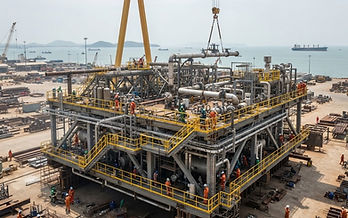
Every enquiry is answered within 48 hours by our estimating team in Rayong. The priced quotation follows once drawings, quantities and standards are confirmed. Stainless steel fabrication, structural steel fabrication, pipe spooling, pressure vessels, steel tanks, mining equipment and conveyors, pig launchers, chutes and hoppers, send the package and we will price it.
Before you request a quotation
Steel fabrication quotation questions
What structural steel fabrication, pressure vessel and pipe spooling packages cost, what to send with an enquiry, and how delivery to site works.
Structural steel fabrication is priced from the section and plate tonnage, the detailing and drawing hours, welding and fitting manhours, NDT requirements, blast and coating system, packing and freight. Grade matters as much as weight: AS/NZS, ASTM, JIS and BS sections carry different mill prices, and heavy built up members take longer than rolled sections. Our Rayong workshop produces around 10,000 tonnes of structural steel fabrication a year, so a clear bill of materials is usually enough to price. Send the drawings and we answer within 48 hours; the priced quotation follows once quantities, standards and delivery dates are confirmed.
For steel fabrication work, send the drawings or IFC package, a bill of materials with material grades, the welding and NDT requirements, the coating specification, the delivery port and your site dates. Add the inspection and test plan, any third party inspection requirement, and whether trial assembly or match marking is needed. Where drawings are still in progress, a scope list with sizes, quantities and duty is enough to start, and the estimate is refined once the final package arrives. Every enquiry is answered within 48 hours, and the priced quotation is issued after scope, standards and quantities are confirmed.
Yes. Pressure vessel fabrication is carried out to ASME Section VIII Div. 1 under our ASME U stamp No. 43,462, or to AS/NZS and BS where the project specifies, covering separators, air receivers, water drums, waste heat recovery units and pig launchers. Steel tanks for fuel, biofuel, chemical, water and food duty are designed in house with our E Tank programme to API, ASME, BS and AS/NZS. Because structural steel, vessels, tanks and their supports are built in the same workshops, one enquiry can cover the vessel package, the tank package and the structural steel that carries them, with a single coating and documentation system and one shipment.
Steel fabrication Australia packages are scheduled from a 33,000 m2 Rayong yard with an 80,000 m2 assembly yard inside Sattahip port, so fabrication, trial assembly, blasting, coating and packing run in one place. Programme length depends on tonnage, material lead times, the coating system and inspection scope, and it is confirmed with the quotation. We quote FOB Laem Chabang, Map Ta Phut or Sattahip, or CIF and DAP to your Australian port, with packing lists, weights, lifting points and a data book per shipment. Staged deliveries can follow your site erection sequence instead of shipping everything at once.
There is no fixed minimum. Pipe spooling Australia packages run at up to 3,000 diameter inches per shift on SCH.40, from a single replacement spool to a full plant piping scope, with spools numbered, X rayed where specified and coated to match erection order. Mining equipment fabrication covers chutes, hoppers, ore bins, transfer towers and conveyor structures with Bisalloy, Hardox, rubber lining or hardfacing fitted in house, from one wear liner set to modules of up to 2,500 tonnes assembled at Sattahip. Send the scope list and we will tell you what the smallest sensible batch is for your programme.