


Welding & Testing
The Crucial Importance of Post Weld Heat Treatment in Stainless Steel Fabrication
Why postweld heat treatment relaxes residual stress in stainless welds, and how the heating and cooling cycle is controlled on fabricated vessels and process pipe.
Understanding Post Weld Heat Treatment (PWHT)
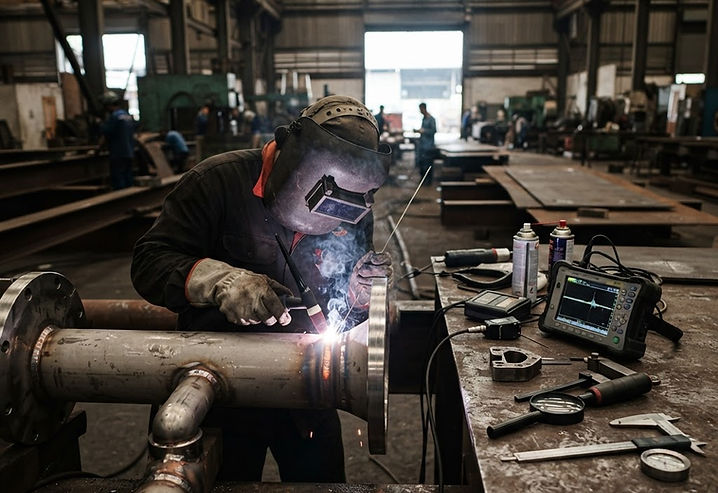
Post Weld Heat Treatment (PWHT) is a critical process in the fabrication of stainless steel components within heavy steel fabrication companies that aims to enhance their structural integrity and longevity. After the welding operation, stainless steel undergoes significant changes in its microstructure due to the thermal cycles involved in welding. PWHT involves heating the welded assembly to a specific temperature, holding it there for a predetermined duration, and then allowing it to cool gradually. This procedure effectively alters the material properties of the stainless steel, optimizing its performance in various applications.
The primary methods utilized for PWHT include furnace heating, localized heating, and induction heating. While furnace heating applies to entire assemblies, localized heating can target specific areas of concern. Induction heating, although less common, offers rapid heating and is efficient for specific applications. Each method has its unique advantages and can be chosen based on the complexities of the fabrication project.
The chemical and physical principles behind PWHT are rooted in the effects of heat on the microstructure of stainless steel. By subjecting welded joints to controlled heat, the residual stresses induced during welding can be relieved, reducing the risk of cracking and distortion. This process not only improves ductility but also modifies the hardness of the stainless steel, leading to improved mechanical properties. Furthermore, PWHT promotes the reformation of the microstructure to achieve a more homogenous and stable material state.
In stainless steel welding, PWHT is essential for ensuring high quality components, particularly in applications subjected to high stress or corrosive environments. By enhancing stress relief and promoting the desired mechanical properties, PWHT serves as a protective measure, ultimately prolonging the service life of welded stainless steel structures. Therefore, integrating effective PWHT practices in the fabrication process is indispensable for meeting industry standards and ensuring reliability.
Benefits of PWHT in Stainless Steel Fabrication
Post Weld Heat Treatment (PWHT) serves as a vital process in the fabrication of stainless steel, contributing significantly to the overall performance and longevity of welded components. One of the primary benefits of PWHT is its capacity to enhance the corrosion resistance of stainless steel. The high temperatures involved in the treatment facilitate the diffusion of alloying elements, effectively restoring and optimizing passivation layers that protect against corrosive environments. This is particularly critical in industries where exposure to harsh chemicals is commonplace.
Additionally, PWHT is instrumental in reducing residual stresses that develop during the stainless steel fabrication welding process. The rapid cooling associated with welding can create uneven stress distributions, leading to potential distortions or failures in the final product. By applying controlled heating and cooling cycles during PWHT, these residual stresses can be relieved, ensuring that the welded joints retain their structural integrity over time. This is essential in applications where safety and reliability are paramount, such as pressure vessels and piping systems.
Furthermore, PWHT plays a significant role in improving both the ductility and toughness of stainless steel. By allowing the microstructure to stabilize, PWHT enhances the material’s ability to withstand dynamic loads without fracturing. This is particularly advantageous in critical structural components, where high resilience against mechanical impact is necessary. Additionally, PWHT minimizes hardening phenomena often associated with welding, preserving the malleability of the stainless steel and allowing for easier machining and forming processes.

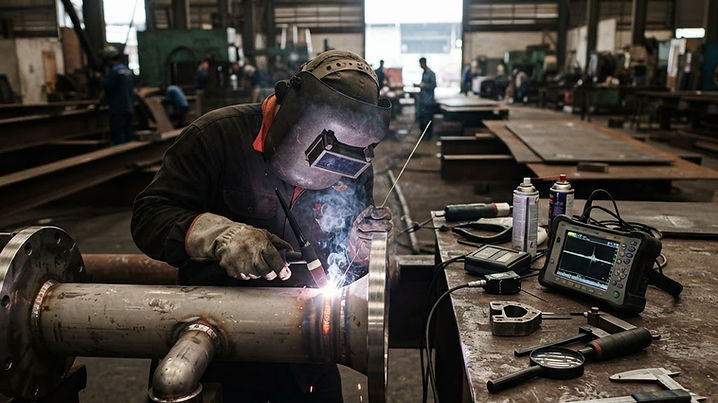
Overall, implementing PWHT in stainless steel fabrication not only boosts performance but also extends the service life of products. The consistent application of this technique across various projects demonstrates its invaluable contribution to maintaining high quality standards in the industry.
Best Practices for Implementing PWHT
Post Weld Heat Treatment (PWHT) is a critical process in stainless steel welding, aimed at relieving residual stresses and improving the material’s mechanical properties. To achieve optimal results, several best practices should be adhered to during the implementation of PWHT.
Firstly, proper temperature settings are paramount. The heat treatment temperature should be selected based on the specific grade of stainless steel being welded. For instance, a common practice is to heat the material to a temperature between 1,200°F to 1,600°F (650°C to 870°C) depending on the welding parameters and steel composition. Maintaining this temperature is essential to ensure a uniform heating and to promote effective stress relief.
The duration of heat treatment also plays a significant role. Generally, the treatment should last for a period sufficient to allow the heat to penetrate the entire thickness of the weld and heat affected zone. A time frame of approximately one hour per inch of thickness is commonly employed, but this can vary based on specific project requirements. Monitoring the temperature throughout this duration is crucial to prevent overheating or insufficient treatment.
Cooling rates after heat treatment should be controlled as well. A slow cooling rate helps to stabilize the microstructure and avoid the introduction of new stresses. Quenching or rapid cooling may lead to undesirable effects such as cracking or high hardness levels. Therefore, it is advisable to allow the material to cool in air or to use insulation to moderate the cooling rate.
In addition to these technical considerations, ensuring compliance with industry standards is key. Organizations such as the American Society of Mechanical Engineers ( ASME ) provide guidelines that outline the specific requirements for PWHT in stainless steel applications. Following these codes not only ensures the quality of the welding but also enhances the safety and reliability of the final product. Furthermore, implementing proper safety measures during the PWHT process, such as the use of protective gear and ensuring proper ventilation, is vital to safeguarding personnel.
Challenges and Considerations in PWHT
Post Weld Heat Treatment (PWHT) is a critical process in stainless steel welding that aims to enhance the mechanical properties of welded structures. However, it comes with its own set of challenges and considerations that must be addressed to ensure effective fabrication. One primary challenge is the equipment limitations, as specialized furnaces or heating setups are often required for uniform heat distribution. Not all facilities have the capacity to accommodate such equipment, which can lead to delays and complications during the welding process.
Another significant consideration is the financial aspect, particularly energy costs associated with PWHT. The duration and intensity of heating can lead to considerable energy consumption, potentially inflating production costs. It is crucial for manufacturers to weigh the benefits of PWHT against these expenses, considering options for energy efficient heating methods that can minimize operational costs without compromising quality.
Time constraints also pose a challenge during the PWHT process. The heating and cooling cycles can extend project timelines, adding pressure to meet deadlines. To mitigate this, adequate planning and scheduling of heating operations are essential. Manufacturers may also explore alternative welding techniques that reduce residual stresses; methods such as laser welding or friction stir welding can minimize the need for extensive PWHT, thus streamlining the fabrication process.
Furthermore, distortions arising from heat treatment can affect the final integrity of stainless steel structures. Employing preheating prior to welding and using proper joint designs can help manage the thermal stresses that lead to distortion. Ultimately, navigating these challenges requires a proactive approach, emphasizing appropriate techniques and equipment selection to ensure the successful application of PWHT in stainless steel welding.
K999 Thailand carries out work of this kind through its pipe spool fabrication team in Rayong.
Further reading
Follow Critical Minerals across the wider market on Project Atlas Intel.
How K999 can help
Welding and inspection practice
The welding procedures, welder qualifications and inspection routines described here are the ones applied to every spool, vessel and frame that leaves our workshop.
Inspection and expediting- 01
Qualified procedures for carbon steel, stainless steel and nickel alloys, with welder performance records held per joint type.
- 02
Dimensional and weld inspection in house, with third party witness arranged for client hold points.
- 03
Inspection and expediting support that follows the job from raw material receipt through to load out.
More on Welding & Testing
All articles


Request for quotation
Need fabricated steel to that standard?
Every enquiry is answered within 48 hours by our estimating team in Rayong. The priced quotation follows once drawings, quantities and standards are confirmed. Stainless steel fabrication, structural steel fabrication, pipe spooling, pressure vessels, steel tanks, mining equipment and conveyors, pig launchers, chutes and hoppers, send the package and we will price it.
Before you request a quotation
Steel fabrication quotation questions
What structural steel fabrication, pressure vessel and pipe spooling packages cost, what to send with an enquiry, and how delivery to site works.
Structural steel fabrication is priced from the section and plate tonnage, the detailing and drawing hours, welding and fitting manhours, NDT requirements, blast and coating system, packing and freight. Grade matters as much as weight: AS/NZS, ASTM, JIS and BS sections carry different mill prices, and heavy built up members take longer than rolled sections. Our Rayong workshop produces around 10,000 tonnes of structural steel fabrication a year, so a clear bill of materials is usually enough to price. Send the drawings and we answer within 48 hours; the priced quotation follows once quantities, standards and delivery dates are confirmed.
For steel fabrication work, send the drawings or IFC package, a bill of materials with material grades, the welding and NDT requirements, the coating specification, the delivery port and your site dates. Add the inspection and test plan, any third party inspection requirement, and whether trial assembly or match marking is needed. Where drawings are still in progress, a scope list with sizes, quantities and duty is enough to start, and the estimate is refined once the final package arrives. Every enquiry is answered within 48 hours, and the priced quotation is issued after scope, standards and quantities are confirmed.
Yes. Pressure vessel fabrication is carried out to ASME Section VIII Div. 1 under our ASME U stamp No. 43,462, or to AS/NZS and BS where the project specifies, covering separators, air receivers, water drums, waste heat recovery units and pig launchers. Steel tanks for fuel, biofuel, chemical, water and food duty are designed in house with our E Tank programme to API, ASME, BS and AS/NZS. Because structural steel, vessels, tanks and their supports are built in the same workshops, one enquiry can cover the vessel package, the tank package and the structural steel that carries them, with a single coating and documentation system and one shipment.
Steel fabrication Australia packages are scheduled from a 33,000 m2 Rayong yard with an 80,000 m2 assembly yard inside Sattahip port, so fabrication, trial assembly, blasting, coating and packing run in one place. Programme length depends on tonnage, material lead times, the coating system and inspection scope, and it is confirmed with the quotation. We quote FOB Laem Chabang, Map Ta Phut or Sattahip, or CIF and DAP to your Australian port, with packing lists, weights, lifting points and a data book per shipment. Staged deliveries can follow your site erection sequence instead of shipping everything at once.
There is no fixed minimum. Pipe spooling Australia packages run at up to 3,000 diameter inches per shift on SCH.40, from a single replacement spool to a full plant piping scope, with spools numbered, X rayed where specified and coated to match erection order. Mining equipment fabrication covers chutes, hoppers, ore bins, transfer towers and conveyor structures with Bisalloy, Hardox, rubber lining or hardfacing fitted in house, from one wear liner set to modules of up to 2,500 tonnes assembled at Sattahip. Send the scope list and we will tell you what the smallest sensible batch is for your programme.