


Energy & Oil Gas
Putin Says Nord Stream Will Restart, With Conditions
Russian President Vladimir Putin signalled that Europe would start getting gas again through a key pipeline but warned that unless a spat over sanctioned parts is resolved, flows will be...
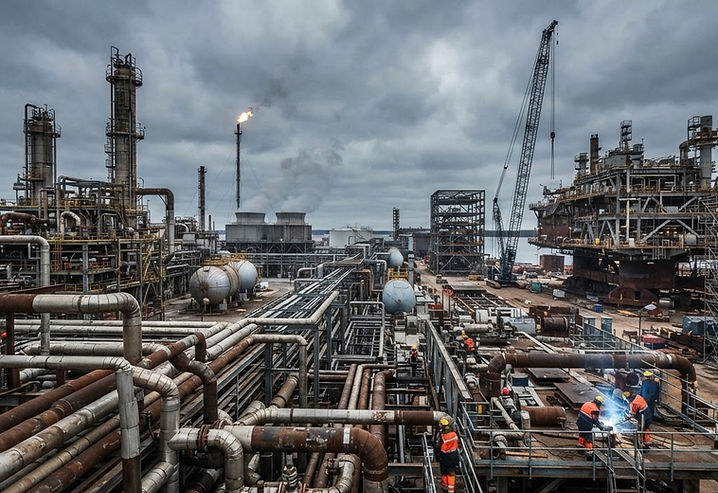
Russian President Vladimir Putin signalled that Europe would start getting gas again through a key pipeline but warned that unless a spat over sanctioned parts is resolved, flows will be tightly curbed.
Europe is on tenterhooks, waiting to see whether gas flows resume on Thursday when maintenance on the Nord Stream pipeline is set to end. Putin gave the clearest signal yet that Moscow plans to restart at least some flows. But if a pipeline part that was caught up in sanctions isn’t returned to Russia, then the link will only work at 20% of capacity as soon as next week - as that’s when another part that’s now in Russia needs to go for maintenance via pipe fabrication, Putin said. After frantic diplomatic efforts by Germany, the turbine is on its way home from Canada.
“If another comes, two will operate. If not, just one, so 30 million cubic meters will be pumped per day,” Putin told reporters after a summit in Iran late Tuesday. He wants the part back in Russia, along with all its paperwork, he said. Currently, no gas is flowing through the biggest pipeline to Europe because of maintenance, just as the continent is trying to refill its storage for winter. Before maintenance, gas was flowing at about 40% of capacity. Gazprom PJSC is poised to restart flows, Bloomberg reported on Tuesday, but at reduced levels, according to people familiar with the situation. Ultimately, it’s a decision for the Kremlin. Across the region, officials and businesses have been on edge as to whether Russia will reopen the tap for Nord Stream. The European Union is working on the assumption flows will be cut and scrambling to find ways to reduce consumption. The bloc is facing its worst energy crisis in decades, with the threat of shortages undermining the euro and adding to the risks of recession.
Governments have been racing to secure alternate supplies after Russia invaded Ukraine in February, sparking a wave of EU sanctions and retaliatory measures from Moscow. Officials are aware the clock is ticking toward the colder months when European gas demand for heating is high. “What Gazprom is going to do tomorrow is your best guess as well as ours,” said European Commission spokesman Eric Mamer, referring to Russia’s state run supplier. “What is clear is that when we are preparing winter contingency plans, we base ourselves on the worst possible scenario.” Even before the works, Gazprom slashed deliveries through the pipeline, citing technical issues at a separate asset that compresses gas for the link. Earlier this year the company cut supplies to some EU countries over a pay dispute, and more recently it declared force majeure on shipments to several European buyers.
Near Russia’s Baltic coast, Gazprom’s Portovaya compressor station is where gas supplies start their 745 mile journey to Germany through Nord Stream. Russia cited issues with the station - a separate legal entity from the pipeline, with different ownership - when it cut supplies last month. Portovaya has six major gas turbines, enabling it to build sufficient pressure to send gas over such a long distance. Only two of those units were operating before Nord Stream shut for maintenance earlier this month, according to Gazprom. The other components needed to be serviced with regard to steel fabrication by their manufacturer, Siemens Energy AG. One turbine got stranded in Canada - where it was being repaired - due to Ottawa’s sanctions against Moscow. Canada released the component to Germany, following calls from Berlin, and other turbines can now go for similar work. But there’s no clarity on when this might happen, and no details on the remaining two turbines or their condition.
K999 Thailand carries out work of this kind through its pressure vessel fabrication team in Rayong.
Further reading
Follow project intelligence platform across the wider market on Project Atlas Intel.
How K999 can help
Process equipment for energy projects
Pressure containment and pipeline work carries the tightest documentation on the shop floor, and the articles here track the codes and market conditions behind that work.
Pressure vessels and tanks- 01
Pressure vessels, steel tanks and pig launchers built to ASME and client specifications.
- 02
Pipe spool fabrication with heat induction bending for long radius and tight radius bends.
- 03
Full traceability from mill certificates through weld maps to hydrotest records.
More on Energy & Oil Gas
All articles

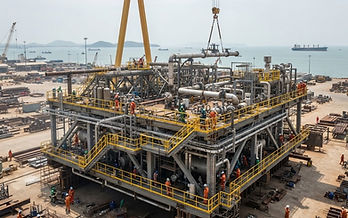

Request for quotation
Need fabricated steel to that standard?
Every enquiry is answered within 48 hours by our estimating team in Rayong. The priced quotation follows once drawings, quantities and standards are confirmed. Stainless steel fabrication, structural steel fabrication, pipe spooling, pressure vessels, steel tanks, mining equipment and conveyors, pig launchers, chutes and hoppers, send the package and we will price it.
Before you request a quotation
Steel fabrication quotation questions
What structural steel fabrication, pressure vessel and pipe spooling packages cost, what to send with an enquiry, and how delivery to site works.
Structural steel fabrication is priced from the section and plate tonnage, the detailing and drawing hours, welding and fitting manhours, NDT requirements, blast and coating system, packing and freight. Grade matters as much as weight: AS/NZS, ASTM, JIS and BS sections carry different mill prices, and heavy built up members take longer than rolled sections. Our Rayong workshop produces around 10,000 tonnes of structural steel fabrication a year, so a clear bill of materials is usually enough to price. Send the drawings and we answer within 48 hours; the priced quotation follows once quantities, standards and delivery dates are confirmed.
For steel fabrication work, send the drawings or IFC package, a bill of materials with material grades, the welding and NDT requirements, the coating specification, the delivery port and your site dates. Add the inspection and test plan, any third party inspection requirement, and whether trial assembly or match marking is needed. Where drawings are still in progress, a scope list with sizes, quantities and duty is enough to start, and the estimate is refined once the final package arrives. Every enquiry is answered within 48 hours, and the priced quotation is issued after scope, standards and quantities are confirmed.
Yes. Pressure vessel fabrication is carried out to ASME Section VIII Div. 1 under our ASME U stamp No. 43,462, or to AS/NZS and BS where the project specifies, covering separators, air receivers, water drums, waste heat recovery units and pig launchers. Steel tanks for fuel, biofuel, chemical, water and food duty are designed in house with our E Tank programme to API, ASME, BS and AS/NZS. Because structural steel, vessels, tanks and their supports are built in the same workshops, one enquiry can cover the vessel package, the tank package and the structural steel that carries them, with a single coating and documentation system and one shipment.
Steel fabrication Australia packages are scheduled from a 33,000 m2 Rayong yard with an 80,000 m2 assembly yard inside Sattahip port, so fabrication, trial assembly, blasting, coating and packing run in one place. Programme length depends on tonnage, material lead times, the coating system and inspection scope, and it is confirmed with the quotation. We quote FOB Laem Chabang, Map Ta Phut or Sattahip, or CIF and DAP to your Australian port, with packing lists, weights, lifting points and a data book per shipment. Staged deliveries can follow your site erection sequence instead of shipping everything at once.
There is no fixed minimum. Pipe spooling Australia packages run at up to 3,000 diameter inches per shift on SCH.40, from a single replacement spool to a full plant piping scope, with spools numbered, X rayed where specified and coated to match erection order. Mining equipment fabrication covers chutes, hoppers, ore bins, transfer towers and conveyor structures with Bisalloy, Hardox, rubber lining or hardfacing fitted in house, from one wear liner set to modules of up to 2,500 tonnes assembled at Sattahip. Send the scope list and we will tell you what the smallest sensible batch is for your programme.