


Energy & Oil Gas
Role of Fabrication in Oil and Gas Industry
Skids, pressure vessels, pipe spools and platform modules are all fabricated packages that keep oil and gas projects on schedule.
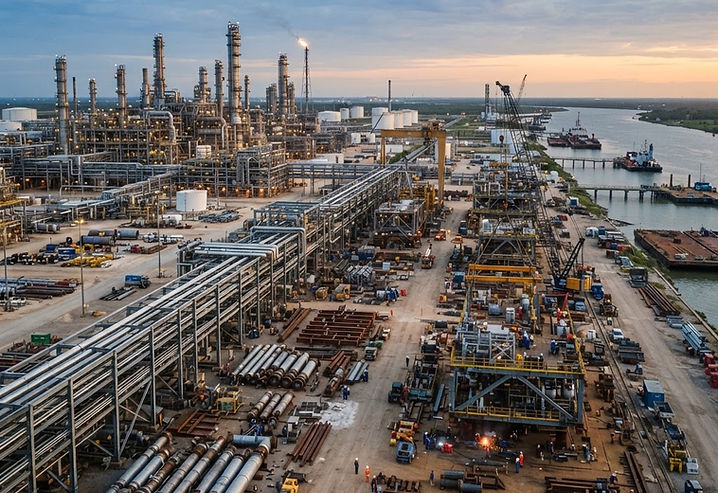
Good quality infrastructure in the oil and gas industry is an absolute necessity for oil to be transported, transformed, processed etc. But how are all these complex machines developed and assembled for use by oil and gas professionals? The answer is “fabrication” where metal fabrication companies are involved in producing pipelines, hollow sections, platforms, beams, girders, custom fitted metal elements, pressure vessels and heat exchangers. Metal and steel fabrication plays a crucial role in the oil and gas industry and this blog will look to outline its various applications and advantages in this regard.
The infrastructure of the oil and gas industry is complex. An oil rig or an oil platform is a large structure with facilities to drill wells, and extract and process oil and natural gas. There are different types of oil platforms such as fixed platforms, compliant towers, semisubmersible platform, jack up drilling rigs, drill ships, floating production systems, tension leg platforms, and gravity based structures and spar platforms. All these structures are built on steel legs and steel jackets are commonly used structural steel sections while constructing oil platforms.
Almost all equipment used in the oil and gas industry are made of structural steel. All kinds of critical parts are manufactured by structural steel fabricators. Pipelines, pressure vessels, and oil and gas separators are some of the applications of structural steel in the oil and gas industry.
Pipelines: Structural steel fabricators produce pipelines based on the type of fluid they will carry.

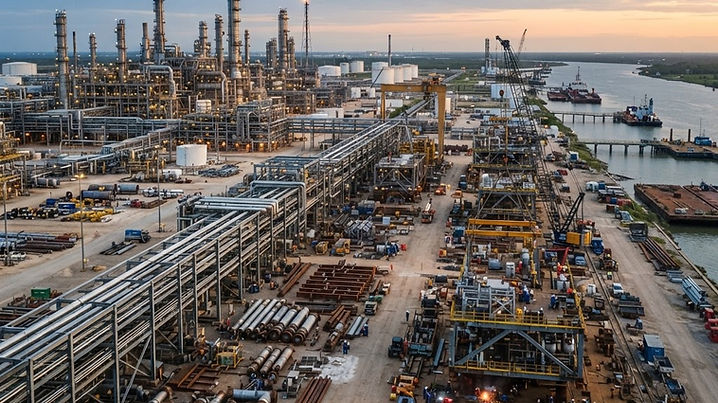
Pressure Vessels: Pressure vessels are used to hold the fluid or natural gas collected at the oil rig. They are fabricated by steel fabricators for oil and gas companies.
Oil and Gas Separators: Oil and Gas separators are pressure vessels used for separating a well stream into gaseous and liquid components. A major part of it is fabricated by fabrication companies.
Fabrication, in particular modular fabrication and process skids, allows the oil and gas industry to meet its pipeline and equipment needs by quickly and efficiently delivering the products and services that the industry needs to continue functioning. Among other things modular fabrication techniques provide the following advantages:
Speed of Construction, Time spent waiting for new pipelines to be built and parts and equipment to be delivered is an extremely costly inconvenience to oil and gas companies. Fortunately, modular fabrication allows for a very rapid construction and fast delivery because the process has been finely tuned for maximum speed and efficiency.
Easy Delivery and Installation, Building the new equipment is only half the battle, the rest lies in actually delivering it and getting it setup. Modular fabrication allows pieces to be shipped and stored conveniently, and then installed with a minimum of inconvenience at its final worksite.
High Safety and Quality Standards, Modular fabrication can be done to the highest level of safety and quality standards because the equipment and parts can be tested prior to delivery. This allows any defects to be identified and corrected before the oil or gas company is ever faced with downtimes or safety hazards from faulty equipment.
The myriad applications and benefits of fabrication have been instrumental in supporting the mammoth oil and gas industry. While there is also a cost associated with maintaining heavy machinery and instrumentation, the smooth operations of various aspects of oil mining and production is essential to generating revenues and meeting industry requirements. Fabrication also has uses in other industries like mining, logging etc., in essence, fabrication is the definition of multifaceted!
Further reading
Follow Mining across the wider market on Project Atlas Intel.
How K999 can help
Process equipment for energy projects
Pressure containment and pipeline work carries the tightest documentation on the shop floor, and the articles here track the codes and market conditions behind that work.
Pressure vessels and tanks- 01
Pressure vessels, steel tanks and pig launchers built to ASME and client specifications.
- 02
Pipe spool fabrication with heat induction bending for long radius and tight radius bends.
- 03
Full traceability from mill certificates through weld maps to hydrotest records.
More on Energy & Oil Gas
All articles

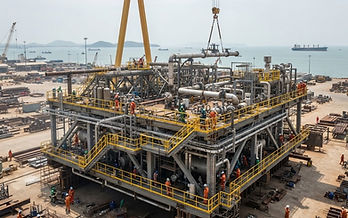

Request for quotation
Need fabricated steel to that standard?
Every enquiry is answered within 48 hours by our estimating team in Rayong. The priced quotation follows once drawings, quantities and standards are confirmed. Stainless steel fabrication, structural steel fabrication, pipe spooling, pressure vessels, steel tanks, mining equipment and conveyors, pig launchers, chutes and hoppers, send the package and we will price it.
Before you request a quotation
Steel fabrication quotation questions
What structural steel fabrication, pressure vessel and pipe spooling packages cost, what to send with an enquiry, and how delivery to site works.
Structural steel fabrication is priced from the section and plate tonnage, the detailing and drawing hours, welding and fitting manhours, NDT requirements, blast and coating system, packing and freight. Grade matters as much as weight: AS/NZS, ASTM, JIS and BS sections carry different mill prices, and heavy built up members take longer than rolled sections. Our Rayong workshop produces around 10,000 tonnes of structural steel fabrication a year, so a clear bill of materials is usually enough to price. Send the drawings and we answer within 48 hours; the priced quotation follows once quantities, standards and delivery dates are confirmed.
For steel fabrication work, send the drawings or IFC package, a bill of materials with material grades, the welding and NDT requirements, the coating specification, the delivery port and your site dates. Add the inspection and test plan, any third party inspection requirement, and whether trial assembly or match marking is needed. Where drawings are still in progress, a scope list with sizes, quantities and duty is enough to start, and the estimate is refined once the final package arrives. Every enquiry is answered within 48 hours, and the priced quotation is issued after scope, standards and quantities are confirmed.
Yes. Pressure vessel fabrication is carried out to ASME Section VIII Div. 1 under our ASME U stamp No. 43,462, or to AS/NZS and BS where the project specifies, covering separators, air receivers, water drums, waste heat recovery units and pig launchers. Steel tanks for fuel, biofuel, chemical, water and food duty are designed in house with our E Tank programme to API, ASME, BS and AS/NZS. Because structural steel, vessels, tanks and their supports are built in the same workshops, one enquiry can cover the vessel package, the tank package and the structural steel that carries them, with a single coating and documentation system and one shipment.
Steel fabrication Australia packages are scheduled from a 33,000 m2 Rayong yard with an 80,000 m2 assembly yard inside Sattahip port, so fabrication, trial assembly, blasting, coating and packing run in one place. Programme length depends on tonnage, material lead times, the coating system and inspection scope, and it is confirmed with the quotation. We quote FOB Laem Chabang, Map Ta Phut or Sattahip, or CIF and DAP to your Australian port, with packing lists, weights, lifting points and a data book per shipment. Staged deliveries can follow your site erection sequence instead of shipping everything at once.
There is no fixed minimum. Pipe spooling Australia packages run at up to 3,000 diameter inches per shift on SCH.40, from a single replacement spool to a full plant piping scope, with spools numbered, X rayed where specified and coated to match erection order. Mining equipment fabrication covers chutes, hoppers, ore bins, transfer towers and conveyor structures with Bisalloy, Hardox, rubber lining or hardfacing fitted in house, from one wear liner set to modules of up to 2,500 tonnes assembled at Sattahip. Send the scope list and we will tell you what the smallest sensible batch is for your programme.