


Energy & Oil Gas
The Future Made in Australia Act
The Australian government’s vision for a Future Made in Australia, which is to be enacted later this year, is set to become the core of the government’s industrial policy, and will...
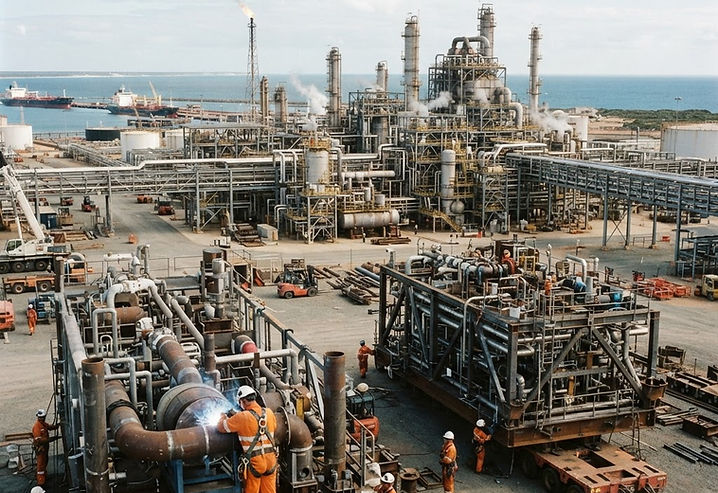
The Australian government’s vision for a Future Made in Australia, which is to be enacted later this year, is set to become the core of the government’s industrial policy, and will encompass existing and new initiatives. The vision is aligned to reshoring and onshoring, which is one of the 2023 trends in Australian manufacturing. Announcing the Future Made in Australia Act in Queensland last Thursday, Prime Minister Anthony Albanese said the US is pursuing what they call a ‘small yard, high fence’ approach to critical industries. He listed the policies of the European Union, Japan, Korea and Canada, and proclaimed, “This is not old fashioned protectionism or isolationism, it is the new competition”. “We must recognise there is a new and widespread willingness to make economic interventions on the basis of national interest and national sovereignty. And, critically, none of this is being left solely to market forces,” he said, while promising to champion global markets and free trade, and to build bilateral and multilateral cooperation.
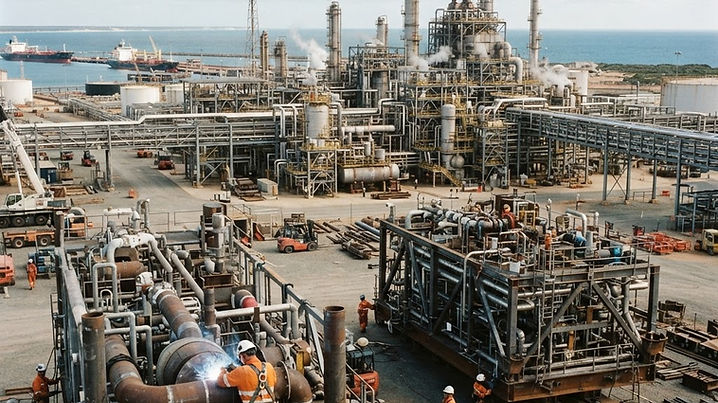
The new Act will include existing government initiatives such as the $15 billion National Reconstruction Fund, the skills agenda, and initiatives to encourage Australian made batteries and solar panels, the Hydrogen Headstart program and the Net Zero Economy Authority. New incentives for local and offshore companies to invest in Australia’s renewables and advanced manufacturing capacity are to be fleshed out in the May Budget. “Part of the objective here is about Australia presenting potential investors with ‘a single front door’. A clear path to investing in Australia, in Queensland, in hydrogen, green metals and advanced processes with an aim to decarbonise the manufacturing industry,” he told his largely Queensland audience. “In this time of transformative opportunity, our government will not be an observer or a spectator, we will be a participant, a partner, an investor, and enabler. This new wave demands a new approach - and since the last election, our government has been laying the foundations to deliver it …. In next month’s Budget, and beyond, we’ll be building on that foundation.”
Responses to the announcement have been mixed, ranging from acclaim from clean energy advocates, scientific groups and workers’ representatives to qualified, lukewarm reception from business groups to specific caveats from the Productivity Commission and Weld Australia. Weld Australia welcomed the Act as a critical opportunity to bolster local economic participation in heat induction bending services. Yet it warned that government must ensure that enforceable, local content thresholds are formally incorporated to achieve the desired results. The Productivity Commission’s new chair Danielle Wood told media that Australia can’t pretend the Act will be without cost, and that subsidies demand well defined exit strategies. “We risk creating a class of businesses that is reliant on government subsidies,” she told the Australian Financial Review. If we are supporting industries - such as pipe fabrication - that don’t have a long term competitive advantage, that can be an ongoing cost. It diverts resources, that’s workers and capital, away from other parts of the economy where they might generate high value uses.” Since then, Treasurer Jim Chalmers has said Wood’s points had already been addressed by government.
K999 Thailand carries out work of this kind through its pressure vessel fabrication team in Rayong.
Further reading
Follow Renewable Energy across the wider market on Project Atlas Intel.
How K999 can help
Process equipment for energy projects
Pressure containment and pipeline work carries the tightest documentation on the shop floor, and the articles here track the codes and market conditions behind that work.
Pressure vessels and tanks- 01
Pressure vessels, steel tanks and pig launchers built to ASME and client specifications.
- 02
Pipe spool fabrication with heat induction bending for long radius and tight radius bends.
- 03
Full traceability from mill certificates through weld maps to hydrotest records.
More on Energy & Oil Gas
All articles


Request for quotation
Need fabricated steel to that standard?
Every enquiry is answered within 48 hours by our estimating team in Rayong. The priced quotation follows once drawings, quantities and standards are confirmed. Stainless steel fabrication, structural steel fabrication, pipe spooling, pressure vessels, steel tanks, mining equipment and conveyors, pig launchers, chutes and hoppers, send the package and we will price it.
Before you request a quotation
Steel fabrication quotation questions
What structural steel fabrication, pressure vessel and pipe spooling packages cost, what to send with an enquiry, and how delivery to site works.
Structural steel fabrication is priced from the section and plate tonnage, the detailing and drawing hours, welding and fitting manhours, NDT requirements, blast and coating system, packing and freight. Grade matters as much as weight: AS/NZS, ASTM, JIS and BS sections carry different mill prices, and heavy built up members take longer than rolled sections. Our Rayong workshop produces around 10,000 tonnes of structural steel fabrication a year, so a clear bill of materials is usually enough to price. Send the drawings and we answer within 48 hours; the priced quotation follows once quantities, standards and delivery dates are confirmed.
For steel fabrication work, send the drawings or IFC package, a bill of materials with material grades, the welding and NDT requirements, the coating specification, the delivery port and your site dates. Add the inspection and test plan, any third party inspection requirement, and whether trial assembly or match marking is needed. Where drawings are still in progress, a scope list with sizes, quantities and duty is enough to start, and the estimate is refined once the final package arrives. Every enquiry is answered within 48 hours, and the priced quotation is issued after scope, standards and quantities are confirmed.
Yes. Pressure vessel fabrication is carried out to ASME Section VIII Div. 1 under our ASME U stamp No. 43,462, or to AS/NZS and BS where the project specifies, covering separators, air receivers, water drums, waste heat recovery units and pig launchers. Steel tanks for fuel, biofuel, chemical, water and food duty are designed in house with our E Tank programme to API, ASME, BS and AS/NZS. Because structural steel, vessels, tanks and their supports are built in the same workshops, one enquiry can cover the vessel package, the tank package and the structural steel that carries them, with a single coating and documentation system and one shipment.
Steel fabrication Australia packages are scheduled from a 33,000 m2 Rayong yard with an 80,000 m2 assembly yard inside Sattahip port, so fabrication, trial assembly, blasting, coating and packing run in one place. Programme length depends on tonnage, material lead times, the coating system and inspection scope, and it is confirmed with the quotation. We quote FOB Laem Chabang, Map Ta Phut or Sattahip, or CIF and DAP to your Australian port, with packing lists, weights, lifting points and a data book per shipment. Staged deliveries can follow your site erection sequence instead of shipping everything at once.
There is no fixed minimum. Pipe spooling Australia packages run at up to 3,000 diameter inches per shift on SCH.40, from a single replacement spool to a full plant piping scope, with spools numbered, X rayed where specified and coated to match erection order. Mining equipment fabrication covers chutes, hoppers, ore bins, transfer towers and conveyor structures with Bisalloy, Hardox, rubber lining or hardfacing fitted in house, from one wear liner set to modules of up to 2,500 tonnes assembled at Sattahip. Send the scope list and we will tell you what the smallest sensible batch is for your programme.