


Energy & Oil Gas
The Future of Petrochemicals
Feedstock shifts and recycling chemistry are redirecting investment in petrochemical complexes and their equipment.
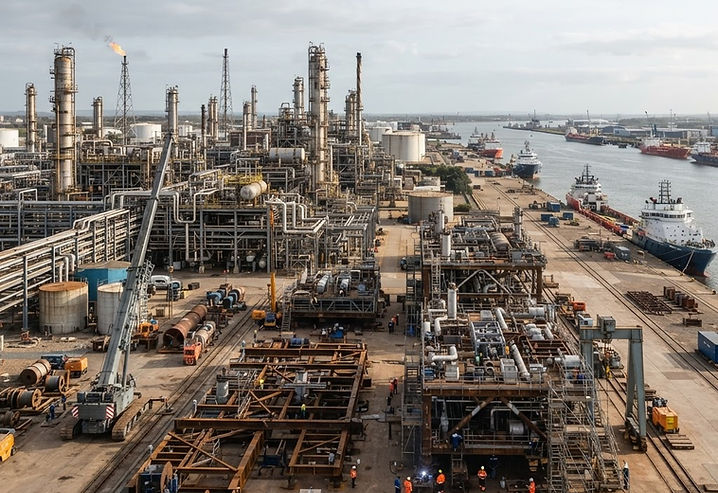
Petrochemicals play a hugely important role in our day to day lives. Plastics, detergents, dyes and fertilizers are made from petrochemicals and the demand for these items is only expected to increase further in coming days. However, there appear to be gradual shifts in the global petrochemicals industry that are changing the way base chemicals capacities are added and utilized. Despite its size, this industry continues to take a back seat in the global energy debate. This blog will explore the petrochemicals sector in the backdrop of tailwinds and underlying recessionary issues.
Petrochemicals are the chemical products obtained from petroleum by refining. The two most common petrochemical classes are olefins (including ethylene and propylene) and aromatics (including benzene, toluene and xylene isomers). Oil refineries produce olefins and aromatics by fluid catalytic cracking of petroleum fractions. Chemical plants produce olefins by steam cracking of natural gas liquids like ethane and propane and aromatics are produced by catalytic reforming of naphtha. These are stored in storage tanks and are the building blocks for a wide range of materials such as solvents, laundry detergents and adhesives.
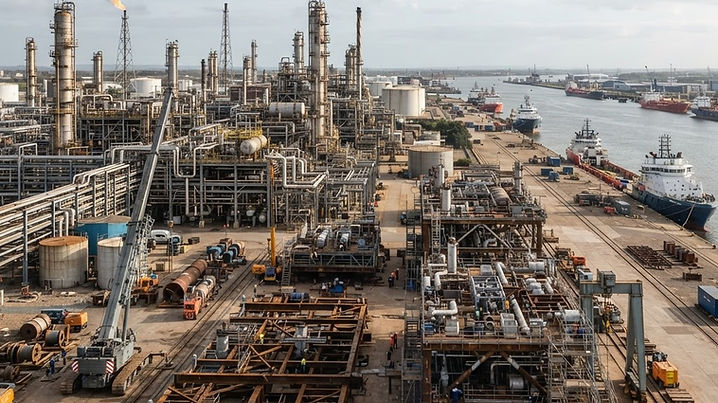
The demand for plastics, the most familiar group of petrochemical products, has outpaced that of all other bulk materials (such as steel, aluminum or cement) and has nearly doubled in the last 20 years. Advanced economies, such as the United States and Europe, currently use up to 20 times as much plastic and up to 10 times as much fertilizer as developing economies such as India and Indonesia, on a per capita basis. Although substantial increase in recycling and efforts to curb single use plastics are expected, especially in developed economies of Europe, Japan and Korea, these efforts will be far outweighed by developing economies sharply increasing their shares of plastic consumption (as well as its disposal). The growth in demand for petrochemical products means that petrochemicals are set to account for over a third of the growth in oil demand by 2030, and nearly half by 2050, ahead of trucks, aviation and shipping. Also, the United States currently holds around 40% of the global ethane based petrochemical production capacity. The Middle East is renowned for producing key petrochemicals at low costs.
It is well known that plastic is not bio degradable and this is an environmental concern. When plastic waste finds its way into the ocean, it breaks down into small pieces that are commonly ingested by marine life. As the larger debris, including containers, bottles etc., continue to degrade over time, the quantity of microplastics could increase significantly. This will lead to research into sustainable chemical production, establishing and extending plant level benchmarking schemes for energy performance and pursuing effective regulatory actions to reduce carbon dioxide emissions. Other headwinds may include construction of new petrochemical plants getting delayed (or even getting scrapped), as companies grapple to maintain margins, cut costs, and rationalize capital allocation.
Considering the dependence on everyday items like plastic packaging, fertilizers, synthetic rubber and detergents, petrochemical products are here to stay in the foreseeable future. In developing economies, the focus on environmental degradation is not as strong as it is in developed economies and there is a lack of feasible alternatives for petrochemical products in developing economies. The production and matching of supply and demand of petrochemicals is robust and this industry is expected to prosper in coming years with a few challenges to be considered. Hence, as consumer consumption picks up in the post COVID 19 world, expect petrochemicals industries to flourish in the coming days!
K999 Thailand carries out work of this kind through its pressure vessel fabrication team in Rayong.
Further reading
Follow hydrogen projects in Europe across the wider market on Project Atlas Intel.
How K999 can help
Process equipment for energy projects
Pressure containment and pipeline work carries the tightest documentation on the shop floor, and the articles here track the codes and market conditions behind that work.
Pressure vessels and tanks- 01
Pressure vessels, steel tanks and pig launchers built to ASME and client specifications.
- 02
Pipe spool fabrication with heat induction bending for long radius and tight radius bends.
- 03
Full traceability from mill certificates through weld maps to hydrotest records.
More on Energy & Oil Gas
All articles


Request for quotation
Need fabricated steel to that standard?
Every enquiry is answered within 48 hours by our estimating team in Rayong. The priced quotation follows once drawings, quantities and standards are confirmed. Stainless steel fabrication, structural steel fabrication, pipe spooling, pressure vessels, steel tanks, mining equipment and conveyors, pig launchers, chutes and hoppers, send the package and we will price it.
Before you request a quotation
Steel fabrication quotation questions
What structural steel fabrication, pressure vessel and pipe spooling packages cost, what to send with an enquiry, and how delivery to site works.
Structural steel fabrication is priced from the section and plate tonnage, the detailing and drawing hours, welding and fitting manhours, NDT requirements, blast and coating system, packing and freight. Grade matters as much as weight: AS/NZS, ASTM, JIS and BS sections carry different mill prices, and heavy built up members take longer than rolled sections. Our Rayong workshop produces around 10,000 tonnes of structural steel fabrication a year, so a clear bill of materials is usually enough to price. Send the drawings and we answer within 48 hours; the priced quotation follows once quantities, standards and delivery dates are confirmed.
For steel fabrication work, send the drawings or IFC package, a bill of materials with material grades, the welding and NDT requirements, the coating specification, the delivery port and your site dates. Add the inspection and test plan, any third party inspection requirement, and whether trial assembly or match marking is needed. Where drawings are still in progress, a scope list with sizes, quantities and duty is enough to start, and the estimate is refined once the final package arrives. Every enquiry is answered within 48 hours, and the priced quotation is issued after scope, standards and quantities are confirmed.
Yes. Pressure vessel fabrication is carried out to ASME Section VIII Div. 1 under our ASME U stamp No. 43,462, or to AS/NZS and BS where the project specifies, covering separators, air receivers, water drums, waste heat recovery units and pig launchers. Steel tanks for fuel, biofuel, chemical, water and food duty are designed in house with our E Tank programme to API, ASME, BS and AS/NZS. Because structural steel, vessels, tanks and their supports are built in the same workshops, one enquiry can cover the vessel package, the tank package and the structural steel that carries them, with a single coating and documentation system and one shipment.
Steel fabrication Australia packages are scheduled from a 33,000 m2 Rayong yard with an 80,000 m2 assembly yard inside Sattahip port, so fabrication, trial assembly, blasting, coating and packing run in one place. Programme length depends on tonnage, material lead times, the coating system and inspection scope, and it is confirmed with the quotation. We quote FOB Laem Chabang, Map Ta Phut or Sattahip, or CIF and DAP to your Australian port, with packing lists, weights, lifting points and a data book per shipment. Staged deliveries can follow your site erection sequence instead of shipping everything at once.
There is no fixed minimum. Pipe spooling Australia packages run at up to 3,000 diameter inches per shift on SCH.40, from a single replacement spool to a full plant piping scope, with spools numbered, X rayed where specified and coated to match erection order. Mining equipment fabrication covers chutes, hoppers, ore bins, transfer towers and conveyor structures with Bisalloy, Hardox, rubber lining or hardfacing fitted in house, from one wear liner set to modules of up to 2,500 tonnes assembled at Sattahip. Send the scope list and we will tell you what the smallest sensible batch is for your programme.