


Energy & Oil Gas
Types of Crude Oil
Sweet, sour, light and heavy crudes need different metallurgy and corrosion allowances in refining equipment.
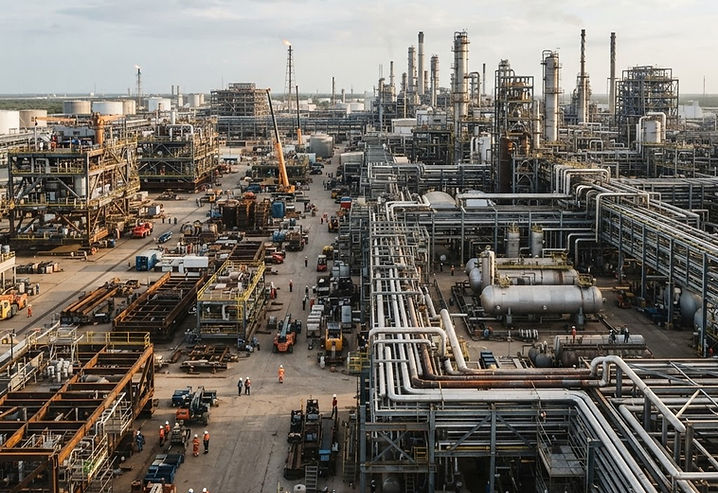
Oil investors and consumers are generally interested in the quality of oil. This is due to the fact that crude oil forms differently due to the geographical diversity of different locations. Crude oil is then classified into several categories depending on its density and sulfur content and then it is refined for end user consumption. This categorization is performed by the oil industry and regulators and is one of the factors which determines oil price apart from geopolitics, natural events and organizational influences. This blog discusses the various grades of crude oil and their individual characteristics which play important roles in the oil and gas industry.
The Environment Protection Authority (EPA) categorizes crude oil into four main types of crude oil: Class A, Class B, Class C, and Class D. These are important for learning more about general toxicity and physical state changes:
Class A: Most refined products and many high quality, light crude oils are included in Class A. Class A oils are highly fluid, often clear, spread rapidly on solid or water surfaces and are usually flammable. Despite how valuable they are, Class A oils can be extremely toxic to humans, animals, and other organisms.
Class B: These are waxy and oily in feel and are less toxic than Class A oils. They stick more firmly to surfaces than Class A oils. As temperatures rise, their tendency to penetrate porous substrates increases and they can be persistent. Evaporation of volatiles may lead to a Class C or D residue. Medium to heavy paraffin based oils fall into this class.
Class C: These are usually brown or black, have a similar density to water, and tend to sink. This type of oil doesn’t penetrate porous surfaces as quickly as other types of crude oil. In the event of evaporation or weathering of volatiles in a Class C oil, it may produce solid or tarry Class D oil. Even though Class C crude oil is less toxic, it can still harm wildlife.
Class D: These are residual oils, heavy crude oils, select high paraffin based oils, and certain weathered oils. Typically, Class D oils are dark black or brown, and if they melt, they can coat surfaces, making cleaning up a spill very difficult. Class D crude oil is relatively nontoxic and do not penetrate porous substances.
Oil can be grouped by sulphur content as either sweet or sour, or by density as either heavy or light. Using these two groups, and by creating a group in between, oil is classified into six classes by the industry and investors:
Heavy/Sweet, Heavy/Sour, Medium/Sweet, Medium Sour, Light/Sweet, Light/Sour
Heavy oils are used to make industrial products like asphalt and plastics. Medium oils have sulphur content that falls somewhere between heavy and light. Light oils are generally used in diesel, gasoline, and aviation fuel because they take less processing. Sour crude has more sulphur and carbon than light crude and requires more refining using steel fabrication; thus, it incurs more costs.
The broad categorization of oils leads to its varied uses in petroleum and petroleum derived industries. However, for oil spills, these classifications are dynamic as weather conditions and water temperature greatly influence the behaviour of oil and refined petroleum products in the environment. Thus, there is a lot of granularities with regard to types of crude oil pertaining to chemical composition, characteristics, uses etc. and this showcases how crude oil plays different roles in our day to day lives!
K999 Thailand carries out work of this kind through its pressure vessel fabrication team in Rayong.
Further reading
Follow pipeline projects in the United States across the wider market on Project Atlas Intel.
Calculation tool
Run the numbers for this yourself with the free storage tank articles from Engineering Toolbox Australia. Treat the result as a first check, then confirm the final design with your engineer.
How K999 can help
Process equipment for energy projects
Pressure containment and pipeline work carries the tightest documentation on the shop floor, and the articles here track the codes and market conditions behind that work.
Pressure vessels and tanks- 01
Pressure vessels, steel tanks and pig launchers built to ASME and client specifications.
- 02
Pipe spool fabrication with heat induction bending for long radius and tight radius bends.
- 03
Full traceability from mill certificates through weld maps to hydrotest records.
More on Energy & Oil Gas
All articles


Request for quotation
Need fabricated steel to that standard?
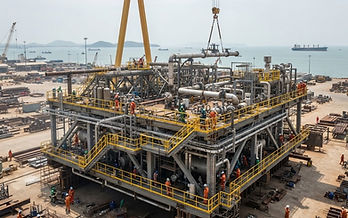
Every enquiry is answered within 48 hours by our estimating team in Rayong. The priced quotation follows once drawings, quantities and standards are confirmed. Stainless steel fabrication, structural steel fabrication, pipe spooling, pressure vessels, steel tanks, mining equipment and conveyors, pig launchers, chutes and hoppers, send the package and we will price it.
Before you request a quotation
Steel fabrication quotation questions
What structural steel fabrication, pressure vessel and pipe spooling packages cost, what to send with an enquiry, and how delivery to site works.
Structural steel fabrication is priced from the section and plate tonnage, the detailing and drawing hours, welding and fitting manhours, NDT requirements, blast and coating system, packing and freight. Grade matters as much as weight: AS/NZS, ASTM, JIS and BS sections carry different mill prices, and heavy built up members take longer than rolled sections. Our Rayong workshop produces around 10,000 tonnes of structural steel fabrication a year, so a clear bill of materials is usually enough to price. Send the drawings and we answer within 48 hours; the priced quotation follows once quantities, standards and delivery dates are confirmed.
For steel fabrication work, send the drawings or IFC package, a bill of materials with material grades, the welding and NDT requirements, the coating specification, the delivery port and your site dates. Add the inspection and test plan, any third party inspection requirement, and whether trial assembly or match marking is needed. Where drawings are still in progress, a scope list with sizes, quantities and duty is enough to start, and the estimate is refined once the final package arrives. Every enquiry is answered within 48 hours, and the priced quotation is issued after scope, standards and quantities are confirmed.
Yes. Pressure vessel fabrication is carried out to ASME Section VIII Div. 1 under our ASME U stamp No. 43,462, or to AS/NZS and BS where the project specifies, covering separators, air receivers, water drums, waste heat recovery units and pig launchers. Steel tanks for fuel, biofuel, chemical, water and food duty are designed in house with our E Tank programme to API, ASME, BS and AS/NZS. Because structural steel, vessels, tanks and their supports are built in the same workshops, one enquiry can cover the vessel package, the tank package and the structural steel that carries them, with a single coating and documentation system and one shipment.
Steel fabrication Australia packages are scheduled from a 33,000 m2 Rayong yard with an 80,000 m2 assembly yard inside Sattahip port, so fabrication, trial assembly, blasting, coating and packing run in one place. Programme length depends on tonnage, material lead times, the coating system and inspection scope, and it is confirmed with the quotation. We quote FOB Laem Chabang, Map Ta Phut or Sattahip, or CIF and DAP to your Australian port, with packing lists, weights, lifting points and a data book per shipment. Staged deliveries can follow your site erection sequence instead of shipping everything at once.
There is no fixed minimum. Pipe spooling Australia packages run at up to 3,000 diameter inches per shift on SCH.40, from a single replacement spool to a full plant piping scope, with spools numbered, X rayed where specified and coated to match erection order. Mining equipment fabrication covers chutes, hoppers, ore bins, transfer towers and conveyor structures with Bisalloy, Hardox, rubber lining or hardfacing fitted in house, from one wear liner set to modules of up to 2,500 tonnes assembled at Sattahip. Send the scope list and we will tell you what the smallest sensible batch is for your programme.