


Energy & Oil Gas
U.S. Floats New Steel, Aluminum Tariffs Based On Carbon Emissions
In addition to looking to decarbonize the oil and gas industry, U.S.
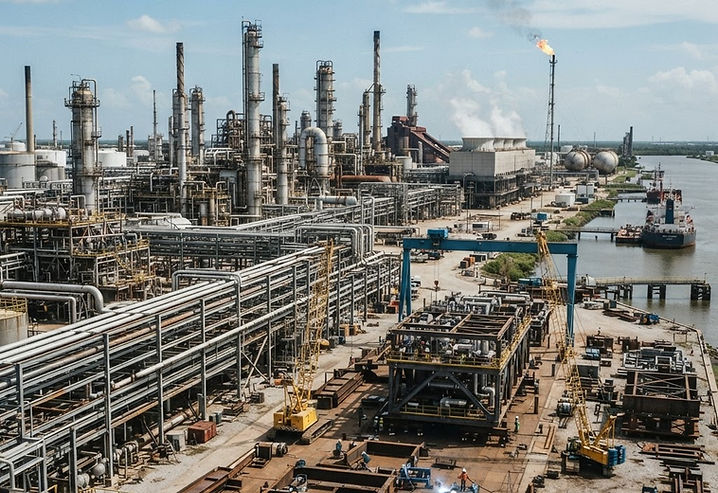
In addition to looking to decarbonize the oil and gas industry, U.S. officials are proposing to levy tariffs on steel and aluminum based on how much carbon the producing country’s industries emit. This is part of a bid to fight climate change and “dirty” metals made in China and elsewhere, two people familiar with the plan said on Wednesday.
U.S. steelmakers claim to have the world’s lowest carbon emissions levels, in part because 70% of American steel is made from scrap iron in electric arc furnaces rather than smelting iron ore in coal fired blast furnaces. Steelmakers elsewhere, including in Europe, rely more heavily on coal, and the plan as proposed would be advantageous to U.S. producers to leverage sustainable manufacturing, such as battery electric vehicles. The U.S.-EU talks on low carbon steel have been aimed in large part at China, which relies on coal for most of its steel output as well as low grade iron ore that contributes to high carbon emissions.
If implemented, the plan would provide new grounds for excluding Chinese steel from Western markets. Most U.S. tariffs are currently based on antidumping laws to combat pricing below production costs, laws aimed at combating unfair government subsidies or laws aimed at safeguarding strategic industries. The proposal from the U.S. Trade Representative’s office to be negotiated with the European Union would create a global “club” of market oriented countries seeking to reduce carbon emissions. The plan would set “emissions intensity” standards for the production of specific steel and aluminum and products, according to a document describing the plan seen by Reuters.
Countries that are members of the “global arrangement” with emissions exceeding these standards would pay higher tariffs when exporting metals to countries with lower emissions, according to the document. Countries with steel and aluminum fabrication plant emissions at or below those of the importing country would pay no carbon based tariffs. “There would be an advantage of being in the club, as it would provide a lower level of carbon tariffs, while countries outside the club would pay higher tariffs,” one of the sources said, adding that the proposal aimed to incentivize investments to reduce emissions. “This is all very conceptual and there’s a lot of work ahead on this. The details are going to be very important.”
Countries outside the low emissions club would be subject to a higher rate of tariffs when exporting steel and aluminum to member countries. The proposal, which is now being shared with industry and EU officials, has grown out of U.S.-EU discussions on “green” steel production over the past year after Washington halted tariffs on EU produced steel and aluminum in exchange for a quota system. The two sides agreed to work to reduce carbon emissions in steel and aluminum production of heavy steel fabrication companies while tackling the longstanding problem of excess capacity in the industries, much of it centered in China. The proposed low emissions metals club would exclude China and other “nonmarket” economies dominated by state owned or state directed enterprises, setting out criteria to prohibit member countries from contributing to the problem of unviable excess steel and aluminum capacity. A USTR spokesperson did not immediately respond to a request for comment on the plan.
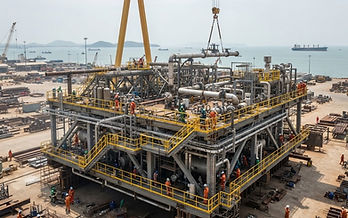
K999 Thailand carries out work of this kind through its pressure vessel fabrication team in Rayong.
Further reading
Follow global industrial project database across the wider market on Project Atlas Intel.
How K999 can help
Process equipment for energy projects
Pressure containment and pipeline work carries the tightest documentation on the shop floor, and the articles here track the codes and market conditions behind that work.
Pressure vessels and tanks- 01
Pressure vessels, steel tanks and pig launchers built to ASME and client specifications.
- 02
Pipe spool fabrication with heat induction bending for long radius and tight radius bends.
- 03
Full traceability from mill certificates through weld maps to hydrotest records.
More on Energy & Oil Gas
All articles


Request for quotation
Need fabricated steel to that standard?
Every enquiry is answered within 48 hours by our estimating team in Rayong. The priced quotation follows once drawings, quantities and standards are confirmed. Stainless steel fabrication, structural steel fabrication, pipe spooling, pressure vessels, steel tanks, mining equipment and conveyors, pig launchers, chutes and hoppers, send the package and we will price it.
Before you request a quotation
Steel fabrication quotation questions
What structural steel fabrication, pressure vessel and pipe spooling packages cost, what to send with an enquiry, and how delivery to site works.
Structural steel fabrication is priced from the section and plate tonnage, the detailing and drawing hours, welding and fitting manhours, NDT requirements, blast and coating system, packing and freight. Grade matters as much as weight: AS/NZS, ASTM, JIS and BS sections carry different mill prices, and heavy built up members take longer than rolled sections. Our Rayong workshop produces around 10,000 tonnes of structural steel fabrication a year, so a clear bill of materials is usually enough to price. Send the drawings and we answer within 48 hours; the priced quotation follows once quantities, standards and delivery dates are confirmed.
For steel fabrication work, send the drawings or IFC package, a bill of materials with material grades, the welding and NDT requirements, the coating specification, the delivery port and your site dates. Add the inspection and test plan, any third party inspection requirement, and whether trial assembly or match marking is needed. Where drawings are still in progress, a scope list with sizes, quantities and duty is enough to start, and the estimate is refined once the final package arrives. Every enquiry is answered within 48 hours, and the priced quotation is issued after scope, standards and quantities are confirmed.
Yes. Pressure vessel fabrication is carried out to ASME Section VIII Div. 1 under our ASME U stamp No. 43,462, or to AS/NZS and BS where the project specifies, covering separators, air receivers, water drums, waste heat recovery units and pig launchers. Steel tanks for fuel, biofuel, chemical, water and food duty are designed in house with our E Tank programme to API, ASME, BS and AS/NZS. Because structural steel, vessels, tanks and their supports are built in the same workshops, one enquiry can cover the vessel package, the tank package and the structural steel that carries them, with a single coating and documentation system and one shipment.
Steel fabrication Australia packages are scheduled from a 33,000 m2 Rayong yard with an 80,000 m2 assembly yard inside Sattahip port, so fabrication, trial assembly, blasting, coating and packing run in one place. Programme length depends on tonnage, material lead times, the coating system and inspection scope, and it is confirmed with the quotation. We quote FOB Laem Chabang, Map Ta Phut or Sattahip, or CIF and DAP to your Australian port, with packing lists, weights, lifting points and a data book per shipment. Staged deliveries can follow your site erection sequence instead of shipping everything at once.
There is no fixed minimum. Pipe spooling Australia packages run at up to 3,000 diameter inches per shift on SCH.40, from a single replacement spool to a full plant piping scope, with spools numbered, X rayed where specified and coated to match erection order. Mining equipment fabrication covers chutes, hoppers, ore bins, transfer towers and conveyor structures with Bisalloy, Hardox, rubber lining or hardfacing fitted in house, from one wear liner set to modules of up to 2,500 tonnes assembled at Sattahip. Send the scope list and we will tell you what the smallest sensible batch is for your programme.