


Energy & Oil Gas
Understanding Waste Heat Recovery Units: Mechanisms and Benefits
Waste heat recovery units capture exhaust energy to preheat process streams, cutting fuel use on industrial plants.
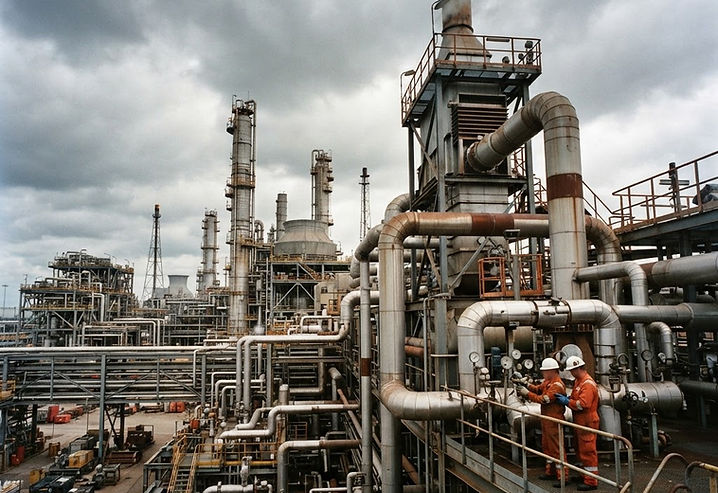
Introduction to Waste Heat Recovery
Waste heat recovery units ( WHRU s) play a crucial role in enhancing energy efficiency across various industrial processes. The concept revolves around recovering excess heat that would otherwise be lost to the environment during manufacturing, power generation, or other operations. Waste heat, defined as heat produced in processes where it is not put to practical use, originates from numerous sources including exhaust gases, flue gases, and hot surfaces. These units are designed to capture such thermal energy and repurpose it, thus contributing to a more sustainable energy framework.
The growing emphasis on energy efficiency, driven by rising energy costs and environmental concerns, makes the implementation of WHRUs increasingly important. Industries are under pressure to optimize energy usage to reduce operational costs while simultaneously minimizing their carbon footprint. In a world where resources are becoming scarcer, the efficient use of energy through waste heat recovery is essential for both economic and environmental advantages.
Implementing WHRUs brings significant cost saving benefits by enhancing the overall efficiency of industrial processes. By recovering and using waste heat, organizations can not only lower their energy consumption but also reduce reliance on energy from external sources. This is especially pertinent in energy intensive industries such as cement, steel, and petrochemicals, where the potential for recovery is substantial. Furthermore, the adoption of WHRUs aligns with global sustainability goals, as it contributes to reduced greenhouse gas emissions and promotes a circular economy.
The transition to energy efficient practices through the use of waste heat recovery units is not just beneficial from an economic perspective but is also a step towards responsible environmental stewardship. The exploration of the mechanisms of WHRU s thereafter will shed light on how these units function and the technologies involved in optimizing waste heat recovery.
How Waste Heat Recovery Units Work
Waste Heat Recovery Units (WHRUs) are engineered systems designed to capture and repurpose thermal energy that would otherwise be lost to the environment. The fundamental principle behind WHRUs is based on the heat exchange process, where heat is efficiently transferred from a hot medium, typically a gas or liquid, to a working fluid that can be utilized for energy production or heating purposes.
There are various types of WHRUs, including economizers, heat exchangers, and organic Rankine cycle systems. Each unit operates on the principle of maximizing energy efficiency through recycling waste heat. Economizers are typically used in industrial settings, where they recover heat from flue gases to preheat boiler feedwater. This not only improves overall thermal efficiency but also reduces fuel consumption, leading to lower operational costs.
Heat exchangers, on the other hand, serve to transfer heat between two or more fluids without mixing them. In WHRUs, they can be employed to facilitate the transfer of energy from exhaust gases to a secondary fluid without losing the primary gas stream. These units significantly enhance the overall energy output of a system, allowing for a more sustainable and responsible utilization of resources.

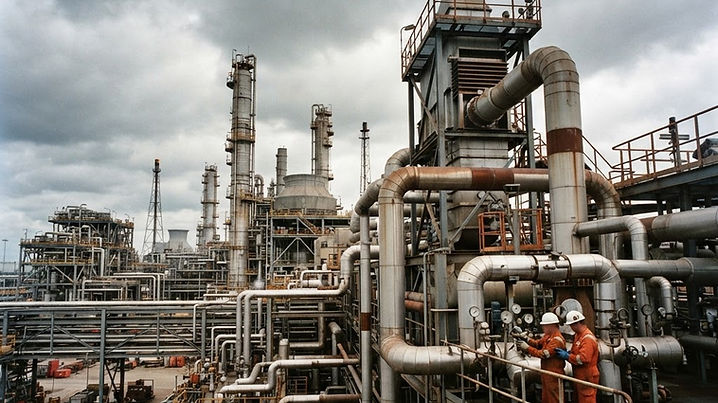
Another notable type of WHRU is the organic Rankine cycle (ORC) system, which converts thermal energy into mechanical work. Within ORC systems, waste heat is used to vaporize a working fluid, which subsequently expands through a turbine, generating electricity. Key components of WHRUs include turbines, compressors, and condensers, each contributing to the effective conversion and management of waste heat. Turbines harness the energy from the vaporized fluid to produce power, while condensers and compressors facilitate the transition of the working fluid, ensuring continual heat recovery cycles.
Applications of Waste Heat Recovery Units
Waste Heat Recovery Units (WHRUs) serve a vital role in various industries by capturing and reusing excess heat generated during industrial operations. In manufacturing, these units can significantly improve energy efficiency. For instance, in a steel production facility, WHRUs can recover heat from furnace exhausts, thereby reducing the energy requirement needed for subsequent processes. This not only lowers operational costs but also minimizes the facility’s carbon footprint, showcasing the dual benefit of enhanced efficiency and environmental responsibility.
In the power generation sector, WHRUs are typically integrated into combined cycle power plants. These plants utilize WHRUs to recapture heat from gas turbine exhaust, which is then used to produce steam and drive a steam turbine for additional power generation. This approach not only optimizes fuel utilization but also enhances overall power plant efficiency. Case studies illustrate that power plants utilizing WHRUs can achieve efficiency ratings of up to 60%, compared to traditional power generation methods that may only reach 33%.
Furthermore, WHRUs find application in HVAC systems, particularly in large commercial buildings. By recovering heat from exhaust air and redistributing it back into the building, WHRUs can significantly reduce the demand on heating systems, leading to lower energy consumption. Studies in urban environments reveal a consistent trend where buildings equipped with WHRUs achieve substantial reductions in heating costs.
The potential for WHRUs extends to the renewable energy sector as well, particularly in technologies such as biomass and solar thermal systems. Here, the integration of waste heat recovery mechanisms not only maximizes energy output but also enhances the sustainability of these energy sources. The advancements in WHRUs contribute positively to the industry’s goal of reducing reliance on fossil fuels and promoting a greener future.
Challenges and Future Trends in Waste Heat Recovery
The implementation of Waste Heat Recovery Units (WHRUs) presents several challenges that can hinder their widespread adoption. One of the primary obstacles lies in the technical limitations associated with existing technologies. WHRUs often require specific temperature gradients to function effectively, which can be difficult to achieve in certain industrial processes. Furthermore, the retrofitting of WHRUs into existing systems may necessitate significant modifications, resulting in increased costs and extended downtime. These factors can deter businesses from investing in WHRU technology, impacting its economic viability.
Another crucial challenge pertains to regulatory hurdles. In many jurisdictions, the legislative framework surrounding energy efficiency and emissions reduction is still evolving. Lack of clear guidelines or incentives can create uncertainty for companies considering the installation of WHRUs. Furthermore, different standards and regulations across regions may complicate compliance, adding to the operational burden of integrating WHRU systems.
Despite these challenges, the future of WHRUs appears promising, driven by emerging innovations and trends. Developments in materials science are facilitating the creation of more efficient and durable components, which can enhance the effectiveness of WHRUs in various applications. Additionally, the integration of WHRUs with other renewable energy systems, such as solar or wind power, presents a compelling opportunity to maximize energy recovery and utilization. This synergy can lead to a more sustainable energy landscape and enhance overall efficiency.
Moreover, increasing government incentives aimed at promoting eco friendly practices are encouraging industries to adopt WHRU technology. Incentives can range from tax benefits to grants aimed at offsetting initial investment costs. As global concerns regarding climate change intensify, waste heat recovery technologies are becoming increasingly recognized as integral to achieving energy efficiency and sustainability goals. In conclusion, while challenges remain, continued innovation and supportive policies are expected to foster a successful future for waste heat recovery units in diverse sectors.
K999 Thailand carries out work of this kind through its pressure vessel fabrication team in Rayong.
Further reading
Follow Battery Materials across the wider market on Project Atlas Intel.
Calculation tool
Run the numbers for this yourself with the free steel take-off calculator from Engineering Toolbox Australia. Treat the result as a first check, then confirm the final design with your engineer.
How K999 can help
Process equipment for energy projects
Pressure containment and pipeline work carries the tightest documentation on the shop floor, and the articles here track the codes and market conditions behind that work.
Pressure vessels and tanks- 01
Pressure vessels, steel tanks and pig launchers built to ASME and client specifications.
- 02
Pipe spool fabrication with heat induction bending for long radius and tight radius bends.
- 03
Full traceability from mill certificates through weld maps to hydrotest records.
More on Energy & Oil Gas
All articles


Request for quotation
Need fabricated steel to that standard?
Every enquiry is answered within 48 hours by our estimating team in Rayong. The priced quotation follows once drawings, quantities and standards are confirmed. Stainless steel fabrication, structural steel fabrication, pipe spooling, pressure vessels, steel tanks, mining equipment and conveyors, pig launchers, chutes and hoppers, send the package and we will price it.
Before you request a quotation
Steel fabrication quotation questions
What structural steel fabrication, pressure vessel and pipe spooling packages cost, what to send with an enquiry, and how delivery to site works.
Structural steel fabrication is priced from the section and plate tonnage, the detailing and drawing hours, welding and fitting manhours, NDT requirements, blast and coating system, packing and freight. Grade matters as much as weight: AS/NZS, ASTM, JIS and BS sections carry different mill prices, and heavy built up members take longer than rolled sections. Our Rayong workshop produces around 10,000 tonnes of structural steel fabrication a year, so a clear bill of materials is usually enough to price. Send the drawings and we answer within 48 hours; the priced quotation follows once quantities, standards and delivery dates are confirmed.
For steel fabrication work, send the drawings or IFC package, a bill of materials with material grades, the welding and NDT requirements, the coating specification, the delivery port and your site dates. Add the inspection and test plan, any third party inspection requirement, and whether trial assembly or match marking is needed. Where drawings are still in progress, a scope list with sizes, quantities and duty is enough to start, and the estimate is refined once the final package arrives. Every enquiry is answered within 48 hours, and the priced quotation is issued after scope, standards and quantities are confirmed.
Yes. Pressure vessel fabrication is carried out to ASME Section VIII Div. 1 under our ASME U stamp No. 43,462, or to AS/NZS and BS where the project specifies, covering separators, air receivers, water drums, waste heat recovery units and pig launchers. Steel tanks for fuel, biofuel, chemical, water and food duty are designed in house with our E Tank programme to API, ASME, BS and AS/NZS. Because structural steel, vessels, tanks and their supports are built in the same workshops, one enquiry can cover the vessel package, the tank package and the structural steel that carries them, with a single coating and documentation system and one shipment.
Steel fabrication Australia packages are scheduled from a 33,000 m2 Rayong yard with an 80,000 m2 assembly yard inside Sattahip port, so fabrication, trial assembly, blasting, coating and packing run in one place. Programme length depends on tonnage, material lead times, the coating system and inspection scope, and it is confirmed with the quotation. We quote FOB Laem Chabang, Map Ta Phut or Sattahip, or CIF and DAP to your Australian port, with packing lists, weights, lifting points and a data book per shipment. Staged deliveries can follow your site erection sequence instead of shipping everything at once.
There is no fixed minimum. Pipe spooling Australia packages run at up to 3,000 diameter inches per shift on SCH.40, from a single replacement spool to a full plant piping scope, with spools numbered, X rayed where specified and coated to match erection order. Mining equipment fabrication covers chutes, hoppers, ore bins, transfer towers and conveyor structures with Bisalloy, Hardox, rubber lining or hardfacing fitted in house, from one wear liner set to modules of up to 2,500 tonnes assembled at Sattahip. Send the scope list and we will tell you what the smallest sensible batch is for your programme.