


Energy & Oil Gas
Use of Oil in Ancient Times
Bitumen and seep oil served waterproofing, medicine and warfare long before the modern petroleum industry existed.
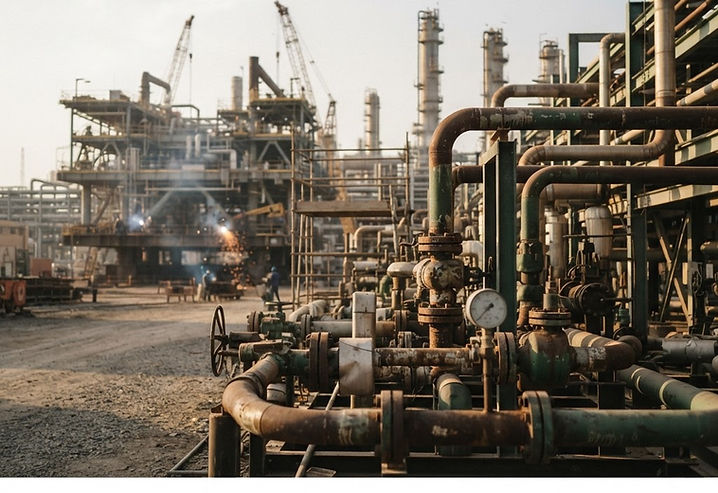
It is a well known fact that the most abundant liquid on earth is water. An interesting fact is the second most abundant liquid is petroleum, the driver of multiple industries globally today. However, petroleum was in use much before the modern oil and gas industry came into being, with many cultures harnessing and utilizing petroleum for architecture, shipping, home uses, medicines etc. Though oil was not traded much till recent times, its ubiquity in ancient times paints a fascinating picture of the way humans were using natural resources to move towards a more industrial future. This blog will look to cover the various applications of oil by ancient cultures in this regard.
The petroleum industry is first encountered in the archaeological record near Hit in what is now Iraq. Hit is on the banks of the Euphrates River and is the site of an oil seep known locally as The Fountains of Pitch. There asphalt was quarried for use as mortar between building stones as early as 6000 years ago. Asphalt was also used as a waterproofing agent for baths, pottery and boats. The Babylonians caulked their ships with asphalt. In Mesopotamia around 4000 B.C., bitumen, a tarry crude, was used as caulking for ships, a setting for jewels and mosaics, and an adhesive to secure weapon handles. Egyptians used it for embalming, and the walls of Babylon and the famed pyramids were held together with it. About 2000 years ago the Chinese used oil and natural gas for heat and light. Bamboo pipes carried gas into home.
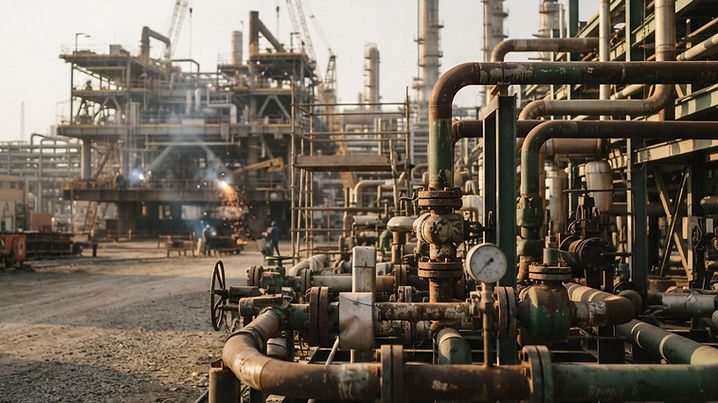
The American Indians collected oil for medicines. The American settlers found its presence in the water supplies a contamination, but they learned to collect it to use as fuel in their lamps. Indians near Sacramento used asphalt to waterproof their baskets and to glue fibres of a soap root brush to form a handle with twine. Also, hard asphalt was used to make blades for knives and arrowheads. Their counterparts on the coast in the Mattole Valley in Northern California also harvested the sticky, dark material that made baskets airtight, secured arrowheads to wooden shafts and for some was said to have served as medicine for colds, coughs, burns and cuts.
Native Americans traded crude oil that they obtained from oil seeps in upstate New York among other places. The Seneca tribe traded oil for so long that all crude oil was referred to as ‘Seneca Oil’. Seneca Oil was supposed to have great medicinal value. It sold for $20 per quart in a time when skilled workmen were paid pennies per hour. The Senecas also used crude oil for body paint and for ceremonial fires.
The first, large scale demand for petroleum was generated by the invention of the kerosene lamp in 1854. The first oil well was drilled in 1859 by Col. Edwin Drake and this gave rise to the modern petroleum industry and related industries like steel fabrication. However, as can be observed, oil has been valued throughout the centuries and was an integral part of daily activities since ancient times. With the advent of motor vehicles, petroleum or “petrol” became a household necessity and it is one of the most essential commodities today. Thus, there is much to learn from the various applications of petroleum through the ages and how it is impacting our way of life to this day!
K999 Thailand carries out work of this kind through its pressure vessel fabrication team in Rayong.
Further reading
Follow project tracking across the wider market on Project Atlas Intel.
How K999 can help
Process equipment for energy projects
Pressure containment and pipeline work carries the tightest documentation on the shop floor, and the articles here track the codes and market conditions behind that work.
Pressure vessels and tanks- 01
Pressure vessels, steel tanks and pig launchers built to ASME and client specifications.
- 02
Pipe spool fabrication with heat induction bending for long radius and tight radius bends.
- 03
Full traceability from mill certificates through weld maps to hydrotest records.
More on Energy & Oil Gas
All articles

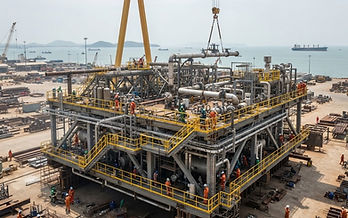

Request for quotation
Need fabricated steel to that standard?
Every enquiry is answered within 48 hours by our estimating team in Rayong. The priced quotation follows once drawings, quantities and standards are confirmed. Stainless steel fabrication, structural steel fabrication, pipe spooling, pressure vessels, steel tanks, mining equipment and conveyors, pig launchers, chutes and hoppers, send the package and we will price it.
Before you request a quotation
Steel fabrication quotation questions
What structural steel fabrication, pressure vessel and pipe spooling packages cost, what to send with an enquiry, and how delivery to site works.
Structural steel fabrication is priced from the section and plate tonnage, the detailing and drawing hours, welding and fitting manhours, NDT requirements, blast and coating system, packing and freight. Grade matters as much as weight: AS/NZS, ASTM, JIS and BS sections carry different mill prices, and heavy built up members take longer than rolled sections. Our Rayong workshop produces around 10,000 tonnes of structural steel fabrication a year, so a clear bill of materials is usually enough to price. Send the drawings and we answer within 48 hours; the priced quotation follows once quantities, standards and delivery dates are confirmed.
For steel fabrication work, send the drawings or IFC package, a bill of materials with material grades, the welding and NDT requirements, the coating specification, the delivery port and your site dates. Add the inspection and test plan, any third party inspection requirement, and whether trial assembly or match marking is needed. Where drawings are still in progress, a scope list with sizes, quantities and duty is enough to start, and the estimate is refined once the final package arrives. Every enquiry is answered within 48 hours, and the priced quotation is issued after scope, standards and quantities are confirmed.
Yes. Pressure vessel fabrication is carried out to ASME Section VIII Div. 1 under our ASME U stamp No. 43,462, or to AS/NZS and BS where the project specifies, covering separators, air receivers, water drums, waste heat recovery units and pig launchers. Steel tanks for fuel, biofuel, chemical, water and food duty are designed in house with our E Tank programme to API, ASME, BS and AS/NZS. Because structural steel, vessels, tanks and their supports are built in the same workshops, one enquiry can cover the vessel package, the tank package and the structural steel that carries them, with a single coating and documentation system and one shipment.
Steel fabrication Australia packages are scheduled from a 33,000 m2 Rayong yard with an 80,000 m2 assembly yard inside Sattahip port, so fabrication, trial assembly, blasting, coating and packing run in one place. Programme length depends on tonnage, material lead times, the coating system and inspection scope, and it is confirmed with the quotation. We quote FOB Laem Chabang, Map Ta Phut or Sattahip, or CIF and DAP to your Australian port, with packing lists, weights, lifting points and a data book per shipment. Staged deliveries can follow your site erection sequence instead of shipping everything at once.
There is no fixed minimum. Pipe spooling Australia packages run at up to 3,000 diameter inches per shift on SCH.40, from a single replacement spool to a full plant piping scope, with spools numbered, X rayed where specified and coated to match erection order. Mining equipment fabrication covers chutes, hoppers, ore bins, transfer towers and conveyor structures with Bisalloy, Hardox, rubber lining or hardfacing fitted in house, from one wear liner set to modules of up to 2,500 tonnes assembled at Sattahip. Send the scope list and we will tell you what the smallest sensible batch is for your programme.