


Manufacturing & Technology
Why Cloud Based EDI Is Imperative for Manufacturing
Cloud EDI links purchase orders, releases and despatch notes with clients, removing manual entry from fabrication scheduling.
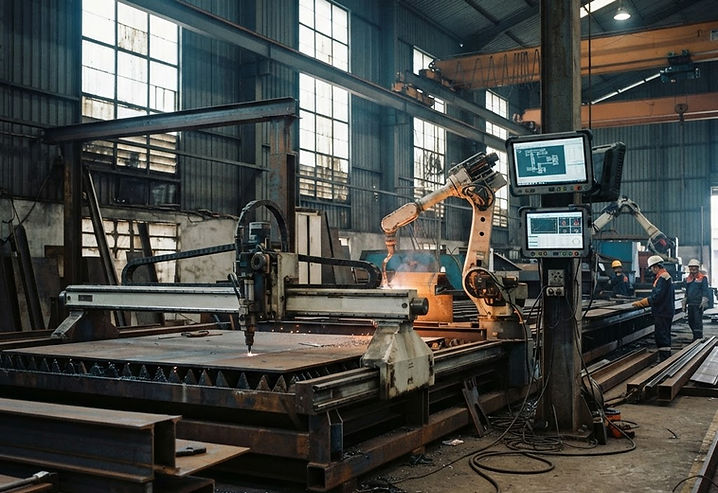
Electronic Data Interchange (EDI) is essential to many manufacturing operations. It streamlines communication with suppliers, reduces documentation errors and supports agile supply chains, but the use of EDI in the steel fabrication Australia industry often falls short of its potential. Too many organizations overlook the value of a cloud based EDI. While up to 86% of businesses already use EDI technology today, just over 60% of them keep related data in the cloud. That means nearly half of the companies using such software rely on an inferior version. As Industry 4.0 initiatives pick up across the board, it will become increasingly important for manufacturers to reverse this trend and upgrade their EDI. This blog will look to deep dive into this topic.
Benefits of Cloud Based EDI
Cloud based EDI functions similarly to conventional solutions but runs entirely online instead of using on premise IT infrastructure. Keeping all data and functions in the cloud offers several critical advantages for manufacturers and their supply chain partners.
Improved Communication
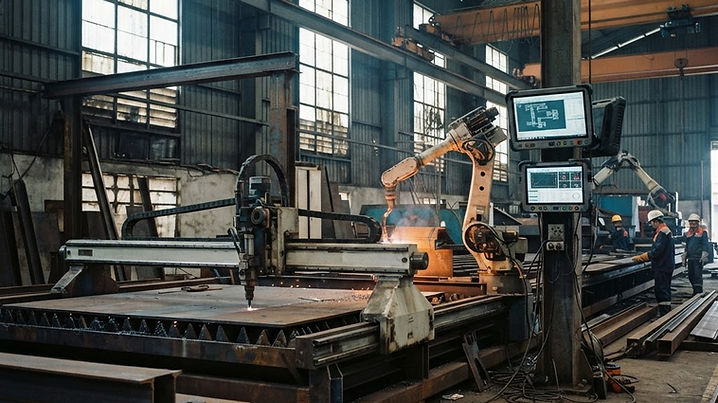
Moving EDI to the cloud makes it easier to connect it to a wider range of data. As a result, manufacturers are not stifled by data woes and can share more with suppliers, 3PLs and other third parties. Considering just 6% of organizations today have full visibility into their supply chain, a little communication can go a long way. The primary benefit here is that a cloud platform provides a single source of truth. All EDI users will upload data to and get information from the same place. Consequently, they avoid miscommunication and conflict from different parties having unsynchronized records. Cloud EDI also minimizes errors because Internet of Things (IoT) endpoints and other devices can upload new data directly to the cloud. No in between step or manual transmission is necessary, reducing the chances of transcription mistakes or omissions. Higher accuracy, in turn, prevents supply chain disruptions.
Higher Efficiency
Automatic data uploads and a single source of truth have a secondary advantage, efficiency. EDI records in the cloud overcomes some limitations of AI and IIoT in manufacturing as it will always reflect the latest information without delay, as separate users no longer need to send updates to others. Automatic uploads further streamline communication by removing the manual element entirely. Many cloud based EDI solutions come with automation features. These may include automatic document transfers, data organization, chart and graph generation, data entry, automated alerts, and inventory management. When these processes require no human input, manufacturers can more easily work around the labor shortage affecting the industry. It is worth noting that setting up a cloud platform is far faster than an on premise alternative, too. Manufacturers do not need to install any IT infrastructure or upgrade their hardware because everything runs on remote data centers.
Scalability
Similarly, using cloud EDI in manufacturing improves overall scalability. Removing on premise hardware concerns and interoperability barriers means businesses can scale up almost instantaneously. It is often little more than paying for a new data storage tier or authorizing another party. Downsizing and lateral scalability are likewise cheaper and faster in the cloud. Setting up new alerts, reducing data storage, aligning workflows with new goals, and making other adjustments can take mere minutes. This agility is essential in a rapidly changing manufacturing environment. Supply chain strategies are shifting across the sector, and disruptions in areas like mining plant and equipment Australia are increasingly common. As a result, manufacturing organizations need to adapt quickly to maintain productivity and profitability. Achieving that level of scalability with an on premise EDI would be expensive and slow, but a cloud alternative makes it accessible.
Closing Statement
An effective EDI in manufacturing must be as agile, accurate and secure as leading manufacturers themselves. The only way to achieve that is to use a cloud based alternative to conventional solutions. There is a reason why cloud EDI is becoming increasingly popular across industries. It provides the communication, efficiency, scalability, and security modern businesses need. Manufacturers should jump on that potential now if they do not want to get left behind.
K999 Thailand carries out work of this kind through its steel fabrication capability team in Rayong.
Further reading
Follow offshore wind projects in Europe across the wider market on Project Atlas Intel.
How K999 can help
How we apply the technology
Faster quoting, cleaner detailing and fewer site surprises come from the tools we use before the first cut, and the articles here explain how those tools change the work.
3D modelling and detailing- 01
3D modelling and shop detailing that resolves clashes before fabrication starts.
- 02
Fibre laser cutting for plate profiles, with nesting planned around the rolling schedule.
- 03
Project management that reports progress against the same model the client approved.
More on Manufacturing & Technology
All articles


Request for quotation
Need fabricated steel to that standard?
Every enquiry is answered within 48 hours by our estimating team in Rayong. The priced quotation follows once drawings, quantities and standards are confirmed. Stainless steel fabrication, structural steel fabrication, pipe spooling, pressure vessels, steel tanks, mining equipment and conveyors, pig launchers, chutes and hoppers, send the package and we will price it.
Before you request a quotation
Steel fabrication quotation questions
What structural steel fabrication, pressure vessel and pipe spooling packages cost, what to send with an enquiry, and how delivery to site works.
Structural steel fabrication is priced from the section and plate tonnage, the detailing and drawing hours, welding and fitting manhours, NDT requirements, blast and coating system, packing and freight. Grade matters as much as weight: AS/NZS, ASTM, JIS and BS sections carry different mill prices, and heavy built up members take longer than rolled sections. Our Rayong workshop produces around 10,000 tonnes of structural steel fabrication a year, so a clear bill of materials is usually enough to price. Send the drawings and we answer within 48 hours; the priced quotation follows once quantities, standards and delivery dates are confirmed.
For steel fabrication work, send the drawings or IFC package, a bill of materials with material grades, the welding and NDT requirements, the coating specification, the delivery port and your site dates. Add the inspection and test plan, any third party inspection requirement, and whether trial assembly or match marking is needed. Where drawings are still in progress, a scope list with sizes, quantities and duty is enough to start, and the estimate is refined once the final package arrives. Every enquiry is answered within 48 hours, and the priced quotation is issued after scope, standards and quantities are confirmed.
Yes. Pressure vessel fabrication is carried out to ASME Section VIII Div. 1 under our ASME U stamp No. 43,462, or to AS/NZS and BS where the project specifies, covering separators, air receivers, water drums, waste heat recovery units and pig launchers. Steel tanks for fuel, biofuel, chemical, water and food duty are designed in house with our E Tank programme to API, ASME, BS and AS/NZS. Because structural steel, vessels, tanks and their supports are built in the same workshops, one enquiry can cover the vessel package, the tank package and the structural steel that carries them, with a single coating and documentation system and one shipment.
Steel fabrication Australia packages are scheduled from a 33,000 m2 Rayong yard with an 80,000 m2 assembly yard inside Sattahip port, so fabrication, trial assembly, blasting, coating and packing run in one place. Programme length depends on tonnage, material lead times, the coating system and inspection scope, and it is confirmed with the quotation. We quote FOB Laem Chabang, Map Ta Phut or Sattahip, or CIF and DAP to your Australian port, with packing lists, weights, lifting points and a data book per shipment. Staged deliveries can follow your site erection sequence instead of shipping everything at once.
There is no fixed minimum. Pipe spooling Australia packages run at up to 3,000 diameter inches per shift on SCH.40, from a single replacement spool to a full plant piping scope, with spools numbered, X rayed where specified and coated to match erection order. Mining equipment fabrication covers chutes, hoppers, ore bins, transfer towers and conveyor structures with Bisalloy, Hardox, rubber lining or hardfacing fitted in house, from one wear liner set to modules of up to 2,500 tonnes assembled at Sattahip. Send the scope list and we will tell you what the smallest sensible batch is for your programme.