Why Australia Must Get Ahead Now in Rare Earths. While the World Is Uncertain
Global supply chains are entering a period of volatility not seen in decades. Rising geopolitical tensions, trade fragmentation, and regional conflicts are forcing governments and industries to rethink where critical materials come from and how secure those supplies really are.
Among the most strategically important of these materials are rare earth elements. These minerals are essential for modern technologies including electric vehicles, wind turbines, defence systems, semiconductors, and advanced electronics.
For Australia, the current global uncertainty presents a rare opportunity but also a narrow window.
If Australia moves decisively now, it can become one of the world’s most trusted suppliers of rare earth materials and the advanced infrastructure needed to process them.
The Strategic Importance of Rare Earths
Rare earths are not actually rare in the earth’s crust but economically viable deposits and processing capability are concentrated in only a few places globally.
Currently, a large portion of rare earth processing capacity is concentrated in China, creating supply chain vulnerabilities for Western economies.
As governments in the United States, Europe, Japan, and Australia push for supply diversification, new projects are being accelerated across Australia particularly in Western Australia and Northern Territory.
Projects like Iluka’s Eneabba refinery and other emerging rare earth processing facilities highlight how quickly the sector is evolving.
But mining the ore is only the first step.
The real challenge lies in building the complex processing plants and infrastructure required to refine these materials.
The Engineering Challenge Behind Rare Earth Processing
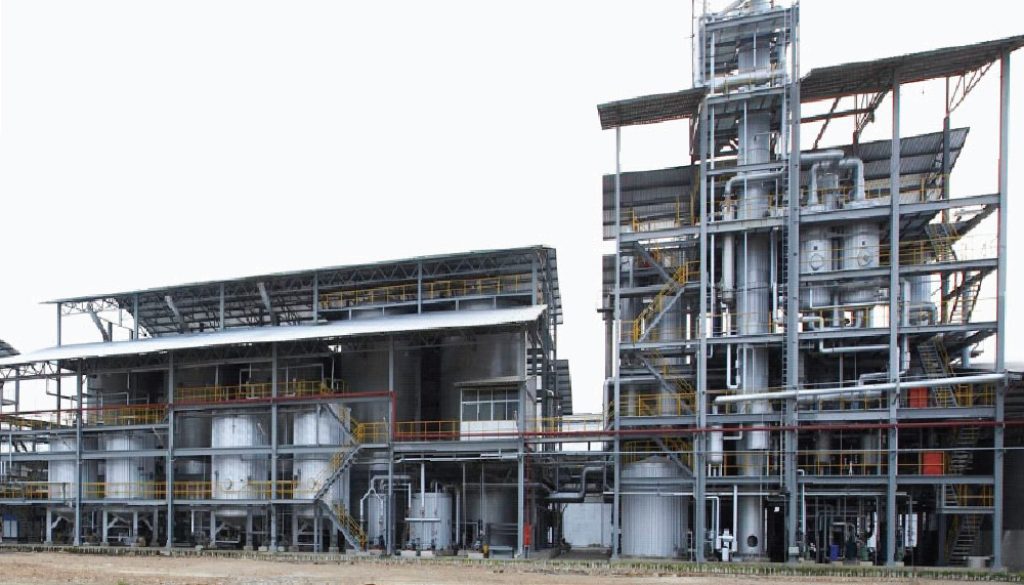
Rare earth processing facilities are among the most complex industrial plants being built today.
They require large volumes of:
-
Exotic materials capable of handling corrosive chemical environments
-
Precision plant construction and modular fabrication
Processing rare earths involves aggressive chemical environments, including acids and solvents that rapidly degrade standard carbon steel.
This means fabrication must often use:
-
Duplex stainless steels
-
High-nickel alloys
-
Titanium and other exotic materials
These materials require specialist fabrication expertise and controlled welding environments to ensure long-term durability.
For EPC contractors and project developers, fabrication capability has become a critical bottleneck.
Why Fabrication Capacity Matters More Than Ever
As more rare earth projects move from feasibility into construction, the demand for large-scale modular fabrication is rising rapidly.
However, many Western countries face significant challenges:
-
High labour costs
-
Limited fabrication yard capacity
-
Long construction schedules
This is where regional fabrication hubs play a crucial role.
Countries like Thailand, with established heavy industrial fabrication sectors and deep-water ports such as Map Ta Phut, are becoming increasingly important partners for Australian projects.
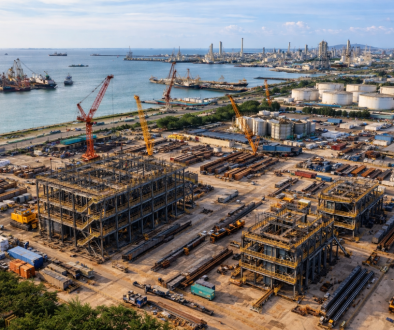
Large-scale modules including process skids, structural steel, tanks, and pipe racks can be fabricated offshore and shipped directly to project sites in Western Australia.
This approach can significantly reduce project timelines while maintaining strict quality standards.
The Window of Opportunity
The global race to secure rare earth supply chains is accelerating.
Governments are investing billions into:
-
Critical minerals strategies
-
Domestic processing capability
-
Strategic reserves
But infrastructure takes time to build.
From feasibility to production, rare earth projects can take five to ten years to develop.
That means the projects being designed and constructed today will define supply chains for the next decade.
If Australia wants to secure its position as a global leader in critical minerals, it must ensure that engineering, procurement, and construction capacity keeps pace with resource development.
Building the Industrial Backbone
Australia has the geology.
What it needs now is the industrial backbone to turn those resources into finished materials.
That means investment not only in mining but also in:
-
Advanced stainless steel fabrication
-
High-spec mining equipment
-
Processing plants built with exotic materials
-
Efficient plant construction strategies
The countries that build these supply chains first will shape the future of clean energy, defence technology, and advanced manufacturing.
And right now amid global uncertainty, Australia has an opportunity to lead.
But the window will not stay open forever.