


Energy & Oil Gas
Internet of Things - the new Oil and Gas trend
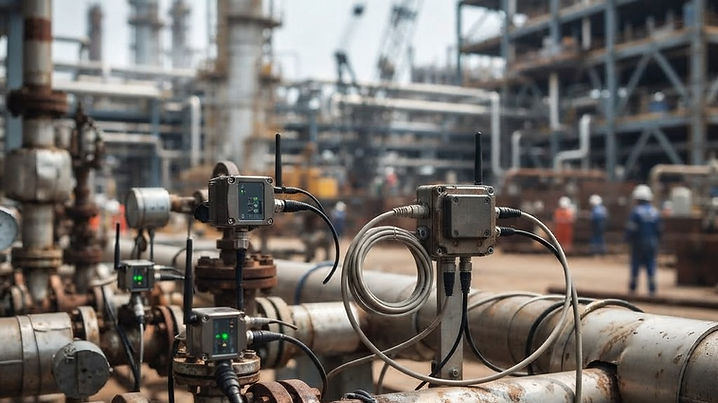
Sensor networks on wells, pipelines and rotating equipment enable condition based maintenance across remote assets.
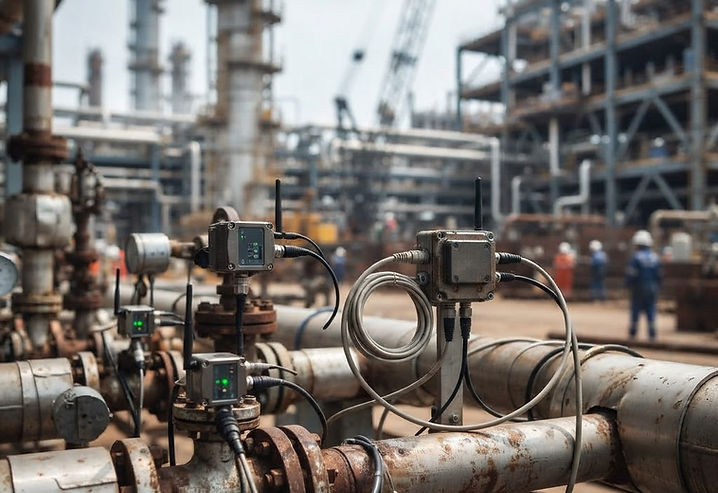
What comes to your mind when you hear the term Internet of Things (IoT)? You may be reminded of fitness trackers, smart watches and other wearable devices or equipment which can be embedded with electronics or software. Applications of IoT have been increasing steadily and now, the oil and gas industry is set to experience its multiple benefits. The advantages of oil and gas IoT applications lie in creating value through an integrated deployment strategy. IoT will allow the industry to digitize, optimize and automate processes that were previously unconnected to save time, money and to increase safety.
Some of the ways IoT features in this industry are highlighted as follows:,
Acoustic Monitoring: IoT acoustic sensors in the oil field continuously analyze oil composition (oil, water, gas, etc.) within pipelines to determine types of crude oil, while laboratory tests from simulated field conditions and selected sensors exhibiting optimal oil flow performance enhance the readings. In addition, statistical models estimate the composition and flow rates to continuously improve planning for subsequent operations.
Seismic Exploration Sensors: Individual IoT sensors connected by fiber optic cables aid oil exploration by mapping subsurface drilling sites to determine new drilling locations and optimize output of operational sites. An Internet connected seismic sensor network collects data and transfers it to servers to provide an image of the subsurface site. Comparative data analysis is conducted to select the best drilling site. A sensor based system improves drilling rig productivity and reduces time required for site selection data analysis.

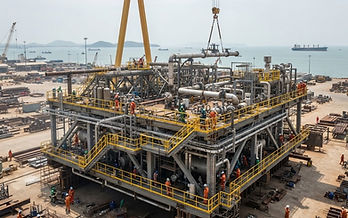
Digital Twin for Projects: A fully loaded digital twin, a digital replica of an actual asset being constructed, gives oil & gas companies the ability to drill down virtually to obtain project progress updates (e.g., outstanding issues, bottleneck constraints) increasing knowledge gathering efficiency. The digital twin also provides a 3D status report that allows management to “look around the platform” and understand the status of each component from design, build and assembly.
IoT has led to many improvements in this industry. Some of these advantages are listed below:
Remote Services: Oil typically isn’t found in easily accessible areas. With safety and regulation issues rising, extraction sites in remote locations and the increasing price of equipment maintenance, IoT allows oil and gas companies to be available at all hours to manage issues ranging from spills to emergency shutdowns and remote field operations. For instance, massive amounts of reservoir data can be integrated with near real time field data to plan the placement of wells and water tanks and to determine flow rates.
Health and Safety: Oil and gas extraction is characterized by hazardous working environments. IoT allows companies better to predict when mining plant and equipment needs maintenance, to track spare parts on rigs, to know whether contract workers at a refinery are certified to be in certain areas and to determine the exact number of people to evacuate when an incident occurs.
Asset Tracking and Monitoring: Wireless sensor network oil and gas IoT applications are in great demand nowadays. Due to oil’s dramatic price volatility, companies are spending more time analyzing their investments and internal operations to see where reductions or changes can take place while still maintaining the business and maximizing asset utilization.
As a segmented industry with various streams, Oil and Gas would benefit from a seamless framework in which IoT applications and deployments are closely monitored across the ecosystem that comprises upstream, midstream and downstream players. The sector will benefit from the adoption of asset tracking solutions and predictive maintenance and will enhance processes involved in crude oil refining. Those applications may even become a necessity for maintaining a lead over peers in the ultracompetitive global Oil and Gas marketplace!
K999 Thailand carries out work of this kind through its pressure vessel fabrication team in Rayong.
Further reading
Follow Mineral Processing across the wider market on Project Atlas Intel.
How K999 can help
Process equipment for energy projects
Pressure containment and pipeline work carries the tightest documentation on the shop floor, and the articles here track the codes and market conditions behind that work.
Pressure vessels and tanks- 01
Pressure vessels, steel tanks and pig launchers built to ASME and client specifications.
- 02
Pipe spool fabrication with heat induction bending for long radius and tight radius bends.
- 03
Full traceability from mill certificates through weld maps to hydrotest records.
More on Energy & Oil Gas
All articles


Request for quotation
Need fabricated steel to that standard?
Every enquiry is answered within 48 hours by our estimating team in Rayong. The priced quotation follows once drawings, quantities and standards are confirmed. Stainless steel fabrication, structural steel fabrication, pipe spooling, pressure vessels, steel tanks, mining equipment and conveyors, pig launchers, chutes and hoppers, send the package and we will price it.
Before you request a quotation
Steel fabrication quotation questions
What structural steel fabrication, pressure vessel and pipe spooling packages cost, what to send with an enquiry, and how delivery to site works.
Structural steel fabrication is priced from the section and plate tonnage, the detailing and drawing hours, welding and fitting manhours, NDT requirements, blast and coating system, packing and freight. Grade matters as much as weight: AS/NZS, ASTM, JIS and BS sections carry different mill prices, and heavy built up members take longer than rolled sections. Our Rayong workshop produces around 10,000 tonnes of structural steel fabrication a year, so a clear bill of materials is usually enough to price. Send the drawings and we answer within 48 hours; the priced quotation follows once quantities, standards and delivery dates are confirmed.
For steel fabrication work, send the drawings or IFC package, a bill of materials with material grades, the welding and NDT requirements, the coating specification, the delivery port and your site dates. Add the inspection and test plan, any third party inspection requirement, and whether trial assembly or match marking is needed. Where drawings are still in progress, a scope list with sizes, quantities and duty is enough to start, and the estimate is refined once the final package arrives. Every enquiry is answered within 48 hours, and the priced quotation is issued after scope, standards and quantities are confirmed.
Yes. Pressure vessel fabrication is carried out to ASME Section VIII Div. 1 under our ASME U stamp No. 43,462, or to AS/NZS and BS where the project specifies, covering separators, air receivers, water drums, waste heat recovery units and pig launchers. Steel tanks for fuel, biofuel, chemical, water and food duty are designed in house with our E Tank programme to API, ASME, BS and AS/NZS. Because structural steel, vessels, tanks and their supports are built in the same workshops, one enquiry can cover the vessel package, the tank package and the structural steel that carries them, with a single coating and documentation system and one shipment.
Steel fabrication Australia packages are scheduled from a 33,000 m2 Rayong yard with an 80,000 m2 assembly yard inside Sattahip port, so fabrication, trial assembly, blasting, coating and packing run in one place. Programme length depends on tonnage, material lead times, the coating system and inspection scope, and it is confirmed with the quotation. We quote FOB Laem Chabang, Map Ta Phut or Sattahip, or CIF and DAP to your Australian port, with packing lists, weights, lifting points and a data book per shipment. Staged deliveries can follow your site erection sequence instead of shipping everything at once.
There is no fixed minimum. Pipe spooling Australia packages run at up to 3,000 diameter inches per shift on SCH.40, from a single replacement spool to a full plant piping scope, with spools numbered, X rayed where specified and coated to match erection order. Mining equipment fabrication covers chutes, hoppers, ore bins, transfer towers and conveyor structures with Bisalloy, Hardox, rubber lining or hardfacing fitted in house, from one wear liner set to modules of up to 2,500 tonnes assembled at Sattahip. Send the scope list and we will tell you what the smallest sensible batch is for your programme.