


Materials & Coatings
Specialized Coatings for Machinery Protection
Epoxy, polyurethane and zinc rich systems are chosen for abrasion, chemical exposure and marine atmosphere rather than appearance.

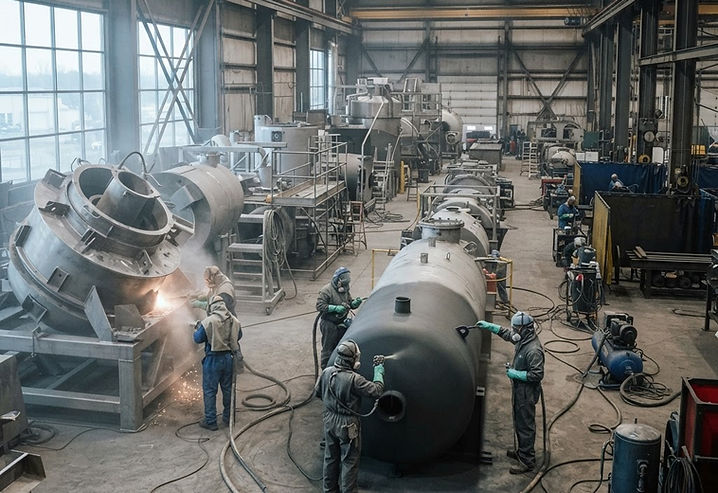
Protective coatings are a crucial part of the manufacturing and fabrication process, adding lifespan and durability to components and contributing to the overall lifecycle of machinery. Machinery is only as effective as its parts, and those parts are only as effective as the coating protecting them. Protective coatings are a crucial element of the manufacturing process, adding not only a finishing touch to a machined component, but adding the durability and longevity that contributes to the part’s lifespan, and to the lifespan of the machine overall. Painting as a coating technique is familiar to many, however what are the other coating mechanisms used in the metal fabrication and manufacturing industries? Let us dive deeper into this topic.
Benefits of Specialized Coatings
Machined components will inevitably wear down over time from use, as well as buildup of residue, corrosion, and exposure to a variety of weather conditions and environments. Machinery downtime can have significant costs to a business, and with supply chain shortages across the world, sourcing replacement parts can be a difficult and time consuming process. Protective coatings not only keep the components beneath from degrading too quickly, but can also be reapplied within a relatively short time frame.
Recoating components locally rather than waiting to order replacement parts from overseas can drastically reduce downtime, allowing machinery to remain up and running for longer and dramatically increasing productivity.

Types of Specialized Coatings
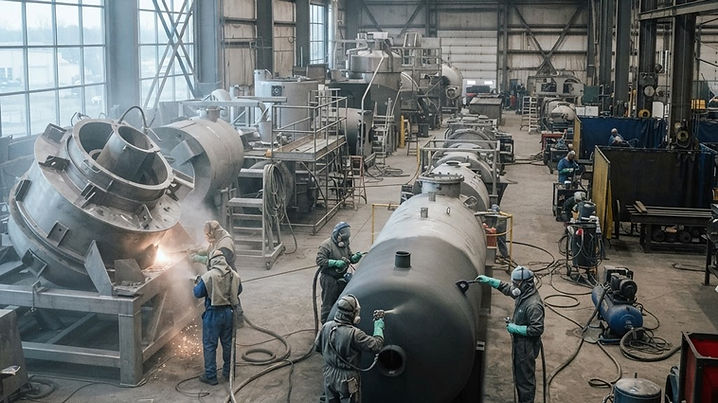
Manufactured components require specialized protection that will meet the needs of the design specifications and their application. Machinery in outdoor settings, or in plants with high levels of moisture, require coatings that will protect against corrosion of the metal beneath. With an effective pretreatment, coatings such as powder coating and thermoplastic coating add a layer of protection to the surface of aluminium or steel in mining plant and equipment that can withstand high levels of moisture and salt spray. Parts in fast moving machinery, defense applications and heavy duty applications are particularly susceptible to wear and abrasion.
As parts wear down over time, the effectiveness of the machinery overall can be compromised. Anodizing and its tougher counterpart hard anodizing are effective finishes for reducing abrasion and wear and expanding the lifespan of a component. A hard, dense aluminium oxide layer grown from the surface of the aluminium, anodizing adds protection against wear and external damage, preventing parts from wearing down quickly and adding significant longevity. Specialty finishes such as ceramic coatings can also add hardness and durability suitable for moving parts with tight tolerances. For components at risk of accumulation of residue, glue, chemicals or food substances such as pressure vessels, PTFE or PFA coatings, more commonly known as Teflon, are effective at reducing friction and allowing materials to pass over the part without building up.
Concluding Remarks
Choosing the appropriate coating is crucial for protecting metal fabrication products from environmental factors like corrosion and wear. Different coatings such as liquid, powder, plating, anodizing, and conversion coatings offer unique properties that can enhance the performance and appearance of the metal substrate. Each type of coating has its own advantages and disadvantages, and selection depends on factors such as the intended use, exposure environment, and desired properties of the coating. In conclusion, the right coating and application method can significantly improve the durability, appearance, and longevity of a metal product. Thus, for industrial use in manufacturing, coating is gradually moving towards “must have”, compared to its current “good to have” status!
K999 Thailand carries out work of this kind through its abrasive blasting and protective coating team in Rayong.
Further reading
Follow fabrication yards in Southeast Asia across the wider market on Project Atlas Intel.
Calculation tool
Run the numbers for this yourself with the free electrical engineering calculator from Engineering Toolbox Australia. Treat the result as a first check, then confirm the final design with your engineer.
How K999 can help
Material selection and surface protection
We fabricate in stainless, duplex, carbon steel and nickel alloys, and we finish those materials for the environment they will live in, from coastal yards to process plants.
Stainless steel fabrication- 01
Stainless and duplex fabrication with matched filler metals and controlled interpass temperature.
- 02
Abrasive blasting to the specified surface profile before protective coating application.
- 03
Rubber lining and hardfacing for abrasive slurries, chutes and wear plates.
More on Materials & Coatings
All articles


Request for quotation
Need fabricated steel to that standard?
Every enquiry is answered within 48 hours by our estimating team in Rayong. The priced quotation follows once drawings, quantities and standards are confirmed. Stainless steel fabrication, structural steel fabrication, pipe spooling, pressure vessels, steel tanks, mining equipment and conveyors, pig launchers, chutes and hoppers, send the package and we will price it.
Before you request a quotation
Steel fabrication quotation questions
What structural steel fabrication, pressure vessel and pipe spooling packages cost, what to send with an enquiry, and how delivery to site works.
Structural steel fabrication is priced from the section and plate tonnage, the detailing and drawing hours, welding and fitting manhours, NDT requirements, blast and coating system, packing and freight. Grade matters as much as weight: AS/NZS, ASTM, JIS and BS sections carry different mill prices, and heavy built up members take longer than rolled sections. Our Rayong workshop produces around 10,000 tonnes of structural steel fabrication a year, so a clear bill of materials is usually enough to price. Send the drawings and we answer within 48 hours; the priced quotation follows once quantities, standards and delivery dates are confirmed.
For steel fabrication work, send the drawings or IFC package, a bill of materials with material grades, the welding and NDT requirements, the coating specification, the delivery port and your site dates. Add the inspection and test plan, any third party inspection requirement, and whether trial assembly or match marking is needed. Where drawings are still in progress, a scope list with sizes, quantities and duty is enough to start, and the estimate is refined once the final package arrives. Every enquiry is answered within 48 hours, and the priced quotation is issued after scope, standards and quantities are confirmed.
Yes. Pressure vessel fabrication is carried out to ASME Section VIII Div. 1 under our ASME U stamp No. 43,462, or to AS/NZS and BS where the project specifies, covering separators, air receivers, water drums, waste heat recovery units and pig launchers. Steel tanks for fuel, biofuel, chemical, water and food duty are designed in house with our E Tank programme to API, ASME, BS and AS/NZS. Because structural steel, vessels, tanks and their supports are built in the same workshops, one enquiry can cover the vessel package, the tank package and the structural steel that carries them, with a single coating and documentation system and one shipment.
Steel fabrication Australia packages are scheduled from a 33,000 m2 Rayong yard with an 80,000 m2 assembly yard inside Sattahip port, so fabrication, trial assembly, blasting, coating and packing run in one place. Programme length depends on tonnage, material lead times, the coating system and inspection scope, and it is confirmed with the quotation. We quote FOB Laem Chabang, Map Ta Phut or Sattahip, or CIF and DAP to your Australian port, with packing lists, weights, lifting points and a data book per shipment. Staged deliveries can follow your site erection sequence instead of shipping everything at once.
There is no fixed minimum. Pipe spooling Australia packages run at up to 3,000 diameter inches per shift on SCH.40, from a single replacement spool to a full plant piping scope, with spools numbered, X rayed where specified and coated to match erection order. Mining equipment fabrication covers chutes, hoppers, ore bins, transfer towers and conveyor structures with Bisalloy, Hardox, rubber lining or hardfacing fitted in house, from one wear liner set to modules of up to 2,500 tonnes assembled at Sattahip. Send the scope list and we will tell you what the smallest sensible batch is for your programme.